Another Medical Necessity?
New York court finds conflicting medical opinions create triable issue on physical therapy necessity, despite provider's weak affidavit of merit in no-fault insurance case.
Another Medical Necessity? — Read Article →In-depth legal analysis from Attorney Jason Tenenbaum — covering court rulings, legal standards, and practical guidance on medical necessity under New York law.
Expert Analysis
Medical necessity is the most common basis for no-fault claim denials in New York. Insurers hire peer reviewers to opine that treatment was not medically necessary, shifting the burden to providers and claimants to demonstrate otherwise. The legal standards for establishing and rebutting medical necessity — including the sufficiency of peer review reports, the qualifications of reviewing physicians, and the evidentiary burdens at arbitration and trial — are the subject of extensive case law. These articles provide detailed analysis of medical necessity litigation strategies and court decisions.
Read Our Medical Necessity Articles
Frequently Asked Questions
A medical necessity denial occurs when the insurer's peer reviewer determines that treatment was not medically necessary based on a review of the patient's medical records. The peer reviewer writes a report explaining why the treatment does not meet the standard of medical necessity. To challenge this denial, the provider or claimant must present medical evidence — typically an affirmation from the treating physician — explaining why the treatment was necessary and rebutting the peer review findings.
To overcome a peer review denial, you typically need an affirmation or affidavit from the treating physician that specifically addresses and rebuts the peer reviewer's findings. The treating physician must explain the medical rationale for the treatment, reference the patient's clinical findings, and demonstrate why the peer reviewer's conclusions were incorrect. Generic or conclusory statements are insufficient — the response must be detailed and fact-specific.
Medical necessity is evaluated based on whether the treatment is appropriate for the patient's diagnosed condition, consistent with accepted medical standards, and not primarily for the convenience of the patient or provider. Peer reviewers assess factors including clinical findings, diagnostic test results, treatment plan consistency with the diagnosis, and whether the patient is showing functional improvement. Treatment that is excessive, experimental, or unsupported by objective findings may be deemed not medically necessary.
Yes, an insurer can discontinue benefits after a single IME doctor concludes that further treatment is not medically necessary or that the claimant has reached maximum medical improvement. However, the IME report must be sufficiently detailed and the denial must be issued within 30 days under 11 NYCRR §65-3.8(c). The treating physician can submit a rebuttal affirmation explaining why continued treatment is necessary, forming the basis for challenging the cut-off at arbitration.
A peer review is a paper-based evaluation where a licensed medical professional reviews the patient's records and renders an opinion on whether the billed treatment was medically necessary. Unlike an IME, the peer reviewer does not examine the patient. The peer review report must be detailed, address the specific treatment at issue, and explain the medical rationale for the opinion. Generic or boilerplate peer reviews that fail to address the patient's individual clinical presentation may be found insufficient.
New York court finds conflicting medical opinions create triable issue on physical therapy necessity, despite provider's weak affidavit of merit in no-fault insurance case.
Another Medical Necessity? — Read Article →
Learn about medical necessity trials in NY no-fault cases. Understand burden of proof, expert witness credibility, and defense strategies. Call 516-750-0595.
Medical Necessity Trials in New York No-Fault Cases: Burden of Proof and Expert Witness Credibility — Read Article →
Learn why surgery peer review alone isnt enough for NY no-fault medical necessity denials. Expert legal analysis from experienced Long Island attorneys. Call 516-750-0595.
Understanding New York No-Fault Insurance Medical Necessity: Why Surgery Peer Review Alone Is Not Enough — Read Article →
Understanding witness credibility standards in NY personal injury law. Expert analysis of medical testimony, expert witnesses & courtroom credibility. Call 516-750-0595.
Witness Credibility in Personal Injury Cases: Standards for Medical and Expert Testimony in New York — Read Article →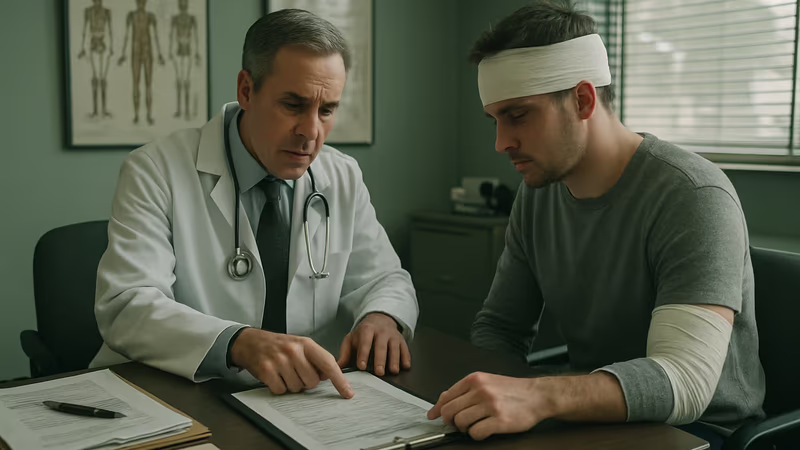
Expert analysis of NY no-fault insurance law: how serious injury thresholds intersect with medical necessity. Ampofo case insights. Call 516-750-0595.
NY No-Fault Insurance: Serious Injury Threshold vs Medical Necessity — Read Article →Need Legal Guidance?
Get a Free Case Evaluation
No fees unless we win. Available 24/7.

Expert analysis of NY medical malpractice burden of proof requirements. Wei Lin case shows why proper expert testimony matters. Call 516-750-0595 for consultation.
Medical Malpractice Burden of Proof in NY: Expert Testimony Requirements — Read Article →
Court rules medical affirmation insufficient when not based on patient examination and fails to rebut defendant's examining physician findings.
“Not based on an examination” — Read Article →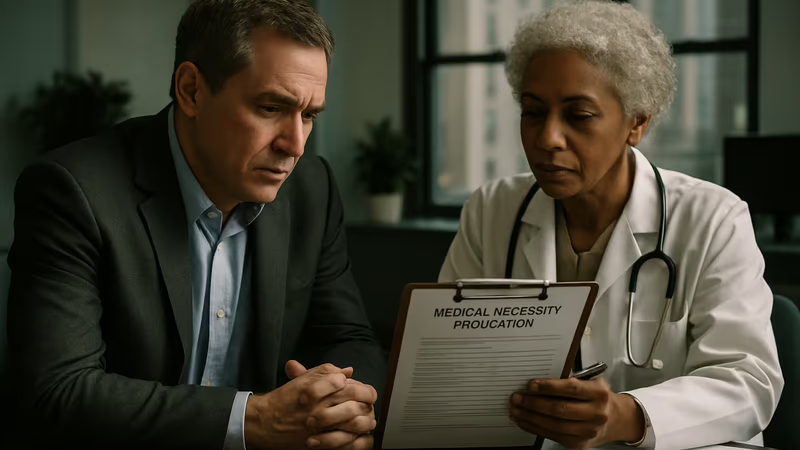
First Department dismisses medical necessity case where plaintiff's affidavit failed to rebut IME findings, lacking examination of assignor and meaningful response.
The First Department dismisses a medical necessity case — Read Article →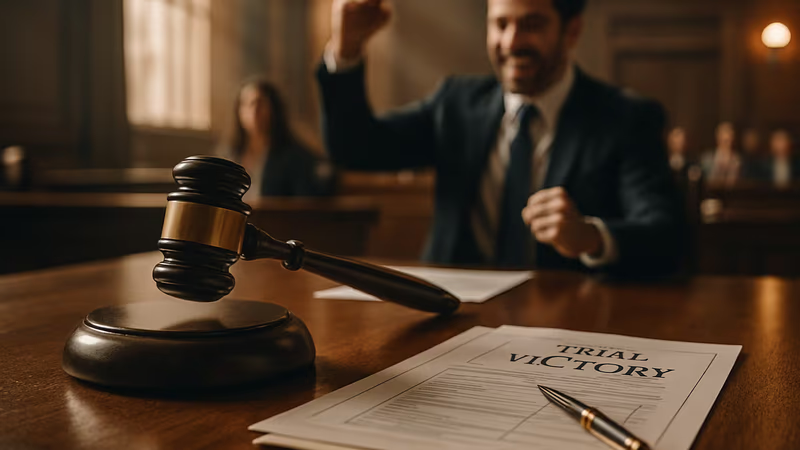
MUA trial victory shows how manipulation under anesthesia medical necessity disputes are resolved through expert testimony battles in New York no-fault cases.
MUA trial victory — Read Article →
Court ruling demonstrates that medical conditions can evolve over time, challenging the emphasis on immediate post-accident medical examinations in necessity determinations.
Why “contemporaneous” medical inquiry should not be the loadstar of medical necessity determinations — Read Article →
New York medical malpractice case highlights the critical requirement for expert witnesses to establish proper foundation when testifying outside their area of specialization.
Out of scope – need foundation — Read Article →
New York court ruling on peer review reports in no-fault insurance medical necessity cases. Analysis of evidentiary standards and expert testimony requirements.
The peer review and its entry into evidence? — Read Article →
New York no-fault medical necessity denial case where insurer's peer review expert failed to consider all medical records, highlighting common arbitration challenges.
It was not proven that the surgery was not medically necessary — Read Article →
NY court ruling on medical necessity claims allows expert testimony from witnesses who didn't prepare peer review reports, clarifying trial evidence rules.
New trial with a twist on a medical necessity claim — Read Article →
New York court decision on medical necessity and fee schedule defenses in no-fault insurance cases, featuring expert affidavit requirements and proper coding analysis.
Functional ATIC/ medial necessity and fee schedule defense susbstantiated — Read Article →
Learn how medical professionals must document and explain changes in patient conditions to prove serious injury claims in New York no-fault cases.
Substantiation of diminishment of ROM — Read Article →
5102(d) litigation case where plaintiff's own medical records revealed preexisting conditions, defeating threshold injury claims in New York personal injury law.
5102(d) litigation: Plaintiff’s own records non-suit him — Read Article →
Court sustains verdict for plaintiff in no-fault MRI medical necessity case after finding defendant's expert witness testimony not credible despite qualifications.
Verdict in favor of Plaintiff sustained — Read Article →
Global Liberty Ins. Co. v W. Joseph Gorum case analysis: court grants default but denies summary judgment on medical necessity peer review signature issues.
Default granted but summary judgment motion denied — Read Article →
New Horizon Surgical v Allstate: Court analysis of MUA medical necessity burden of proof and expert witness testimony in New York no-fault insurance disputes.
MUA with Straniere: Part 2 — Read Article →
New Horizon Surgical Center v Allstate case analysis covering chiropractor MUA procedures, medical necessity burden of proof, and facility fee coverage extensions.
A lot here in a Straniere special — Read Article →
Court ruling shows "interboard" IME cutoff requirements in action - acupuncture provider loses no-fault case for lack of medical evidence opposing summary judgment motion.
A sighting of “interboard” in action — Read Article →
Court finds triable issue of fact on medical necessity when plaintiff's medical affidavit specified assignor's conditions and described benefits of disputed medical supplies.
Triable issue of fact as to medical necessity — Read Article →
Court reverses order after plaintiff's affidavit failed to meaningfully rebut defendant's peer review report showing lack of medical necessity for treatment.
Medical necessity not sustained — Read Article →
Appellate Division rules on medical necessity defense requirements, establishing standards for rebutting IME reports in no-fault insurance cases.
Appellate Division opines on lack of medical necessity defense — Read Article →
Court ruling on CPLR 2106 affirmations and prima facie requirements for no-fault insurance claims, including chiropractor limitations and 30-day payment rules.
2106 and a prima facie comment — Read Article →
Analysis of testimony standards regarding deviations in no-fault medical necessity cases, examining proper questioning techniques and legal rationale requirements.
Scope of testimony regarding “deviations” — Read Article →
Appellate Division reverses trial court on no-fault insurance denial mailing practices and medical necessity evidence, establishing prima facie case standards.
Trial de novo summary judgment motion appealed — Read Article →
Court ruling on burden of proof in no-fault medical necessity cases - who must prove surgical necessity when insurers successfully rebut presumptions.
Much ado over something? — Read Article →
NY no-fault medical necessity cases show inconsistent court rulings on deficient rebuttal affidavits, highlighting the unpredictable nature of summary judgment motions.
Run of the mill medical necessity case — Read Article →
Appellate Term affirms Civil Court ruling against medical provider in no-fault case where defendant failed to prove services weren't medically necessary.
Lost to Dr. Bhatt — Read Article →
Court improperly searched record to grant defendant summary judgment on medical necessity when plaintiff never moved on that issue, violating procedural fairness.
Medical necessity finding not sufficient upon search of record — Read Article →
Court rules that unsigned peer review reports can be properly remedied when identical signed versions are submitted in reply papers without prejudicing the opposing party.
The Reply that introduced a proper reply was itself proper — Read Article →
Court ruling shows unsworn, unsigned letters of medical necessity lack probative value in no-fault insurance disputes, emphasizing proper documentation requirements.
Unsworn letters not enough — Read Article →
Court denies insurer's summary judgment motion after defendant's late discovery responses prevent plaintiff from responding to medical necessity challenge.
3212(f) – motion denied — Read Article →
Court rules on deposing medical providers in no-fault insurance cases when medical necessity is disputed, analyzing discovery rights under CPLR 3101(a).
Depositions of medical providers — Read Article →
Court rules subjective patient complaints without objective medical evidence insufficient to deny acupuncture treatment necessity in no-fault insurance case.
Objective evidence necessary — Read Article →
Court ruling clarifies that medical providers must meaningfully address IME findings in their rebuttals, not just submit generic affirmations to establish medical necessity.
An insufficient rebuttal — Read Article →
Court ruling demonstrates that properly supported independent medical examinations can establish lack of medical necessity, but opposing medical affidavits may create triable...
On medical necessity — Read Article →
New York courts recognize that MRI facilities need discovery to defend against medical necessity challenges, unlike other providers who may not require extensive documentation.
Protection of the MRI facilities on medical necessity motions — Read Article →
Court rules that plaintiff's treating therapist affidavit failed to meaningfully address IME findings, allowing insurance company's treatment denial to stand.
IME cut off not rebutted — Read Article →
New York court requires medical evidence, not just "know it all" affidavits, to challenge IME reports in no-fault medical necessity disputes.
Medical necessity motion: the door has creaked open a little bit — Read Article →
Court ruling clarifies IME notification requirements in no-fault cases, with defense succeeding in cutting off acupuncture benefits through proper medical examination procedures.
Ime cut off succeeds — Read Article →
Court upholds medical necessity defense despite plaintiff's challenges to peer review doctor qualifications in Five Boro Med case.
Lack of medical necessity defense upheld — Read Article →
Court decision requiring medical experts to demonstrate proper qualifications when testifying outside their specialty area in NY personal injury cases.
Another Geffner sighting — Read Article →
Court ruling establishes "objective medical explanation" requirement for no-fault insurance medical necessity defenses and highlights proper mailing procedure standards.
Mailing and the first time “objective” has landed in a medical rational case — Read Article →
New York appellate court decisions show inconsistent rulings on no-fault insurance medical necessity and causation claims, highlighting unpredictable outcomes.
It did not work the second time around — Read Article →
In Fludd v Pena, a plaintiff's inability to recall which shoulder was injured and failure to complain about shoulder pain at IME severely damaged their case.
The inability to recall which shoulder was hurt damages the plaintiff’s case — Read Article →
Long Island no-fault attorney discusses PF-NCT testing defenses including fraud, coding disputes, and EMG/NCV overlap in medical necessity cases.
PF-NCS – a thought — Read Article →
Court rules peer review report insufficient to deny acupuncture no-fault claims when review only addressed prior time period, not future treatments.
Peer review of acupuncture not substantitated — Read Article →
Donoso v Motor Vehicle Accident Indemnification Corp challenges the "All in One" case law on medical necessity in no-fault insurance claims, showing poor precedent.
“All in one” debacle is not good law — Read Article →
Court rules on physical therapy medical necessity denial based on chiropractor and physician IME reports, raising questions about cross-disciplinary treatment evaluations.
Post PT treatment not medically appropriate – chiro treatement considered — Read Article →
NYC Civil Court judge refuses expert testimony on hearsay grounds despite Appellate Term precedent requiring such testimony in no-fault medical necessity cases.
Jules said he is not bound by the Appellate Term’s holdings — Read Article →
Two 2014 New York appellate decisions demonstrate how insurance companies can successfully challenge medical necessity claims when healthcare providers fail to properly rebut peer...
Medical necessity reversals — Read Article →
Analysis of Triumph Assoc. Physical Therapy v New York Central Mutual case addressing Ground Rule 11 fee schedule disputes and IME-based medical necessity denials in no-fault law.
Ground rule 11 and the IME cut off — Read Article →
Court ruling shows defendant raised triable issue of fact on 30-day denial period through additional verification timing, shifting burden from carriers.
A triable issue of fact — Read Article →
Court ruling on medical necessity burden shifting in no-fault insurance case where contemporaneous treatment notes defeat IME testimony in Nassau County trial.
Stipulated to defeat. — Read Article →
Court ruling clarifies that peer review testimony with independent medical record analysis can establish lack of medical necessity in no-fault insurance disputes.
Peer review testimony is admissible and sufficient — Read Article →
Court rejects insurance company's confused medical expert testimony in no-fault case, showing that unopposed evidence must still meet basic quality standards.
The rambling man does not meet burden of lack of medical necessity at trial — Read Article →
Court rules fee schedule defense succeeds with employee affidavit but medical necessity defense fails when plaintiff submits sworn letter from treating chiropractor
Comp defense succeeds but medical necessity defense falters — Read Article →
Court rules defendant's summary judgment motion premature when plaintiff lacks discovery needed to oppose medical necessity denial in no-fault insurance case.
Premature summary judgment motion — Read Article →
New York court upholds admission of doctor's peer review testimony on medical necessity despite hearsay objections in no-fault insurance case.
Another peer hearsay case — Read Article →
NY court ruling on chiropractor scope of practice beyond spinal manipulation in no-fault insurance cases. Impact on Willets Point precedent and treatment coverage.
A chiropractor may manipulate areas other than the vertebral column? — Read Article →
New York court denies summary judgment in no-fault case where plaintiff timely requested but didn't receive peer review reports and medical documentation from defendant insurer.
A motion for summary judgment is denied pending disclosure — Read Article →
Learn how IME timing affects DME coverage in NY no-fault insurance. Expert guidance on prescription vs. acquisition rules. Call 516-750-0595.
Understanding IME Cut-offs for Durable Medical Equipment: When Timing Matters — Read Article →
New York court ruling on MUA expert testimony qualifications in no-fault insurance cases, examining when medical experts can testify outside specialty areas.
Another look at MUA — Read Article →
New York courts require competent expert medical proof to challenge medical necessity in no-fault insurance disputes, with fair and reasonable charges being key factors.
Medical necessity disputes in major medical disputes may be raised at any time — Read Article →
Court ruled peer review report lacked factual basis for denying medical supplies, showing First Department's higher scrutiny standards for peer reviews in no-fault cases.
The peer review was insufficient — Read Article →
Court ruling establishes that IME reports must provide factual basis and medical rationale when claiming injuries are resolved in no-fault insurance cases.
Some substance to an IME cut off defense — Read Article →
New York court rules that detailed medical affidavit explaining need for MRI to rule out disc herniations creates triable issue of medical necessity in no-fault case.
That the testing was necessary to rule out herniations is sufficient to warrant a trial on medical necessity — Read Article →
Hunt City Chiropractic case shows conflicting medical expert opinions can create triable issues of fact on medical necessity in no-fault insurance disputes.
Triable issue of fact – medical necessity — Read Article →
Court sanctions attorneys for frivolous no-fault insurance brief while ruling on medical necessity peer review challenges in New York PIP case.
What’s a boy to do? — Read Article →
Court reversal highlights how IME timing affects medical necessity determinations in no-fault insurance disputes, with burden of proof shifting to plaintiffs.
A snapshot in time saves 9 – Reversed (finally) — Read Article →
Court finds MUA procedures lacked medical necessity when services didn't follow established guidelines, showing how peer review can defeat no-fault claims.
MUA services inconsistent with MUA guidelines – prima facie showing lack of medical necessity established — Read Article →
New York court ruling confirms insurance medical experts don't need to review all plaintiff records to establish prima facie case for lack of serious injury.
A Prima facie showing of lack of serious injury does not require a review of plaintiff’s records — Read Article →
Brooklyn Chiropractic v A. Cent. Ins. Co.: Court finds triable issue of fact when plaintiff's IME contradicts insurer's IME, but peer review denial stands unopposed.
Triable issue of fact through another IME in a different specialty — Read Article →
NY court ruling shows insurance expert testimony needs factual basis and medical rationale to prove lack of medical necessity in no-fault cases.
Unrebutted doctor’s testimony insufficient to prove the services lacked a medical necessity — Read Article →
Appellate Term Second Department ruling clarifies medical rationale requirements in DME cases, emphasizing need for meaningful opposition to peer review reports.
Appellate Term Second Department expounds on sufficient medical rationale in DME case — Read Article →
Court ruling on no-fault insurance claim denial for acupuncture services due to insufficient response to verification requests and lack of medical necessity evidence.
Additional Verification non-receipt and lack of medical necessity. — Read Article →
Court ruling shows how insufficient peer review reports fail to establish prima facie burden in medical necessity motions under New York no-fault law.
Defendant failed to meet its prima facie burden on a medical necessity motion — Read Article →
New York court clarifies that peer review reports need only be copies when requested by providers, and cannot be used as evidence to prove lack of medical necessity at trial.
A copy of a peer report is all that is needed — Read Article →
Court rules medical experts don't need literature citations to establish treatment deviation in no-fault cases, relying on professional experience instead.
“Deviation” does not need to be established with medical literature. — Read Article →
New York court rules that unsworn chiropractor letters lack probative value in no-fault insurance medical necessity disputes, requiring proper foundation.
A simple medical necessity decision — Read Article →
Progressive Northeastern court case on medical necessity letters and prior trial testimony failing to rebut no-fault insurance peer review reports
It involved a different matter. — Read Article →
Court clarifies that IME reports cannot retroactively establish lack of medical necessity for treatments provided before the examination date.
Date of IME is guidepost for mecical necessity determination — Read Article →
Court rejects insurer's discovery attempts to find primary coverage and investigate fraudulent incorporation in NY no-fault case, ruling demands improper.
Malella and priority of coverage discovery disallowed — Read Article →
Ocean Diagnostic v. Allstate case analysis showing how medical necessity burden shifted when plaintiff provided stronger evidence than insurer's peer review report.
Reverse Pan Chiropractic — Read Article →
Nassau District Court ruling in Bajaj v GEICO clarifies when substitute peer doctors can testify in no-fault medical necessity cases, overturning restrictive precedent.
The substitute peer doctor — Read Article →
Court ruling emphasizes that peer review reports must provide clear medical rationale and factual basis to successfully challenge medical necessity claims in no-fault cases.
Peer review — Read Article →
Court ruled healthcare provider's affidavit was insufficient to rebut insurance company's peer review reports denying medical necessity claims.
Conclusory affidavit? — Read Article →
Court ruling in Five Boro Psychological v GEICO clarifies that insurers don't need to provide medical records when defending medical necessity denials in no-fault cases.
Mr. Five Boro – the distant cousin of Mr. All Boro – has reappeared — Read Article →
Appellate court rules on peer review requirements and electronic signature validity in no-fault insurance disputes, clarifying evidence standards for medical necessity challenges.
Peer hearsay and electronic signatures — Read Article →
Court finds physician's affidavit insufficient under Pan Chiro standards, raising questions about evolving requirements for medical necessity evidence in no-fault cases.
Affidavit deemed insufficient under a Pan Chiro analysis — Read Article →
Court grants renewal motion after law office failure, defendant wins summary judgment in no-fault insurance case when plaintiff fails to raise triable issues of fact.
Renewal granted and Plaintiff loses. — Read Article →
Court ruling demonstrates that a treating physician's letter of medical necessity can create sufficient factual disputes to defeat summary judgment in no-fault insurance cases.
Letter of medical necessity sufficient to raise an issue of fact — Read Article →
Court dismisses no-fault case after plaintiff objects to inadmissible proof, highlighting importance of sworn medical reports and hearsay rules in New York.
Objected to inadmissible proof spells doom — Read Article →
Appellate Term reverses trial court's exclusion of substitute expert testimony in no-fault medical necessity case, with strong dissent on expert testimony scope.
Another substitute peer case finds it way back on remand – but the dissent is potent — Read Article →
Expert analysis of medical necessity requirements in NY no-fault insurance. Learn from Praetorian case precedent for Long Island & NYC medical providers.
No-Fault Insurance Medical Necessity: Understanding the Praetorian Standard — Read Article →
Expert guidance on no-fault insurance medical necessity disputes in NY. Learn how stipulated evidence can defeat claims. Strategic trial advice. Call 516-750-0595.
No-Fault Insurance Medical Necessity: When Stipulated Evidence Defeats Claims — Read Article →
Learn how New York no-fault insurance medical necessity determinations and peer review requirements impact healthcare providers in Long Island and NYC court cases.
Understanding Medical Necessity and Peer Review Requirements in New York No-Fault Cases — Read Article →
New York CPLR 2106 affirmation requirements in personal injury cases. Learn how improper affirmations can cost plaintiffs their cases and technical compliance rules.
Improper Use of an Affirmation Cost Plaintiff Its Case: Understanding CPLR 2106 Requirements in New York — Read Article →
Learn how doctor affidavits create questions of fact for medical necessity in NY no-fault insurance cases. Essential guidance for Long Island personal injury claims.
A Question of Fact Through an Affidavit of a Doctor: Medical Necessity in New York No-Fault Cases — Read Article →
Medical necessity motion victory in challenging New York no-fault venue shows proper legal strategy can overcome difficult courts. Learn key insights.
Medical necessity motion wins in a tough venue — Read Article →
9th and 10th Judicial Districts correct Nassau County District Court on medical necessity standards in NY no-fault insurance cases, emphasizing proper evidence requirements.
9th and 10th are telling the Nassau County District Court (again) that enough is enough — Read Article →
New York court affirms Civil Court ruling that insurance company failed to prove chiropractic services weren't medically necessary in no-fault case.
First Presbyterian, then PSW – Maryland is at it again — Read Article →
New York appeals court rules that substitute expert witnesses can testify in no-fault insurance cases even when they didn't prepare the original peer review report.
Substitute peer allowed to testify on appeal — Read Article →
Appellate Term First Department rules against durable medical equipment provider in no-fault case, finding insufficient evidence of medical necessity for summary judgment.
Appellate Term First Department does not seem to be too fond of durable medical equipment — Read Article →
A dissenting judge criticizes vague peer review reports in no-fault insurance cases, highlighting the importance of detailed medical necessity determinations.
A potent dissent — Read Article →
Appellate Division ruling on hearsay and peer review reports in no-fault medical necessity cases - analysis of when medical records must be attached to peer reviews.
Who cares about what the Appellate Division has to say about hearsay — Read Article →
New Jersey Appellate Division reviews MUA medical necessity standards, examining $18K+ claims and NAMUAP protocols in no-fault insurance dispute
New Jersey Appellate Division discusses MUA — Read Article →
2007 New York case shows how conclusory medical expert affidavits fail to establish causation in personal injury claims, highlighting importance of substantive evidence.
A 2007 causation case – affidavit insufficient — Read Article →
New York's Appellate Term reveals stark differences between First and Second Departments in handling peer review reports for no-fault insurance medical necessity denials.
Appellate Term, First Departments latest statement on peer reviews — Read Article →
Critical analysis of Consolidated Imaging v Travelers Indemnity Co. - examining flawed Civil Court reasoning in Long Island and NYC no-fault insurance cases.
Civil Court Decisions in No-Fault Insurance: When Legal Reasoning Goes Wrong | Long Island Attorney — Read Article →
Expert analysis of medical necessity defenses in NY no-fault cases. Learn how peer review reports affect insurance claims. Long Island & NYC legal representation.
I wish I had the record and the briefs on this one — Read Article →
GEICO joins Mercury & NYCM with denied medical necessity motions. Important precedent for Long Island & NYC medical providers defending no-fault claims. Call 516-750-0595.
Geico now joins the Mercury and NYCM club in having their medical necesity motions denied based upon boilerplate letters of medical necessity — Read Article →
Expert analysis of strategic MRI timing in NY personal injury cases. Learn why delayed imaging can be better. Long Island & NYC attorneys. Call 516-750-0595.
Strategic MRI Timing in Personal Injury Cases: Why Later Can Be Better — Read Article →
Learn about medical necessity in New York no-fault insurance from the First Department's Enko decision. Expert legal help for healthcare providers. Call 516-750-0595.
Medical Necessity in No-Fault Insurance: Understanding the First Department’s Victory for Insurance Carriers — Read Article →
Appellate Term ruling on medical necessity motions in no-fault insurance cases, examining hearsay rules and evidence standards for Nassau County plaintiff firms.
It was a good run at the cards — Read Article →
Court decisions show consistent pattern: medical providers failing to submit proper affidavits of merit in medical necessity challenges will almost certainly lose at appellate...
And now the Ninth and Tenth follow lockstep with the Second, Eleventh and Thirteenth — Read Article →
Three recent no-fault insurance cases demonstrate how plaintiffs consistently fail to provide adequate medical expert testimony to rebut insurance carriers' utilization reports.
More plaintiffs fail to rebut an insurance carrier’s medical utilization report — Read Article →
New York appellate courts continue to cite the influential Pan Chiropractic v. Mercury decision in no-fault insurance disputes, reinforcing key precedents for medical necessity...
More Pan Chiropractic sightings – or perhaps I should say citings — Read Article →
Analysis of Active Imaging v Progressive case where Appellate Term rejected challenge to medical necessity motion based on peer report without underlying medical records.
I was wrong about the necessity of annexing the reports that the peer doctor relied upon — Read Article →
Nassau County District Court ruling on IME cut-offs and medical necessity burden of proof in no-fault insurance claims - analyzing flawed legal reasoning.
Crazy — Read Article →
Pan Chiro case continues to be cited in NY no-fault insurance medical necessity disputes, showing how poor affidavits of merit fail against proper peer review reports.
Pan Chiro sightings — Read Article →
Court rules that unsigned peer review reports cannot establish prima facie entitlement to summary judgment in no-fault insurance medical necessity disputes.
Prima facie entitlement to summary judgment was not established through an unsigned peer report — Read Article →
Learn how summary judgment motions in no-fault insurance cases can backfire on carriers when discovery rules work against them in medical necessity disputes.
Be careful what you ask for: Discovery by summary judgment motion — Read Article →
Court rules knee surgery including ACL reconstruction doesn't meet NY serious injury threshold when medical records show full strength and range of motion post-surgery.
A signifcant knee surgery does not defeat the 5102(d) serious injury threshold — Read Article →
New York Court of Appeals ruling demonstrates that expert testimony in toxic exposure cases requires scientific data and analysis, not mere speculation, to establish causation.
Analysis or reference to scientific data is necessary to defeat a motion based upon the lack of causal connection between lead paint and attendant poisoning — Read Article →
When treating physicians show conflicting findings about range of motion limitations, courts require proper reconciliation to establish medical necessity under New York's no-fault...
The failure to explain decreased range of motion after a somwhat normal examination with plaintiff's own doctor is fatal to plaintiff's 5102(d) action — Read Article →
Court examines how plaintiff's own hospital records contradicted expert testimony in no-fault threshold case, creating triable issues of fact.
A Plaintiff's own hospital records defeated his own threshold summary judgment motion — Read Article →
Court reverses $4,300 judgment due to insufficient medical affidavit that failed to address insurer's peer review determination in no-fault case.
A $4,300 affidavit- and another Pan Chiro citing (or sighting) — Read Article →
Learn how the Elmont Open MRI v State Farm case impacts personal injury claims and what peer review reports mean for your recovery.
Peer Review Reports in No-Fault Insurance: Elmont Open MRI v State Farm — Read Article →
New York court reinforces Pan Chiropractic standard for medical necessity denials, requiring affirmed peer review reports with factual basis and medical rationale.
Another Pan Medical sighting (or is it citing?) — Read Article →
Court finds peer doctor testimony with medical rationale sufficient to prove lack of medical necessity, reversing trial court in no-fault case.
Peer doctor's testimony is sufficient to prima facie demonstrate a service's lack of medical necessity — Read Article →
Court ruling examining whether a letter of medical necessity creates triable fact issues in no-fault insurance disputes, questioning summary judgment standards.
A letter of medical necessity raises a triable issue of fact? — Read Article →
Jason Tenenbaum successfully defeats plaintiff's medical necessity opposition with verbose but inadequate affidavit in Prime Psychological Services case.
A poorly drafted affidavit of merit fails to defeat my summary judgment motion — Read Article →
Expert defense against medical necessity summary judgment motions in NY. Protect your healthcare practice from insurance carrier challenges. Call (516) 750-0595.
Why Poorly Drafted Medical Affidavits Fail Against Insurance Medical Necessity Motions — Read Article →
Expert legal analysis of SSEP testing in medical malpractice cases. Call (516) 750-0595 for experienced personal injury representation in Long Island and NYC.
SSEP Testing in Medical Malpractice Cases: Understanding Your Rights in Long Island & NYC — Read Article →
Learn how to craft effective peer review rebuttals in New York no-fault insurance cases. Expert legal analysis from experienced Long Island personal injury attorney.
Effective Peer Review Rebuttals in New York No-Fault Insurance Cases — Read Article →
Explore how medical malpractice and no-fault litigation intersect in New York courts. Essential insights for Long Island and NYC attorneys handling complex medical-legal cases.
The Convergence of Medical Malpractice and No-Fault Litigation: Understanding Cross-Practice Legal Principles — Read Article →
Learn how New York courts determine expert qualifications in no-fault insurance cases. Essential guide for Long Island and NYC attorneys handling medical expert testimony...
Expert Qualification Standards in New York No-Fault Cases: Understanding Professional Sufficiency Requirements — Read Article →
Learn why conclusory affidavits fail in medical necessity summary judgment motions. Long Island & NYC legal defense strategies. Call 516-750-0595.
Why Conclusory Affidavits Fail: Building Strong Opposition to Medical Necessity Summary Judgment Motions — Read Article →
Avoid the CPLR 2106 trap that destroys medical practice no-fault claims. Long Island & NYC legal defense against procedural errors. Call 516-750-0595.
The CPLR 2106 Trap: Why Medical Practice Owners Must Avoid This Critical Procedural Error — Read Article →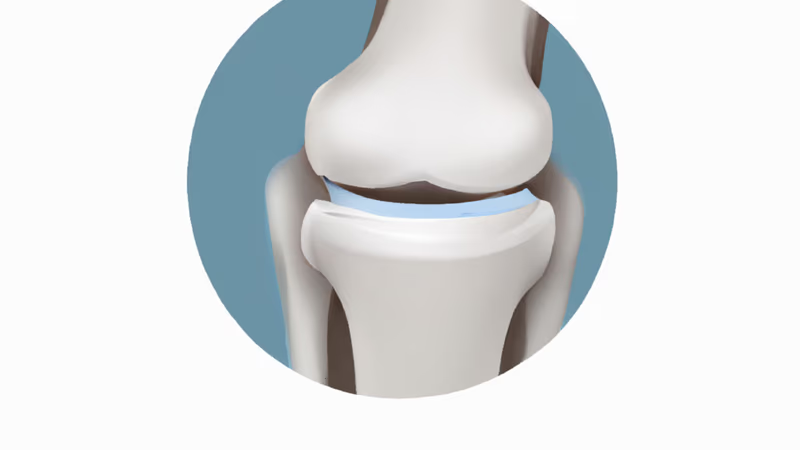
Learn why knee surgery for ACL and meniscus tears may not automatically meet NY serious injury threshold. Expert legal analysis from Long Island personal injury lawyers.
Knee Surgery for ACL and Meniscus Tears: Understanding the Serious Injury Threshold in New York Personal Injury Cases — Read Article →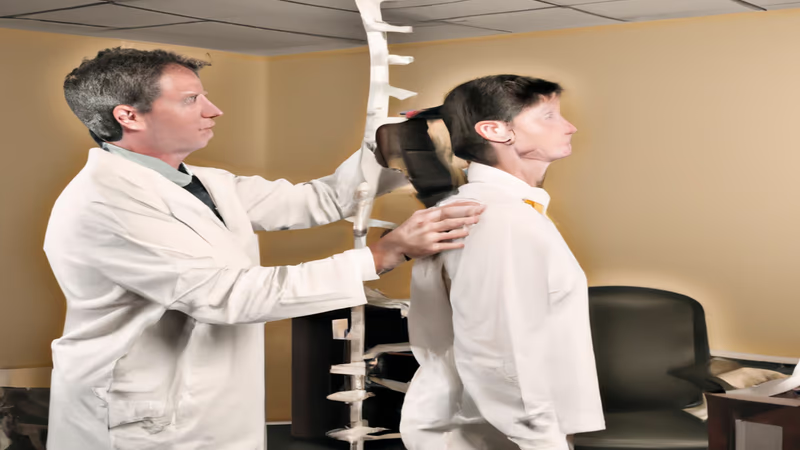
Learn how Kim v O'Rourke established standards requiring IME physicians to provide objective evidence when claiming range of motion limitations are self-restricted.
An IME doctor must offer an explanation why he believes a Claimant's diminished range of motion is self restricted — Read Article →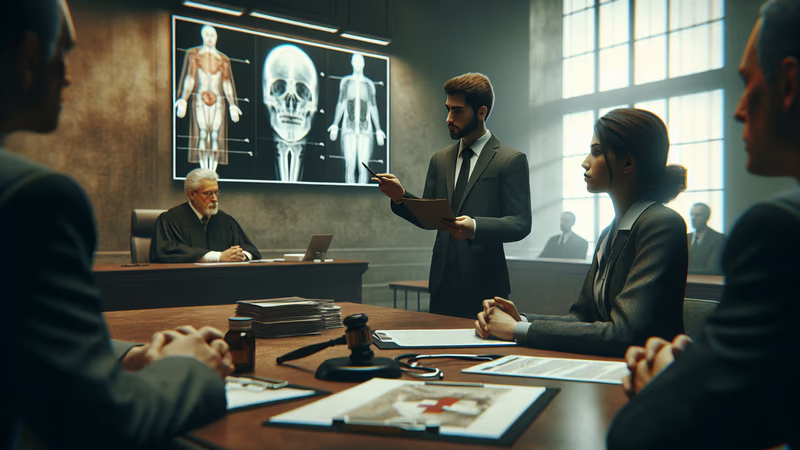
Learn how medical necessity defenses fail in NY no-fault cases. Expert analysis of Progressive Med v Allstate reveals key evidentiary pitfalls & hearsay issues.
Understanding Medical Necessity Defense Failures in New York No-Fault Insurance Cases — Read Article →
Landmark Progressive case changed medical necessity burden of proof in NY no-fault insurance. Expert analysis for healthcare providers. Call (516) 750-0595.
Medical Necessity Determinations: A Landmark Ruling in No-Fault Insurance Litigation — Read Article →
Nassau County court rules neurologists cannot challenge chiropractor MRI orders without proper foundation. Important ruling for Long Island and NYC medical providers.
Neurologist Expert Testimony Limits in MRI Medical Necessity Cases – Long Island & NYC — Read Article →
Court affirms opposing expert affidavit sufficient to defeat summary judgment in medical malpractice when expert has proper credentials and specialty certification.
Affirmation of opposing expert sufficient to thwart summary judgment in a malpractice case — Read Article →
Learn how internist qualifications meet NY expert witness standards for personal injury cases. Nassau & Suffolk County medical malpractice lawyer insights. Call 516-750-0595
Proof That Physician Was Internist Sufficient for Expert Medical Testimony in NY Personal Injury Cases — Read Article →
Learn how New York courts determine serious injury under Insurance Law 5102(d). Analysis of Sone v Qamar where 20-degree spinal limitation deemed insignificant.
Was That Injury Really Insignificant? Understanding the Serious Injury Threshold in New York — Read Article →
Learn NY medical expert testimony standards from Shectman v Wilson case. Expert qualification requirements for medical malpractice cases in NYC and Long Island.
The Appellate Division discusses how an expert becomes comptent to testify about the standard of care in a specific area of practice — Read Article →
Why conclusory medical necessity affidavits fail against insurance companies. Expert analysis of Innovative Chiropractic v Travelers case. Call 516-750-0595.
Plaintiff's conclusory affidavit is insufficient to defeat an insurance carrier's lack of medical necessity motion — Read Article →
Understanding how no-fault IME findings affect third-party personal injury lawsuits in NY. Expert legal analysis from Long Island attorneys. Call 516-750-0595.
Concerns about the use of a first-party no-fault IME to support a third-party defendant's summary judgment motion — Read Article →
Understanding medical necessity proof standards in NY personal injury and no-fault cases. Expert legal analysis from Long Island attorneys. Call 516-750-0595.
A prima facie case of medical necessity? — Read Article →
Learn when treating doctors must meaningfully disagree with IME findings in NY no-fault cases. Expert analysis of medical necessity disputes for Long Island & NYC injury victims.
NY No-Fault: When Treating Doctors Must Challenge IME Medical Necessity Findings — Read Article →
Expert analysis of medical equipment peer review determinations in New York no-fault insurance cases. Understanding evidence requirements and medical necessity standards for Long...
A physician's affirmation and a chiropractor's affidavit will prove the lack of medical necessity of medical equipment — Read Article →
Learn when insurers can perform peer reports after the 30-day claims determination period in PIP cases. Florida court ruling on medical necessity challenges.
May a peer report be performed after the 30-day claims determination period? — Read Article →
Learn how the Pan Chiropractic v Mercury Insurance case changed peer review standards in New York no-fault insurance litigation. Expert legal guidance for healthcare providers.
Understanding Peer Review Standards in New York No-Fault Insurance Cases — Read Article →
Expert analysis of insurance carrier expert testimony scope in NY no-fault medical necessity disputes. Understanding Krishna case precedent, IME reports, and peer review...
May an insurance carrier's expert offer an opinion beyond the confines of his peer or IME report? — Read Article →
Learn how conclusory affidavits fail to defeat insurance carriers' summary judgment motions in NY no-fault cases. Bronze Acupuncture v Mercury shows what works.
Conclusory affidavits will not defeat an insurance carrier's summary judgment motion — Read Article →
Long Island personal injury law blog discusses landmark Bongiorno v State Farm decision, marking first Richmond County reversal on medical necessity summary judgment in no-fault...
The first of hopefully many — Read Article →
New York appellate court inconsistencies in no-fault insurance cases affecting venue selection and case outcomes for Long Island residents.
A minus v. Mercury — Read Article →
Learn the evidence standards for challenging medical necessity in NY no-fault insurance cases. Expert analysis from Long Island personal injury attorney.
Medical Necessity Evidence Standards in No-Fault Law | Long Island Lawyer | Jason Tenenbaum — Read Article →
Learn effective strategies for defeating medical necessity motions in New York no-fault insurance cases. Expert legal insights on peer review challenges.
A Common Sense Approach to Defeating Medical Necessity Motions | Long Island Lawyer | Jason Tenenbaum — Read Article →
Analyzing NY no-fault medical necessity challenges from Continental Medical v. Mercury Casualty case, examining CPLR 2106 affirmation defects and IME report requirements.
NY Medical Necessity Challenges: Continental Medical Case Analysis — Read Article →
New York medical malpractice expert testimony foundation requirements. Learn critical standards for expert witness preparation in Nassau and Suffolk County cases.
Understanding Foundation Requirements in Medical Malpractice Expert Testimony — Read Article →
New York medical necessity summary judgment motions are evolving with stricter expert testimony standards, creating opportunities for skilled no-fault insurance attorneys.
The Future is Bright for Medical Necessity Summary Judgment Motions in New York — Read Article →
Challenge NY no-fault medical necessity denials. Expert analysis of four corners doctrine and PIP jurisprudence for Long Island and NYC victims.
Understanding Medical Necessity Denials: Escaping the Four Corners Rule in Long Island No-Fault Cases — Read Article →The Law Office of Jason Tenenbaum publishes detailed legal analysis on medical necessity and related topics as part of an ongoing commitment to legal education and transparency. Since 2008, Attorney Tenenbaum has written over 2,353 articles examining how New York courts decide cases involving personal injury, no-fault insurance, employment discrimination, and complex litigation matters. Each article is based on an actual court decision and provides the kind of substantive analysis that practitioners and clients need to understand the current state of the law.
Attorney Tenenbaum brings over 24 years of New York litigation experience to every article. His practice spans Nassau County, Suffolk County, Queens, Brooklyn, Manhattan, the Bronx, and Staten Island. He has handled thousands of cases involving insurance disputes, personal injury claims, and employment law matters, giving him a practical perspective that academic commentators often lack. The articles in this collection reflect that experience, offering readers insight into how judges actually apply legal standards in contested cases.
If you are dealing with a legal issue related to medical necessity or any topic covered on this blog, the firm offers free initial consultations by phone or in person. Call (516) 750-0595 to speak with an attorney, or visit the contact page to submit a case review request online. No fee is charged unless the firm recovers compensation on your behalf. The firm's six attorneys bring over 112 combined years of legal experience and speak English, Spanish, Italian, Japanese, and Russian, ensuring clients can communicate in the language they are most comfortable with. Attorney Tenenbaum is admitted to practice in New York, New Jersey, Florida, Texas, Georgia, and Michigan state courts, as well as multiple federal courts, and he has authored more than 2,353 published legal articles that attorneys, judges, and insurance professionals across the state rely on for guidance.
New York's legal framework for medical necessity matters involves an intricate web of statutes, regulations, and case law that has developed over decades. The state's court system — including the Civil Court, District Courts, Supreme Court, Appellate Term, Appellate Division, and Court of Appeals — each plays a distinct role in shaping how medical necessity cases are litigated and decided. Trial-level decisions in Nassau County Supreme Court, Suffolk County Supreme Court, and the New York City Civil Courts establish important factual precedents, while appellate rulings create binding legal standards that all lower courts must follow.
The Civil Practice Law and Rules (CPLR) governs procedure in New York civil litigation and contains provisions that directly impact medical necessity cases. CPLR Article 31 establishes the scope and methods of disclosure, including depositions under CPLR 3107, interrogatories under CPLR 3130, and document demands under CPLR 3120. CPLR 3212 provides the standard for summary judgment, requiring the movant to establish a prima facie case through admissible evidence and shifting the burden to the opponent to raise a triable issue of fact. CPLR 3215 governs default judgments, which require proof of service, proof of the facts constituting the claim, and proof of the amount due. Understanding these procedural tools is essential for anyone involved in medical necessity litigation in New York.
Statutes of limitations vary significantly depending on the type of claim. General negligence and personal injury claims carry a three-year deadline under CPLR 214(5). Medical malpractice claims have a shortened two-and-a-half-year deadline under CPLR 214-a. Claims against municipalities require a Notice of Claim within 90 days under General Municipal Law Section 50-e. No-fault insurance claims have their own regulatory deadlines, including the 30-day filing window for applications and the 45-day submission period for provider claims. Employment discrimination claims under the New York State Human Rights Law generally have a three-year statute of limitations, while federal Title VII claims require EEOC filing within 300 days.
The Appellate Term and Appellate Division regularly issue decisions that clarify and refine the legal standards applicable to medical necessity cases. The Second Department, which covers Long Island and parts of New York City, is particularly active in this area. Its decisions on evidentiary standards, burden-shifting frameworks, and procedural requirements directly affect how trial courts evaluate motions and how attorneys prepare their cases. Attorney Tenenbaum monitors these decisions and analyzes them in the articles on this page, providing practitioners with the timely legal commentary they need to stay current.
The Law Office of Jason Tenenbaum, P.C. is located at 326 Walt Whitman Road, Suite C, Huntington Station, New York 11746, centrally situated on Long Island to serve clients throughout Nassau County, Suffolk County, and the five boroughs of New York City. With over 24 years of experience and more than 1,000 appeals written, Attorney Tenenbaum combines deep legal knowledge with practical courtroom experience. If you need help with a medical necessity matter, call (516) 750-0595 for a free consultation.
Successful outcomes in medical necessity cases often depend on procedural compliance as much as substantive merit. In no-fault insurance litigation, the prima facie case standard requires the plaintiff to submit admissible evidence establishing the claim was properly submitted, overdue, and unpaid. If the defendant raises a defense — such as an IME no-show, EUO non-appearance, lack of medical necessity, or fee schedule dispute — the burden shifts to the plaintiff to present evidence creating a triable issue of fact. Summary judgment motions under CPLR 3212 require the movant to make a prima facie showing through affidavits, deposition testimony, or documentary evidence, and the opposition must raise a genuine factual dispute to avoid dismissal.
In personal injury cases, the discovery process is governed by CPLR Article 31 and involves depositions of parties and witnesses, exchange of medical records under CPLR 3121 authorizations, physical and mental examinations, and expert disclosure. Once discovery is complete, either party may file a note of issue certifying readiness for trial, after which a 120-day deadline applies for filing summary judgment motions under CPLR 3212(a). Motion practice often determines the outcome of cases before trial, and understanding the specific evidentiary standards applied by courts in your jurisdiction is essential. The articles on this page analyze these standards in detail, drawing on real cases litigated by Attorney Tenenbaum and decisions from courts across the state.
The firm serves clients throughout Long Island, including the towns and villages of Huntington, Babylon, Islip, Brookhaven, Smithtown, Hempstead, Garden City, Mineola, Great Neck, Freeport, Long Beach, Rockville Centre, Valley Stream, Westbury, Hicksville, and Massapequa, as well as all five boroughs of New York City. Attorney Tenenbaum regularly appears in Nassau County Supreme Court, Suffolk County Supreme Court, the New York City Civil Court, the American Arbitration Association, the Workers' Compensation Board, and the Appellate Term and Appellate Division of the Second Department. If you need legal assistance with a medical necessity matter or any topic discussed in these articles, call (516) 750-0595 for a free, confidential case evaluation.
The Law Office of Jason Tenenbaum, P.C. was founded in 2002 and has grown into one of Long Island's most respected personal injury, employment law, and insurance litigation firms. The firm's six attorneys — led by founding partner Jason Tenenbaum — bring over 112 combined years of legal experience to every case. The team speaks English, Spanish, Italian, Japanese, and Russian, ensuring that clients from diverse backgrounds can communicate in the language they are most comfortable with during what is often one of the most stressful periods of their lives.
Attorney Tenenbaum earned his Juris Doctor from Syracuse University College of Law and is admitted to practice in New York, New Jersey, Florida, Texas, Georgia, and Michigan state courts, as well as the United States District Courts for the Eastern and Southern Districts of New York. He has written more than 1,000 appellate briefs, handled over 100,000 no-fault insurance cases, and recovered over $100 million in verdicts and settlements for injured individuals and workers throughout Long Island and New York City. His 2,353+ published legal articles on New York case law make him one of the most prolific legal commentators in the state, and his analysis is relied upon by attorneys, judges, and insurance professionals across all four Appellate Division departments.
The firm operates on a contingency fee basis for personal injury and employment discrimination cases, which means clients pay no attorney fees unless the firm recovers compensation on their behalf. Every consultation is free, confidential, and without obligation. The firm's centrally located Huntington Station office provides convenient access to Nassau County Supreme Court in Mineola, Suffolk County Supreme Court in Riverhead, the Nassau County District Court, Suffolk County courts in Central Islip, and the New York City Civil Court. Whether you need help with a car accident claim, a workplace discrimination complaint, a no-fault insurance denial, a workers' compensation dispute, or any other legal matter, the Law Office of Jason Tenenbaum, P.C. is ready to fight for your rights.
Questions About Medical Necessity?
Attorney Jason Tenenbaum has been writing about medical necessity since 2008, drawing on 24+ years of practice. Get a free, confidential case evaluation.
No fees unless we win · Available 24/7 · Hablamos Español
Injured? Don't Wait.
Get Your Free Case Evaluation Today
No fees unless we win — available 24/7 for emergencies.