Key Takeaway
How long does an employment lawsuit take in New York? Get a realistic timeline from filing through trial, plus what speeds things up or slows them down.
This article is part of our ongoing employment law coverage, with 78 published articles analyzing employment law issues across New York State. Attorney Jason Tenenbaum brings 24+ years of hands-on experience to this analysis, drawing from his work on more than 1,000 appeals, over 100,000 no-fault cases, and recovery of over $100 million for clients throughout Nassau County, Suffolk County, Queens, Brooklyn, Manhattan, and the Bronx. For personalized legal advice about how these principles apply to your specific situation, contact our Long Island office at (516) 750-0595 for a free consultation.
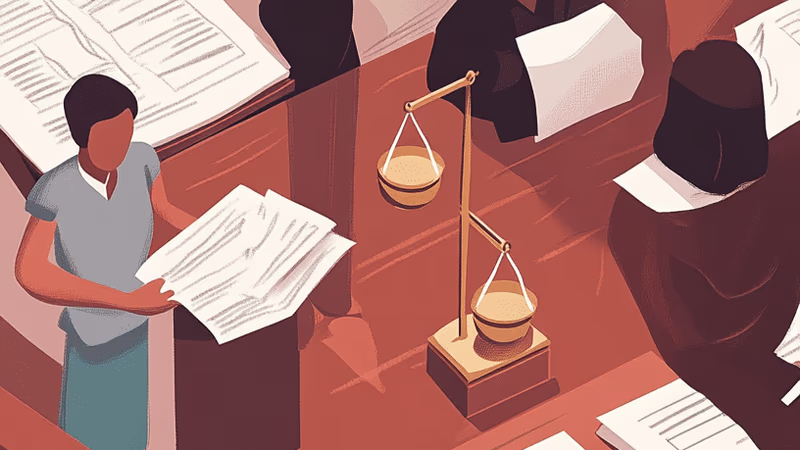
Short answer: Most employment lawsuits in New York resolve in 1 to 3 years. Quick settlements can wrap up in 6 months; complex cases with appeals can take 4+ years. The timeline depends on your case’s complexity, the court’s backlog, and how aggressively the employer fights.
How long does an employment lawsuit take? Employment disputes make up about 15% of civil cases in federal courts annually. If you’ve faced workplace discrimination, harassment, or wrongful termination, you’re likely wondering how long it might take to resolve your case. The answer depends on countless variables—from the complexity of your situation to courtroom backlogs. While no two cases follow identical timelines, understanding the general process can help you prepare mentally and financially for the road ahead.
At The Law Office of Jason Tenenbaum, P.C., we’ve helped many Long Island workers through employment disputes. One question we hear repeatedly: “When will this end?” Though timelines vary widely, we’ll walk through what typically happens at each stage and factors that could speed things up or slow them down.
Typical Employment Lawsuit Timeline
Here’s what a realistic timeline looks like for a New York employment case:
Free Consultation · No Fee Unless We Win
Does this apply to your situation?
Every case is different. Get a free, confidential case review from an experienced attorney who can tell you exactly where you stand.
Initial consultation + case evaluation
Meet with an attorney, review your situation
1–2 weeks
~2 wk total
EEOC/DHR filing + investigation
Government agency reviews your complaint
3–6 months
~6 mo total
Filing complaint in court
Formal lawsuit filed, employer notified
2–4 weeks
~7 mo total
Employer's response / motion to dismiss
Employer disputes claims or tries to end the case early
1–3 months
~10 mo total
Discovery (evidence exchange)
Longest phase — documents, depositions, interrogatories
6–12 months
~22 mo total
Summary judgment motions
Employer tries to win without trial
2–4 months
~26 mo total
Mediation / settlement talks
95% of cases settle here — structured negotiation
1–2 months
~28 mo total
Trial (if no settlement)
Jury or bench trial — witness testimony, evidence presented
1–4 weeks
~30 mo total
Appeals (if any)
Written arguments, possible oral arguments
1–3 years
3–5 yr total
Wondering where your case falls on this timeline? Every situation is different. Call (516) 750-0595 for a free, confidential evaluation — we’ll give you a realistic assessment of your case’s timeline and potential value.
Starting the Process
Case Evaluation and Filing
Your first step is meeting with an employment lawyer to review your situation. Most people schedule this consultation within weeks of the incident—whether it’s sudden termination, harassment, or unpaid wages. A skilled attorney will explain whether you have grounds for a claim and outline potential strategies.
If you move forward, you’ll likely need to file with a government agency before heading to court. For discrimination cases, this usually means submitting a complaint to the Equal Employment Opportunity Commission (EEOC) or the New York State Division of Human Rights. These agencies investigate claims under laws like the Civil Rights Act or Americans with Disabilities Act.
The EEOC’s review typically wraps up within six months, though timelines fluctuate. If they decide not to pursue your case, they’ll issue a “right to sue” letter. You’ll then have 90 days to file in federal court. Drafting and submitting the formal complaint usually takes a few weeks as your lawyer builds the legal framework for your claims.
Employer’s Response
Once filed, you must officially notify the employer (the defendant) about the lawsuit. This step—called “service of process”—generally takes 1-3 weeks. From there, the employer has 21-30 days to reply, depending on whether the case is in federal or state court.
Employers often respond in one of two ways:
- Answer the complaint: They dispute some or all allegations but agree to proceed.
- Motion to dismiss: They argue the case lacks legal merit, even if all facts presented are true.
Motions to dismiss add 2-3 months to the timeline while both sides submit arguments and await a judge’s ruling. If the motion fails, the case moves forward. If it succeeds, you might get a chance to amend your complaint or appeal.
Gathering Evidence: The Discovery Phase
What Happens During Discovery
Discovery—the evidence-gathering stage—often becomes the longest part of a lawsuit. Both sides exchange documents, answer written questions, and conduct interviews under oath. The goal? Prevent surprises at trial by revealing all cards early.
In employment cases, discovery usually lasts 6-12 months. Complex cases (think multiple witnesses or years of payroll records) can stretch longer. Disputes over what information must be shared often trigger delays, requiring court intervention.
Key Components of Discovery
- Document Requests: Employers might ask for emails, personnel files, or performance reviews. You could request internal policies or communications related to your claims.
- Written Questions (Interrogatories): Both parties answer queries about the case under penalty of perjury.
- Depositions: Face-to-face interviews where witnesses answer questions under oath. Your lawyer might depose supervisors, HR staff, or coworkers who saw key events.
- Admissions Requests: Asking the other side to confirm or deny specific facts to narrow disputed issues.
Why Delays Happen
Courts set discovery deadlines, but extensions are common. Employers might drag their feet producing records, or parties might clash over confidentiality. Since 2020, pandemic-related court backlogs have added time to many cases, though virtual hearings have eased some bottlenecks.
Dealing with a delay-heavy employer? Large corporations often use delay as a strategy, hoping you’ll give up or accept a lowball offer. An experienced employment attorney knows these tactics and how to counter them. Don’t go it alone — contact us for a free strategy session.
Settlement Talks and Pre-Trial Motions
The Summary Judgment Hurdle
After discovery, either side can file a motion for summary judgment, arguing the facts don’t support the other party’s case. Employers frequently use this tactic, hoping to avoid trial. Judges grant these motions more often in employment cases than other civil disputes.
This phase tacks on 2-4 months. If the motion succeeds, the case ends (unless appealed). If denied, the case heads toward trial—but settlement discussions often heat up here.
When Settlements Happen
Over 95% of employment cases settle before trial. Timing varies:
- Early Settlements: Occur when evidence strongly favors one side.
- Last-Minute Deals: Happen as trial nears and both sides weigh risks.
Mediation—a structured negotiation with a neutral facilitator—has become standard. Many courts require it before trial, adding 1-2 months to the timeline.
Going to Trial
Preparing for Court
If settlement talks fail, trial prep begins. Make sure you know what to wear to court and how to address the judge — both can affect how your case is perceived. Over 1-3 months, lawyers:
- Coach witnesses
- Organize evidence
- Draft opening/closing statements
- Plan jury selection strategies
Judges hold pretrial conferences to resolve evidence disputes and set ground rules.
Trial Length
Most employment trials last 3-10 days. Factors affecting duration:
- Number of witnesses
- Complexity of claims (e.g., technical expert testimony)
- Jury vs. bench trial
- Court scheduling quirks
Post-pandemic backlogs mean some courts take over a year to schedule trials after declaring a case “ready.”
After the Verdict
Appeals and Enforcement
Losing parties often appeal, adding 1-3+ years. The process involves:
- Filing a notice of appeal within 30 days
- Preparing trial records
- Submitting written arguments
- Possible oral arguments
Even if you win, collecting payment can drag on. Some employers delay through asset transfers or legal maneuvers, requiring garnishment orders or liens.
What Impacts Your Timeline
- Case Complexity: Multi-plaintiff suits or novel legal issues take longer.
- Court Delays: Urban courts and pandemic backlogs slow things down.
- Settlement Flexibility: Willingness to compromise speeds resolution.
- Attorney Efficiency: Lawyers who meet deadlines and avoid procedural missteps keep cases moving.
Real Cases, Real Timelines
While confidentiality prevents specifics, here’s what we’ve seen:
- Quick Resolution (6 months): A harassment case settled due to clear evidence like texts and witness accounts.
- Long Haul (3 years): An age discrimination case against a large corporation, involving 20+ depositions and a failed summary judgment motion.
- Admin Solution (9 months): A wage claim resolved through labor department investigations without filing suit.
Key Takeaways:
- Strong evidence accelerates outcomes
- Large employers often prolong battles
- Preparation prevents delays
Don’t Wait to Protect Your Rights
Most employment lawsuits resolve within 1-3 years. Complex cases or appeals can extend this further. While the process demands patience, skilled legal guidance helps manage stress and strategize effectively.
The most important thing you can do right now is preserve your evidence and understand your deadlines. Many employment claims have strict filing requirements — miss them and you lose your case, no matter how strong the facts.
If you’re considering legal action, call The Law Office of Jason Tenenbaum, P.C. at (516) 750-0595 or request a free consultation online. We’ll help you understand your timeline, evaluate your claim’s strength, and build a strategy that works. We handle employment cases on contingency — you pay nothing unless we win.
We represent employees across Nassau County, Suffolk County, Queens, Brooklyn, Manhattan, and all of New York.
This article provides general information, not legal advice. Consult an attorney about your specific situation.
Need Help?
- The Law Office of Jason Tenenbaum, P.C.: (516) 750-0595
- EEOC: www.eeoc.gov
- NY State Human Rights: dhr.ny.gov
Related Articles
- The Two-Front War (May 2026) — federal-state employment-law conflict for New York employers and workers
- DEI as a False Claims Act Trap — IBM’s $17M settlement and NY federal-contractor risk
- File a Lawsuit Against Your Employer
- First Steps to an Employment Lawsuit
- Employment Discrimination Lawyers Long Island | Law Office of Jason Tenenbaum
Watch: How Long Does a Lawsuit Take?
Legal Context
Why This Matters for Your Case
Employment law in New York provides some of the strongest worker protections in the nation. The New York State Human Rights Law (Executive Law §296) prohibits discrimination based on race, sex, age, disability, sexual orientation, gender identity, and other protected characteristics. The New York City Human Rights Law goes even further, applying a broader standard and covering more employers.
Federal protections under Title VII, the ADA, the ADEA, and the FLSA provide additional layers of protection. The Law Office of Jason Tenenbaum represents employees facing workplace discrimination, wrongful termination, wage theft, hostile work environments, and employer retaliation throughout Long Island, Nassau County, Suffolk County, and the five boroughs of New York City.
Whether your case involves EEOC filings, NYS Division of Human Rights complaints, or direct court action under CPLR Article 78, this article provides the expert legal analysis that workers and practitioners need to understand their rights and develop effective litigation strategies under current New York employment law.
About This Topic
New York Employment Law
New York has some of the strongest worker protections in the nation — from the NYC Human Rights Law to state-level whistleblower statutes. Whether you're dealing with discrimination, wage theft, wrongful termination, or hostile work environments, understanding your rights is the first step. Attorney Jason Tenenbaum represents employees across Long Island and NYC in federal and state employment claims.
78 published articles in Employment Law
Keep Reading
More Employment Law Analysis

EEOC Charge or New York Lawsuit? Which Path Is Worth More for a Discrimination Claim
An EEOC charge: Title VII, a 300-day clock, a damages cap. A New York Human Rights Law suit: no charge, no cap. The election of remedies, explained.
Oct 9, 2026
Document It or Lose It: Why the Personnel File Decides New York Discrimination Cases
The employer needs a legitimate reason with no nexus to your complaint, and it must be in the file. Labor Law § 210-b gives you that file from November 8, 2026.
Oct 8, 2026
Pre-Existing Injuries and Accident Claims: Know Your Rights
Learn how pre-existing conditions affect personal injury claims & get tips to protect your rights when filing a claim after an accident.
Dec 24, 2024
Construction Shift Cancelled? NY's New Reporting Pay Law
New York's Construction Reporting Pay Act, signed September 9, 2026: four hours' pay if you report and get sent home, two hours if a shift is cancelled late.
Sep 14, 2026
DEI as a False Claims Act Trap: IBM's $17M Settlement and What It Means for New York Federal Contractors
DOJ's Civil Rights Fraud Initiative (May 2025) and the April 10, 2026 IBM False Claims Act settlement: what NY federal contractors and whistleblowers face.
May 12, 2026
How NY Lawsuits are Reshaping the App Economy
New York lawsuits are transforming the gig economy by redefining worker classification for app drivers.
Sep 2, 2025Was this article helpful?
Disclaimer: This article is published by the Law Office of Jason Tenenbaum, P.C. for informational and educational purposes only. It does not constitute legal advice, and no attorney-client relationship is formed by reading this content. The legal principles discussed may not apply to your specific situation, and the law may have changed since this article was last updated.
New York law varies by jurisdiction — court decisions in one Appellate Division department may not be followed in another, and local court rules in Nassau County Supreme Court differ from those in Suffolk County Supreme Court, Kings County Civil Court, or Queens County Supreme Court. The Appellate Division, Second Department (which covers Long Island, Brooklyn, Queens, and Staten Island) and the Appellate Term (which hears appeals from lower courts) each have distinct procedural requirements and precedents that affect litigation strategy.
If you need legal help with a employment law matter, contact our office at (516) 750-0595 for a free consultation. We serve clients throughout Long Island (Huntington, Babylon, Islip, Brookhaven, Smithtown, Riverhead, Southampton, East Hampton), Nassau County (Hempstead, Garden City, Mineola, Great Neck, Manhasset, Freeport, Long Beach, Rockville Centre, Valley Stream, Westbury, Hicksville, Massapequa), Suffolk County (Hauppauge, Deer Park, Bay Shore, Central Islip, Patchogue, Brentwood), Queens, Brooklyn, Manhattan, the Bronx, Staten Island, and Westchester County. Prior results do not guarantee a similar outcome.