Key Takeaway
A device sold as an e-bike that exceeds New York's limits is a motor vehicle. Who pays the person it hits, what the seller faces, and what the owner risks.
This article is part of our ongoing personal injury coverage, with 183 published articles analyzing personal injury issues across New York State. Attorney Jason Tenenbaum brings 24+ years of hands-on experience to this analysis, drawing from his work on more than 1,000 appeals, over 100,000 no-fault cases, and recovery of over $100 million for clients throughout Nassau County, Suffolk County, Queens, Brooklyn, Manhattan, and the Bronx. For personalized legal advice about how these principles apply to your specific situation, contact our Long Island office at (516) 750-0595 for a free consultation.
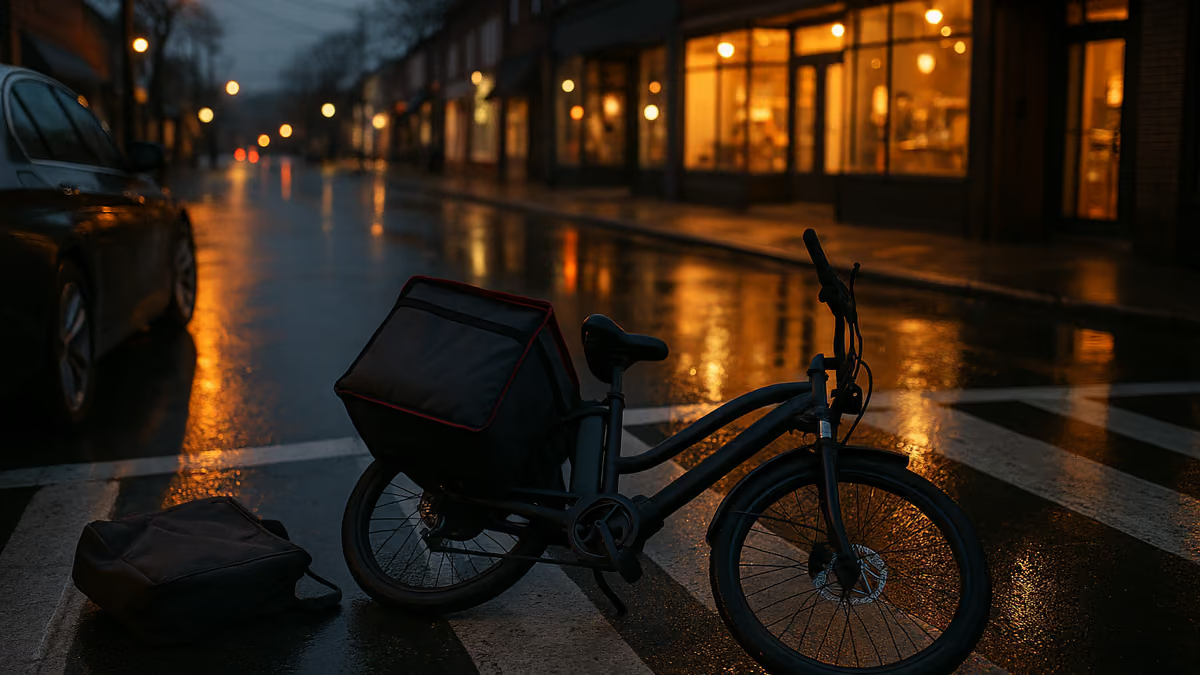
Take a hypothetical. A home health aide is crossing New York Avenue in Huntington Station with the signal when a fat-tire machine with pedals and a throttle comes off the shoulder and knocks the aide down. The rider borrowed it from a neighbor, who bought it online. The listing called it an “e-bike.” The handlebar screen reads 38 miles per hour. It carries no plate and no insurance.
Who pays starts with what that machine is, and New York law decides that by its motor and its speed, not by the word the seller used. Our Long Island electric scooter and e-bike accident lawyer page covers lawful e-bikes. This post covers the other machine: the one sold as an e-bike that the law treats as a motor vehicle. It is general information, not advice about any one claim.
The short version
A lawful e-bike has a motor under 750 watts, operable pedals, and assistance that stops at 20 mph (25 for class three, which exists only in a city of one million or more). Past those limits it is a motor vehicle on the road, whatever the listing said, and the Attorney General's July 31, 2026 consumer alert says selling one as an e-bike violates New York law. If one hits you on foot or on a bicycle, look to the auto policy in your household, to MVAIC if there is none, and to the rider and the owner. The seller rules mostly carry fines. Tonight: photograph the machine, its label or the place one should be, and its speed screen, and save the listing.
When an “e-bike” is legally a motor vehicle
New York defines a “bicycle with electric assist” in Vehicle and Traffic Law § 102-c, and the definition is narrow: no more than 36 inches wide, a motor “of less than seven hundred fifty watts,” operable pedals, and one of three classes. Classes one and two stop assisting at 20 miles per hour. Class three assists to 25, and it exists “Solely within a city having a population of one million or more.” Vehicle and Traffic Law § 125 defines “motor vehicle” as a vehicle “operated or driven upon a public highway” by any power other than muscle, and then excludes a lawful e-bike. A machine that fits no class gets no exclusion.
The Attorney General said the same thing in plain terms on July 31, 2026, after deadly crashes in the city: “Two-wheeled electric-powered vehicles that travel beyond those speed limits are not e-bikes or e-scooters under New York law. They may be e-motos, mopeds, or motorcycles that are subject to additional registration, licensing, and insurance requirements.” The ladder below shows where each machine lands.
Free Case Review
Tell us what happened — free case review
Time-sensitive: NY injury claims have strict deadlines
Details received. The fastest next step is a call.
Injury cases are won early. Evidence fades, witnesses move, and New York's no-fault rules can require paperwork within 30 days of a crash. Don't wait for a callback. Call now and a real person takes your information: our office during business hours, and our intake line after hours and on weekends, answered 24/7.
Call (631) 349-3928Free Consultation · Nothing is filed or shared until you decide
Can't call right now? We'll reach out during business hours.
Statute at a glance
E-bike, moped or motorcycle: where New York draws the lines
- Class one and class two e-bike (Vehicle and Traffic Law § 102-c(a), (b))
- Motor under 750 watts, operable pedals, no more than 36 inches wide. Class one "ceases to provide assistance" at 20 mph; class two has a throttle and is "not capable of providing assistance" at 20 mph. Not a motor vehicle (§ 125); no registration or insurance.
- Class three e-bike (§ 102-c(c))
- Same limits, assistance to 25 mph, but only "Solely within a city having a population of one million or more." Riding one outside such a city "is prohibited" (§ 1242(10)), with a civil fine of not more than $50 (§ 1242(12)). Whether a 25 mph bike on Long Island is an e-bike ridden unlawfully or a motor vehicle, the statutes leave open; a machine past 25 mph or at 750 watts is outside every class.
- Class C limited use motorcycle, the moped (§ 121-b)
- Two or three wheels and a seat, "maximum performance speed of not more than twenty miles per hour." DMV: registration required, any license class, insurance recommended; right-hand lane or shoulder except to turn left (§ 2262(1)). The financial security article does not apply to class C (§ 2265(3)).
- Class B limited use motorcycle (§ 121-b)
- "More than twenty miles per hour but not more than thirty." DMV: registration and insurance required, any license class, right-hand lane or shoulder except when preparing for a left turn (§ 2262(1)).
- Class A limited use motorcycle (§ 121-b)
- "More than thirty miles per hour but not more than forty." DMV: class M or MJ license, registration, insurance and inspection required.
- Over 40 mph (§§ 121-c, 123, 410)
- A limited use vehicle has a maximum performance speed "of not more than forty miles per hour." Above that, a two-wheeled machine with a seat is a motorcycle, and no motorcycle may be driven on a public highway without registration under § 410.
- Who sets the speed (§ 122-b, DMV)
- Maximum performance speed is the speed "certified by the manufacturer and filed with and accepted by the commissioner," and it "shall remain as certified regardless of any modification." DMV: "Only a certified model of limited use motorcycle can get a registration." An uncertified machine cannot be registered as a moped, but it is still a motor vehicle if it fits no exception in § 125.
Definitions quoted from the Vehicle and Traffic Law; license, insurance and inspection rules from the DMV moped page, retrieved October 22, 2026.
Consequently, the machine in the Huntington Station crosswalk is a motor vehicle, ridden without the plate the law requires. Whether its model could ever have been registered is a question for the evidence, not the listing.
Why the listing does not decide it
On and after June 1, 2022, Vehicle and Traffic Law § 1242(11)(a) bars anyone “engaged in the business of selling or leasing” e-bikes from selling one unless a manufacturer’s label is “permanently affixed thereto, in a prominent location,” stating “the class, maximum motor-assisted speed, and motor wattage.” The Attorney General’s alert adds that businesses “cannot advertise or sell vehicles that are intended to be modified to exceed legal limits” and that “converting one for illegal use, or selling one without the required label is illegal under New York law.”
Two practical points follow. First, a missing label is evidence. A machine an e-bike dealer sold in New York on or after June 1, 2022 without one was either sold unlawfully or was never an e-bike. Second, an “unlocked” or “off-road” mode does not help the owner. Class two is defined as a bike “not capable of providing assistance” at 20 miles per hour, so in my reading a mode that lifts the cap is the very capability the definition excludes. The question is what the machine does, and a screen that reads 38 miles per hour is strong evidence of it.
So the first thing you need to look at in any of these files is the machine, not the name on the box. And the fact that it says e-bike decides nothing. Take a photograph of the label on the frame. If there’s no label, well, that’s also a fact because a business cannot lawfully sell an e-bike without one. Write down the top speed shown on the screen and the wattage on the motor. And finally, save the listing and receipt before the seller has a chance to change anything.
Who pays the person it hits
Once the machine is a motor vehicle, payers that do not exist for a lawful e-bike come into the case. The flow below is the order to check them.
Who pays when an e-moto hits you on foot or on a bicycle
Start at step 1 and keep going; more than one payer can apply.
Step 1
Was it a lawful e-bike?
Yes (under 750 watts, assist stops at its class speed): no auto policy and no MVAIC; the claim is negligence against the rider. No: it is a motor vehicle (Vehicle and Traffic Law § 125). Go to step 2. No label: establish the wattage and top speed, then decide.
Step 2
Is there an auto policy in your household?
Yes: it pays first-party benefits to "The named insured and members of his household" for loss from "an uninsured motor vehicle or motorcycle" (Insurance Law § 5103(a)(2)), where the machine is one the law requires to be insured (a class A or B moped, or a motorcycle; Article 51 leaves out vehicles not required to carry financial security, § 5102(f)). Its uninsured motorist coverage reaches "an unregistered vehicle" (§ 3420(f)(1)), with pain and suffering for a covered person only on a serious injury. No: go to step 3.
Step 3
No policy at home: MVAIC
A New York resident who is not "an insured" is a "qualified person" (Insurance Law § 5202(b)). Rider and owner identified: affidavit within 180 days (§ 5208(a)(1)). Identity "unascertainable": police report within 24 hours unless that was not reasonably possible, and affidavit within 90 days (§ 5208(a)(2)). An unpaid judgment is paid at most $25,000 for injury to one person (§ 5210(a)(1)).
Step 4
The people: rider and owner
The rider answers in negligence. The owner of a lent machine is liable for "any person using or operating the same with the permission, express or implied, of such owner" (Vehicle and Traffic Law § 388(1)). Sue within three years (CPLR 214(5)). A rider and owner with no insurance often have little to collect, which is why steps 2 and 3 come first.
The household policy is the payer most people overlook. The aide may not own a car, but the statute counts “a spouse, child or relative of the named insured who regularly resides in his household,” so an aide living with a relative who insures a car is covered, and that policy then pays first-party benefits for medical bills and lost earnings. Whether its uninsured motorist coverage also reaches the aide turns on how the policy defines “insured”; get the declarations page and the endorsement first.
MVAIC is the fallback. Because its definition of “qualified person” leaves out “an insured,” a person with a household policy goes to that policy first; the ATV and dirt bike guide walks through the MVAIC filing.
The owner matters because the rider often has nothing. Under § 388, a neighbor who lends an e-moto stands where a neighbor who lends a car stands; a neighbor who lends a lawful e-bike does not, because § 388 borrows the § 125 definition. In my judgment that one fact decides the borrowed-machine case, which is why the label photograph comes first. Consequently, the aide’s claim runs against the rider and the neighbor, with the household policy, if there is one, paying the bills while it is pending.
Can you sue the seller?
For each rule that reaches the seller, two questions decide what it is worth to an injured person: who enforces it, and can a person sue on it for damages? The card answers both from the text of each statute.
The seller rules
The rules that reach a business selling e-bikes and e-motos in New York, and which ones give you a lawsuit
- The label rule (Vehicle and Traffic Law § 1242(11)(a))
- No business may sell or lease an e-bike after June 1, 2022 without a permanent manufacturer's label stating "the class, maximum motor-assisted speed, and motor wattage." It governs the sale of e-bikes; a machine that is not an e-bike is reached by the advertising rules below. Enforcement: no enforcer is named and § 1242 states no seller penalty, so the general traffic-infraction fine appears to apply, not more than $150 on a first conviction (§ 1800(b)(1)). Lawsuit for damages: none in the text.
- The sticker rule (General Business Law § 391-cc)
- A retailer must supply an adhesive notice: "NOTICE: Always yield to pedestrians and follow traffic laws. Riding on the sidewalk may be illegal; consult local laws." Enforcement: a fine of not more than $250 per stocking unit for a first offense and not more than $1,000 per stocking unit for each later one; the section names no enforcer, and the Department of State writes its rules. Limited use motorcycles and anything that can be registered are outside it. Lawsuit for damages: none in the text.
- Registration at the point of sale (Vehicle and Traffic Law § 2261(6))
- "Every limited use motorcycle ... sold by a dealer shall be registered at the time of sale." DMV dates the rule from January 7, 2025. Enforcement: none stated in the section. Lawsuit for damages: none in the text.
- Deceptive acts (General Business Law § 349)
- Enforcement: the Attorney General may sue to enjoin and for restitution (§ 349(b)). Lawsuit: "any person who has been injured by reason of any deceptive act or deceptive practice" may recover "actual damages or fifty dollars, whichever is greater," up to three times actual damages capped at $1,000 for a willful or knowing violation, and the court may award reasonable attorney's fees (§ 349(h)).
- False advertising (General Business Law §§ 350, 350-a)
- "False advertising" includes "labeling" that is "misleading in a material respect." Enforcement: a civil penalty of not more than $5,000 per violation in an action by the Attorney General (§ 350-d(a)). Lawsuit: actual damages or $500, whichever is greater, up to three times actual damages capped at $10,000 for a willful or knowing violation, and the court may award reasonable attorney's fees (§ 350-e(3)).
- Where to report a seller
- The Attorney General takes complaints through the online complaint form named in the July 31, 2026 alert.
People ask me whether they can sue the store that sold it. Well, look at what each rule does. The label rule and the sticker rule are enforced through fines. The Attorney General enforces the deceptive practices law. And that law also allows a person injured by a deceptive act to file a lawsuit for actual damages or fifty dollars, whichever amount is greater. So I ask myself this question: what are your damages? Who pays for them? For the pedestrian, it’s going to be the rider, the owner, the uninsured motorist coverage on a policy in your household, and MVAIC if there is no policy.
The buyer who was told “e-bike” and sold a motor vehicle is the person § 349(h) most plainly describes. Whether a pedestrian who never saw the listing is a person “injured by reason of” the deception is a question the text of § 349(h) does not answer, and this post does not guess at it. A defect in the machine itself (a throttle that sticks, brakes that fail, a battery that ignites) is a different claim against the maker and the seller, covered on our product liability page.
For the person it hit, the seller’s violation is therefore first of all evidence of what the machine was.
If you bought one, or you were riding it
An e-moto owner owns a motor vehicle. No limited use vehicle may be operated on a public highway unless it is registered and its plates are displayed (Vehicle and Traffic Law § 2261(1)), and no one under 16 may apply. The financial security article applies to class A and class B mopeds. Under § 319, an owner who operates an uninsured motor vehicle, or lets someone else do so, commits a traffic infraction punishable by a fine of $150 to $1,500 or up to 15 days, plus a $750 civil penalty.
A rider who owns an uninsured e-moto is not a “qualified person” for MVAIC, because the definition leaves out “the owner of an uninsured motor vehicle.” Hit by a car, the rider of a machine the law requires to be insured (a class A or B moped) is an occupant of “another motor vehicle,” outside the car’s first-party benefits under § 5103(a)(1); for a class C or uncertified machine the statutes do not settle it. The rider’s own lawsuit against the driver still exists, under the fault-first rules our NYC e-bike bills post summarizes, but the 2026 tort reform added a cap.
Insurance Law § 5104(d), in effect for actions commenced on or after May 26, 2026, limits recovery for non-economic loss to $100,000 for a serious injury when the injured person “is at fault, is not barred from recovery by section fourteen hundred eleven of the civil practice law and rules, and was (1) operating an uninsured motor vehicle and responsible under article six of the vehicle and traffic law for insuring such motor vehicle.” Death cases and lapses shorter than 30 days are carved out. Article six does not apply to class C, so the prong reaches the owner-rider of a machine that had to be insured, such as a class A or B moped.
So you bought one of these for yourself or for your child. Well, here’s what you need to know. Under the law, it is a motor vehicle. It needs a registration and a plate. And the faster classes require insurance. So ride uninsured, get hurt, and you’re outside MVAIC as the owner of an uninsured motor vehicle. And if you are partly at fault, the 2026 law limits your pain and suffering to $100,000. So register it if the model can be registered. If not, then park it.
What to save this week
Evidence about the machine disappears fastest: the police may hold it, and an owner may sell it. Bring these to the first call.
- Photographs of the machine: the motor, the frame label or the place one should be, the throttle, the speed screen, the rear fender where a plate should be.
- The listing, saved as a PDF or screenshots with the date, and the receipt or order confirmation if the owner will share it.
- The police report number, and the names of the rider and the owner.
- The declarations page of every auto policy in your household.
- Medical records and the dates of every missed day of work.
Back to the crosswalk in Huntington Station
The aide was hit by a motor vehicle that a seller called an e-bike. The household policy or MVAIC carries the bills, the rider and the lending neighbor answer for the injury, and the seller’s mislabel goes to the Attorney General and into the evidence file. Our guide to who pays after a Long Island e-bike crash covers the lawful-device case and Suffolk’s local rules, and our Long Island uninsured motorist lawyer page covers the household-policy claim in depth.
Sources
- New York Vehicle and Traffic Law § 102-c, Bicycle with electric assist
- New York Vehicle and Traffic Law § 121-b, Limited use motorcycle
- New York Vehicle and Traffic Law § 121-c, Limited use vehicle
- New York Vehicle and Traffic Law § 122-b, Maximum performance speed
- New York Vehicle and Traffic Law § 123, Motorcycle
- New York Vehicle and Traffic Law § 125, Motor vehicle
- New York Vehicle and Traffic Law § 319, Penalties
- New York Vehicle and Traffic Law § 388, Negligence in use or operation of vehicle attributable to owner
- New York Vehicle and Traffic Law § 410, Registration of motorcycles
- New York Vehicle and Traffic Law § 1242, Additional provisions applicable to bicycles with electric assist
- New York Vehicle and Traffic Law § 1800, Penalties for traffic infractions
- New York Vehicle and Traffic Law § 2261, Registration (limited use vehicles)
- New York Vehicle and Traffic Law § 2262, Limitations on registrations
- New York Vehicle and Traffic Law § 2265, Equipment, inspection and insurance
- New York General Business Law § 349, Unfair, deceptive, or abusive acts and practices unlawful
- New York General Business Law § 350-a, False advertising
- New York General Business Law § 350-d, Civil penalty
- New York General Business Law § 350-e, Construction
- New York General Business Law § 391-cc, Sale of bicycles with electric assist and micromobility devices
- New York Insurance Law § 3420, Liability insurance; standard provisions
- New York Insurance Law § 5103, Entitlement to first party benefits
- New York Insurance Law § 5104, Causes of action for personal injury
- New York Insurance Law § 5202, Definitions (MVAIC)
- New York Insurance Law § 5208, Notice of claim (MVAIC)
- New York Insurance Law § 5210, Application for payment of judgment (MVAIC)
- New York CPLR 214, Actions to be commenced within three years
- New York Attorney General, consumer alert on e-bike and e-scooter safety requirements, July 31, 2026
- NY DMV, Register a Limited Use Motorcycle (Moped)
- NY DMV, Electric Scooters and Bicycles and other Unregistered Vehicles
A listing is the seller’s version of what the machine is. The motor, the speed and the statute decide it. Our personal injury practice handles the claim against the rider, the owner and the insurers.
If a machine sold as an e-bike hit you or your child on Long Island, call (516) 750-0595 with the photographs of the machine and the declarations page of your household auto policy, or request a free case review.
Legal Context
Why This Matters for Your Case
Personal injury law in New York is governed by a complex web of statutes, case law, and procedural rules that differ from most other states. The statute of limitations for most personal injury claims is three years under CPLR 214(5), but claims against municipalities require a Notice of Claim within 90 days. Motor vehicle accident victims must meet the serious injury threshold under Insurance Law §5102(d) before they can recover pain and suffering damages.
The Law Office of Jason Tenenbaum has recovered over $100 million for injured clients across Long Island, Nassau County, Suffolk County, Queens, Brooklyn, Manhattan, and the Bronx. With 24+ years of trial and appellate experience, more than 1,000 appeals written, and 2,600+ published legal articles, Jason Tenenbaum provides the authoritative legal analysis that practitioners and injury victims need to understand their rights.
This article reflects real courtroom experience and a deep understanding of how New York courts actually evaluate personal injury claims — from the initial filing through discovery, summary judgment, trial, and appeal.
About This Topic
New York Personal Injury Law
When negligence causes serious injury, New York law entitles victims to compensation for medical bills, lost income, pain and suffering, and more. From car accidents and slip-and-falls to construction injuries and medical malpractice, the Law Office of Jason Tenenbaum has recovered over $100 million for injured Long Islanders and New Yorkers since 2002.
183 published articles in Personal Injury
Keep Reading
More Personal Injury Analysis
NYC's Pending E-Bike Bills: What They Would Change for People Hurt in a Crash
NYC heard 23 e-bike and delivery bills on September 30, 2026. What each text would change for hurt pedestrians and riders, and the law that applies today.
Oct 21, 2026
New York's Scaffold Law in the 2027 Budget: What Happens If Labor Law 240 Changes, and What Happens If It Doesn't
Labor Law 240 and the 2027 New York budget: what each side argues, the bills on file, and what each possible outcome would change.
Oct 19, 2026
Government Vehicle Car Accident in New York: How to Sue the Government
Hit by a police car, LIRR vehicle, MTA bus, county truck, or any government vehicle in New York?
Apr 5, 2026
4th of July Accidents
Learn about common 4th of July accidents in NY including fireworks injuries, grill burns, and drowning risks.
Jul 2, 2025
Is Your NY Insurer Acting in Bad Faith?
Learn how insurers commit bad faith under NY's No-Fault Law and how to fight denied claims with legal strategies.
Feb 25, 2025
Hospital Self-Insurance: Primary or Excess? Kolli v Kaleida
Court of Appeals hears Kolli v Kaleida Health Sept. 15, 2026: does a hospital self-insurance plan cover an on-call doctor? Does it pay before or after MLMIC?
Sep 20, 2026Frequently Asked Questions
Common Questions About This Topic
6 answers from the firm's New York personal-injury and employment-law practice. Click any question to expand.
Who pays if I'm hit by an e-bike that was really an e-moto in New York?
Start with the auto policy in your household: where the machine is one the law requires to be insured, it pays first-party benefits, and its uninsured motorist coverage can apply. MVAIC applies if your household has no policy. The rider and, for a lent machine, the owner are liable too.
Is an e-bike over 750 watts legal in New York?
Not as an e-bike. Vehicle and Traffic Law § 102-c requires a motor of less than 750 watts, so a machine at or above that is a motor vehicle on the road that needs registration, and DMV registers only certified models.
Can I sue the store that sold an illegal e-bike?
The buyer who was deceived can: General Business Law § 349(h) allows actual damages or $50, whichever is greater, and § 350-e(3) allows actual damages or $500 for false advertising, and the court may award fees. Whether a pedestrian who never saw the listing can use those sections, the text does not say. The label and sticker rules carry fines only.
Does my car insurance cover me if an uninsured e-moto hits me while I'm walking?
It is the first place to look. The policy pays first-party benefits to the named insured and household members for loss from an uninsured motor vehicle the law requires to be insured, and its uninsured motorist coverage reaches an unregistered vehicle, subject to the policy's definition of "insured."
Is a class 3 e-bike legal on Long Island?
No. Class three exists "Solely within a city having a population of one million or more," and riding one outside such a city is prohibited, with a fine of up to $50. A bike that goes past 25 mph or has a motor of 750 watts or more is not an e-bike anywhere in the state.
What happens if I ride an unregistered e-moto and a car hits me?
You can still sue the driver, subject to the bar on a rider more at fault than the driver. If the machine is one you had to insure, the car's policy does not pay you first-party benefits, and as its owner you cannot claim against MVAIC. For actions commenced on or after May 26, 2026, an owner who was at fault but not barred is capped at $100,000 in non-economic damages for a serious injury, except in a death case.
Was this article helpful?
Disclaimer: This article is published by the Law Office of Jason Tenenbaum, P.C. for informational and educational purposes only. It does not constitute legal advice, and no attorney-client relationship is formed by reading this content. The legal principles discussed may not apply to your specific situation, and the law may have changed since this article was last updated.
New York law varies by jurisdiction — court decisions in one Appellate Division department may not be followed in another, and local court rules in Nassau County Supreme Court differ from those in Suffolk County Supreme Court, Kings County Civil Court, or Queens County Supreme Court. The Appellate Division, Second Department (which covers Long Island, Brooklyn, Queens, and Staten Island) and the Appellate Term (which hears appeals from lower courts) each have distinct procedural requirements and precedents that affect litigation strategy.
If you need legal help with a personal injury matter, contact our office at (516) 750-0595 for a free consultation. We serve clients throughout Long Island (Huntington, Babylon, Islip, Brookhaven, Smithtown, Riverhead, Southampton, East Hampton), Nassau County (Hempstead, Garden City, Mineola, Great Neck, Manhasset, Freeport, Long Beach, Rockville Centre, Valley Stream, Westbury, Hicksville, Massapequa), Suffolk County (Hauppauge, Deer Park, Bay Shore, Central Islip, Patchogue, Brentwood), Queens, Brooklyn, Manhattan, the Bronx, Staten Island, and Westchester County. Prior results do not guarantee a similar outcome.