Key Takeaway
NYC's e-bike bills were heard September 30, 2026 and laid over. What Int 994, the class 3 bans and the tracking bills would change if you are hurt.
This article is part of our ongoing personal injury coverage, with 182 published articles analyzing personal injury issues across New York State. Attorney Jason Tenenbaum brings 24+ years of hands-on experience to this analysis, drawing from his work on more than 1,000 appeals, over 100,000 no-fault cases, and recovery of over $100 million for clients throughout Nassau County, Suffolk County, Queens, Brooklyn, Manhattan, and the Bronx. For personalized legal advice about how these principles apply to your specific situation, contact our Long Island office at (516) 750-0595 for a free consultation.
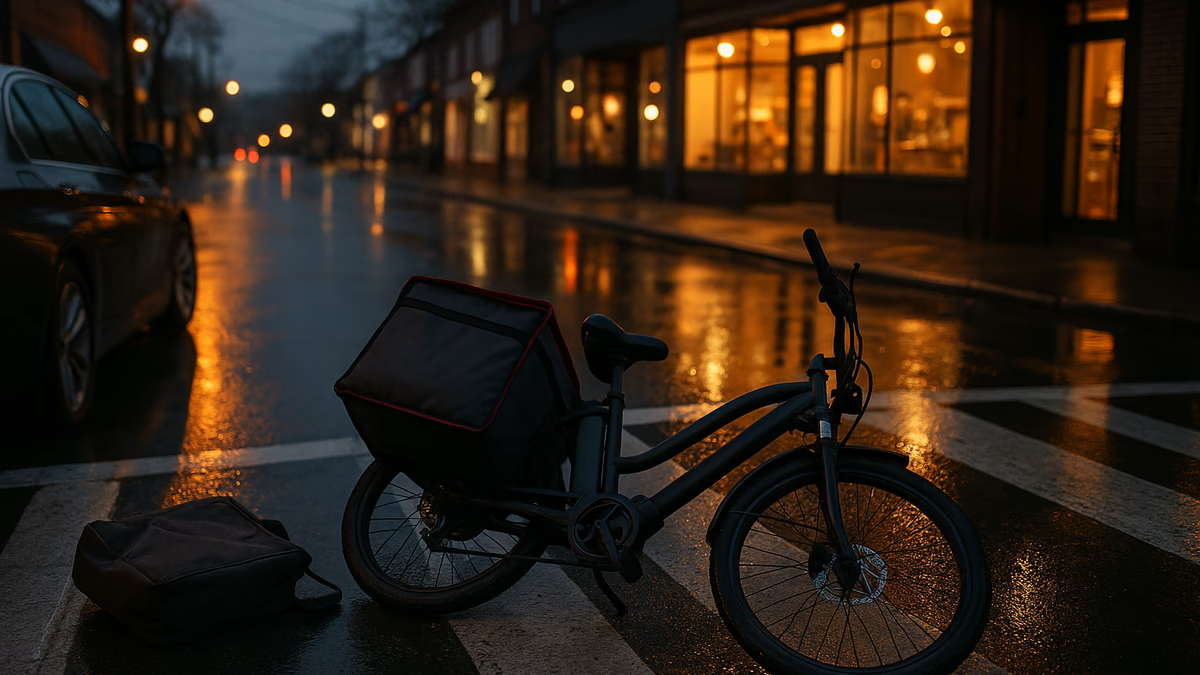
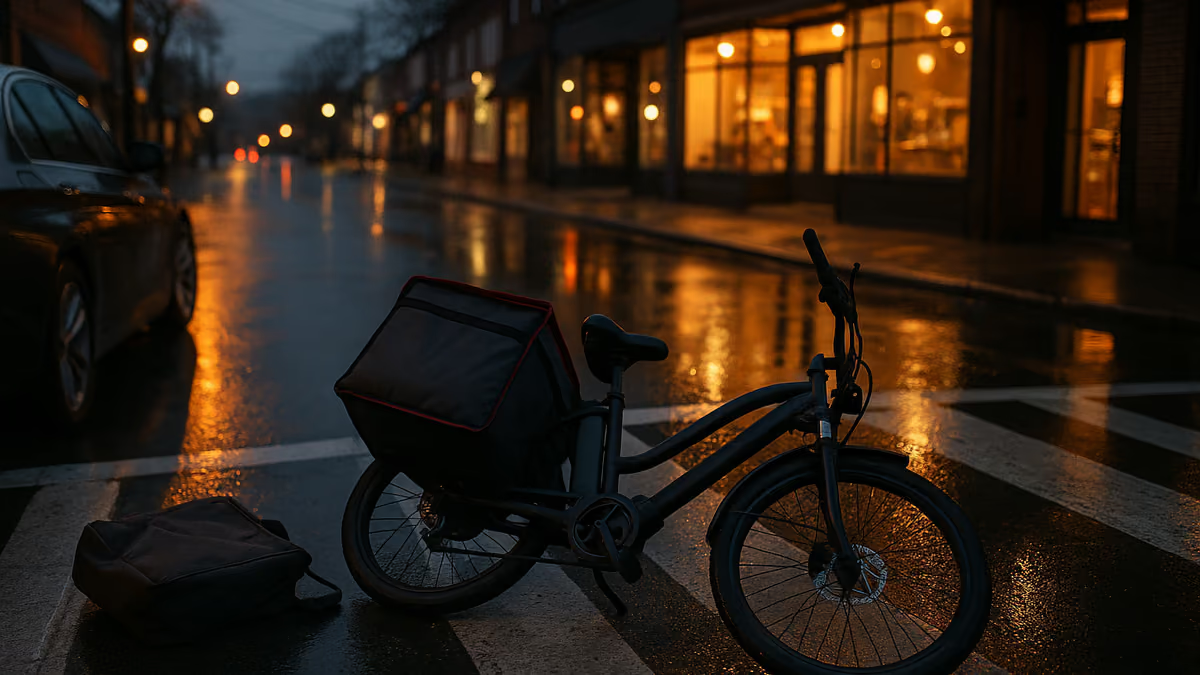
Take a commuter from Massapequa who walks from Penn Station to work on Second Avenue. At East 34th Street, with the walk signal, a delivery e-bike comes through the crosswalk and knocks the commuter down. The rider is working for an app, the frame label says class three, and nobody in the commuter’s household owns a car.
On September 30, 2026, three New York City Council committees held a joint hearing on 23 bills and resolutions about e-bikes, e-scooters, mopeds and delivery apps. One of them, Int 994, would change the answer to the question the commuter’s family asks first, which is who pays. None of them is law. This post reads each text for what it would change for a pedestrian or rider hurt in an e-bike crash, beside the rule that decides that claim today, which our guide to who pays after a Long Island e-bike crash lays out statute by statute.
The short version
Every item heard on September 30, 2026 was laid over in committee without a vote; none is law. The bill aimed most directly at injured people is Int 994, which would require app-based food delivery services to carry liability insurance of at least $100,000 per person and $300,000 per accident for crashes arising out of a delivery worker's operation of an e-bike or similar device during a trip or while on call. Int 244 would end the sale and rental of class three e-bikes in the city, and Int 1110 would later bar riding them. Other bills would require trip, tracking and crash records. Today, a pedestrian hit by a lawful e-bike has no first-party benefits and no MVAIC claim; the claim is negligence against the rider, and against the rider's employer where the rider was an employee on the job.
What happened at the September 30 hearing
The Committees on Transportation and Infrastructure, Consumer and Worker Protection, and Public Safety met jointly at City Hall. The Council’s press release that day described “a record 23 legislative proposals,” and Speaker Julie Menin said that what the Council hears “will directly inform the package of legislation this Council moves forward.”
Legistar records the introduced items as “Hearing Held by Committee” and “Laid Over by Committee” on September 30, 2026; a bill laid over stays in committee without a vote. Three items heard in advance, Int 1102, Int 1110 and Int 1120, were laid over the same way and formally introduced at the October 8, 2026 stated meeting. As of October 14, 2026, no committee agenda on Legistar lists any of the 23 items for a vote.
Free Case Review
Tell us what happened — free case review
Time-sensitive: NY injury claims have strict deadlines
Details received. The fastest next step is a call.
Injury cases are won early. Evidence fades, witnesses move, and New York's no-fault rules can require paperwork within 30 days of a crash. Don't wait for a callback. Call now and a real person takes your information: our office during business hours, and our intake line after hours and on weekends, answered 24/7.
Call (631) 349-3928Free Consultation · Nothing is filed or shared until you decide
Can't call right now? We'll reach out during business hours.
The committee report, citing NYPD data through September 20, 2026, counts 738 e-bike rider injuries and 13 deaths this year, against 601 and 10 over the same period of 2025; drawing on a 2024 Comptroller’s report on 2020 to 2023, it notes that in fatal e-bike crashes “the majority of fatalities were the e-bike riders themselves.”
Who pays today, before any of these bills
None of the bills amends the state law that already decides who pays. Vehicle and Traffic Law § 125 excepts “bicycles with electric assist as defined in section one hundred two-c of this article” from “motor vehicle,” and the no-fault, MVAIC and owner-liability statutes all borrow that definition. The working rules:
- A pedestrian hit by a lawful e-bike has no first-party benefits from the bike and no MVAIC claim. The claim is negligence against the rider and, under the general rule that an employer answers for an employee acting within the scope of the job, the employer.
- An e-bike rider hit by a car collects first-party benefits from the car’s insurer under Insurance Law § 5103(a)(1), which pays “Persons, other than occupants of another motor vehicle or a motorcycle.” A rider on a lawful e-bike is neither.
- A device over the state limits (750 watts or more, or assist past its class speed) is a motor vehicle: its owner answers for a permissive rider, and if it is uninsured a pedestrian it hits can claim against MVAIC.
So the first question that’s asked in every one of these files is not who’s at fault, but what kind of machine is it? Photograph the motor label because the machine decides what statute applies and which insurance carrier, if any, is involved in the case. A lawful e-bike has no no-fault policy. The pedestrian that gets hit by a lawful e-bike in a crosswalk has no first-party benefits from any auto policy and has no claim against MVAIC. It’s just negligence against the rider of the bike, as well as the employer if the person was an employee on the job.
For the commuter on Second Avenue, that means a negligence claim against the rider and, if the rider was the app’s employee, against the app. Whether an app-based delivery worker is an employee is contested; our guide to the 2026 e-bike crackdown covers that fight. Whether any insurer stands behind the rider is the next question to answer.
The insurance bill: Int 994
Int 994, sponsored by Council Member Gale Brewer with five co-sponsors and introduced August 13, 2026, would add an insurance section to the city’s licensing law for third-party food delivery services. The operative sentence: a service that engages a worker who uses a delivery device “shall maintain an insurance policy providing liability coverage for injury or death of any person, and damage to or destruction of any property, where liability for such injury or death of a person, or damage to or destruction of property, arises out of a food delivery worker’s operation of a delivery device during trip time or on-call time.”
The minimums are $100,000 for injury or death to one person, $300,000 for all persons in one accident with no more than $100,000 each, and $50,000 for property damage. “On-call time” is time the worker is logged in and available for offers, so the coverage would reach a worker riding between orders. If the policy lapses “for any reason,” the service’s license “shall become void.”
The text does not say whose liability the policy must insure, the service’s, the worker’s or both. It does not make the service liable for the worker’s negligence, and it says nothing about how an injured person would reach the policy. Its “delivery device” excludes “any vehicle that is capable of being registered with the New York state department of motor vehicles,” so a moped delivery is outside it.
A companion bill, Int 110 (Council Member Selvena Brooks-Powers), would bar a delivery business from requiring its riders “to indemnify or hold harmless such business for any claims” arising from their deliveries.
The commuter’s claim, today and under Int 994:
Today (state law, no city insurance rule)
A defendant, and maybe no insurer
- Negligence claim against the rider.
- The app answers for the rider only if the rider was its employee acting within the scope of the job, which the app will contest.
- A lawful e-bike, including a class three bike in the city, is not a "motor vehicle" (Vehicle and Traffic Law § 125(e)): no first-party benefits from the bike, no MVAIC.
- The rider's own homeowner's or renter's liability policy, where one exists and its terms reach the crash.
- The license application for a delivery app lists four items today (Admin. Code § 20-563.1(b)); none is insurance.
If Int 994 became law as written
A policy behind the app, with open questions
- The app "shall maintain" liability coverage for injury, death and property damage arising out of the worker's operation of a delivery device during trip time or on-call time.
- Minimums: $100,000 one person; $300,000 one accident (no more than $100,000 each); $50,000 property damage.
- Proof of the policy with the license application; a lapsed policy voids the license.
- Not in the text: whose liability the policy insures, or how an injured person reaches it.
- Mopeds and anything that can be registered with the DMV are outside "delivery device."
A bill is not a law. These bills had a hearing on September 30, 2026, the committees laid them over, and nobody voted. So these are just proposals that have not become law. If you were hurt today, today’s law applies to your case. So read the bills for what they would change if they became law, but then build the claim on what the statute says now.
The class three bills: Int 244 and Int 1110
Vehicle and Traffic Law § 102-c(c) describes a bicycle with electric assist whose motor “may be used exclusively to propel such bicycle” and “is not capable of providing assistance when such bicycle reaches a speed of twenty-five miles per hour,” and the class exists “Solely within a city having a population of one million or more.” Consequently, in New York City a class three bike is outside “motor vehicle” today.
Int 244, sponsored by Council Member Crystal Hudson with 26 co-sponsors, in conjunction with the Manhattan Borough President, goes to the seller. No person could “distribute, sell, lease, rent or offer for sale, lease, or rental” a class three e-bike in the city. The penalty is $0 for a first violation and up to $2,000 for each later one within two years.
Int 1110, also Hudson’s, goes to the rider: “No person shall operate a class three bicycle with electric assist on streets or in parks and other public places in the city of New York.” Before April 1, 2029, a rider would get a warning instead of a notice of violation; after that, penalties run from $0 to $100, and on a third or later violation a bike ridden in a way that endangered the rider or others may be impounded. The bill would take effect 24 months after it became law.
Both bills amend the city’s Administrative Code; neither amends § 102-c or § 125, the definitions the insurance statutes borrow. Once Int 1110 took effect, a class three rider hit by a car would be riding in violation of a city law, even in the years when the text calls for a warning instead of a penalty. A defendant could offer that on fault, and in an action against a driver CPLR 1411(b) bars a rider whose share of the fault is greater than the driver’s.
On Long Island the same bike is already a different machine. Class three exists only in a city of a million people or more, so a throttle e-bike that assists to 25 miles per hour fits none of § 102-c’s classes in Nassau or Suffolk and, under the analysis in our Suffolk guide, has no exception from “motor vehicle” there today.
Records, street design and shared fleets
Three bills would make delivery apps track or report data, and a fourth adds a check. Int 78 (Brewer) would send the city per-trip data, including GPS “data points” showing “the route taken by the delivery worker.” Int 1120 (Council Member Lincoln Restler) would have apps track e-bike and moped workers for speeding, wrong-way and sidewalk riding. Int 1021 (Majority Leader Shaun Abreu) would require an annual report of every delivery incident “that resulted in death or serious injury,” and Int 389 (Restler) would require apps to verify moped registrations. The reports would go to the city, and none of the texts addresses access by a person hurt in a crash.
Five more put duties on city agencies and share-system operators: calming devices in bike lanes at no fewer than 50 intersections (Int 1066, Council Member Julie Won), rules of the road shown to share users (Int 214, Council Member Shahana Hanif), shared e-bikes and e-scooters that “gradually decelerate” to a stop on a sidewalk (Int 1102, Abreu), and crash data (Int 1052 and Int 989). The texts are silent on whether breaching those duties supports an injury claim. Today, the practical point is to identify the app or share system quickly, because that is where any record of the trip lives.
The 23 items, read for the injured
The table lists every item heard on September 30, 2026 that bears on a crash claim.
NYC Council, joint hearing of September 30, 2026
The NYC e-bike bills, read for people hurt in a crash
Status of every item: heard September 30, 2026 and laid over in committee, no vote. Int 1102, 1110 and 1120 were introduced October 8, 2026. All are proposals. Effective dates run from the day a bill becomes law unless the row says otherwise.
| Bill (prime sponsor) | What the text would do | What it would change for an injured person | Takes effect |
|---|---|---|---|
| Int 994 (Brewer) | Delivery apps must keep liability insurance for injury, death and property damage arising out of a worker's operation of a delivery device during trip or on-call time: $100,000 / $300,000 / $50,000. A lapse voids the license. | A policy behind the app. The text does not say whose liability it insures or how an injured person reaches it. Mopeds excluded. | 180 days |
| Int 110 (Brooks-Powers) | Extends the commercial delivery rules to every "delivery device," mopeds and motorcycles included; bars a business from requiring its operators to indemnify it for claims arising from deliveries. | The business could not shift crash claims onto the rider by contract. | Tied to a 2025 delivery-licensing bill (Int 1448 of 2025) |
| Int 244 (Hudson) | No sale, lease, rental or offer of a class three e-bike. $0 first violation; up to $2,000 each later one within two years, per stock keeping unit. | Fewer new class three bikes on city streets. State definitions unchanged. | 180 days |
| Int 1110 (Hudson) | No operating a class three e-bike on streets, in parks or other public places. Warnings only before April 1, 2029; then $0, up to $50, up to $100; impound on the third tier for endangering riding. | Riding class three becomes a city violation a defendant could offer on fault (and, against a driver, toward the CPLR 1411(b) bar). Vehicle and Traffic Law §§ 102-c and 125 unchanged. | 24 months |
| Int 78 (Brewer) | Per-trip data to the city: worker ID, order, pickup and drop-off times, time allowed, GPS route, device type. | A trip record on file with the city. Silent on access by injured people. | Tied to a 2025 delivery-licensing bill (Int 1448 of 2025) |
| Int 1120 (Restler) | Apps track e-bike and moped workers for speeding, and for wrong-way or sidewalk riding over 4 mph; real-time alerts; no offers after 3 alerts in 7 days until a DOT course; quarterly reports. | An alert history per worker inside the app; reports to the city are counts. | 180 days |
| Int 1021 (Abreu) | Safety plan with the license application; annual report of each delivery incident resulting in death or serious injury (date, time, borough, GPS location, device, description, discipline). | A yearly incident record at the city, personal information removed. | 120 days |
| Int 389 (Restler) | No moped delivery unless the app verified the moped's registration under Vehicle and Traffic Law § 2261. | Moped deliveries on registered mopeds only. | 60 days |
| Int 1066 (Won) | Traffic calming devices in bike lanes at 50 or more intersections within a year; study; report at two to two and a half years. | Duties run to DOT. No new claim in the text. | Immediately |
| Int 214 (Hanif) | Share operators show the rules of the road before activation (new users, then yearly) and at stations. | Duties run to the operator. No new claim in the text. | Immediately (120 days and 1 year to comply) |
| Int 1102 (Abreu) | Shared e-bikes and e-scooters detect sidewalk riding and slow to a stop until off the sidewalk. $0, then up to $1,000. | Duties run to the operator. No new claim in the text. | 1 year |
| Int 989 (Abreu) | Monthly bike-share incident data to DOT (collision, location, speed, injury, fatality); public report every six months. | Public data on shared-bike crashes. | 60 days |
| Int 1052 (Paladino) | City crash data broken out by micromobility device type and class; interactive map updated at least monthly. | Public data on where and how e-bike crashes happen. | Immediately |
| Res 43 and Res 44 (Brewer) | Ask Albany to pass the Commercial E-Bike Licensing Act (S.7587/A.7833) and A.1679/S.561, raising the penalties for leaving the scene of an accident involving an e-scooter, and to add e-bikes. | None by themselves. A resolution is not a law. | No effect |
| Also heard | Int 95 (moped buyer information at sale), Int 787 (NYPD enforcement reporting), Int 950 (licensing extended to delivery services generally), Int 985 (e-bike trade-in program), Int 986 (dynamometer testing), Int 988 (advertising of registrable vehicles as e-bikes), Int 1004 (pedestrian safety), Int 1069 (safe delivery times). | Indirect. Read with the bills above. | Varies |
The clocks the bills would start
Each bill carries its own effective-date clause, and each clock starts only on the day the bill becomes law. None has.
If they became law
When the main e-bike bills would start to bite
- 180days Int 994 insurance, Int 244 sale ban, Int 1120 trackingEach takes effect 180 days after it becomes law. Int 994's policy then has to be in force for the app to hold its license.
- 1year Int 1102 sidewalk detection; Int 1066 bike-lane calmingInt 1102 takes effect one year after it becomes law. Int 1066 takes effect at once and gives DOT one year to install the devices.
- 24months Int 1110 class three riding banTakes effect 24 months after it becomes law.
- 4/1/29date in text Int 1110 penalties beginA rider who violates the ban before April 1, 2029 "shall not be issued a notice of violation but shall be issued a warning." Penalties apply on or after that date.
What to do if you were hurt in an e-bike crash now
The clocks that run today are state law: three years to sue for negligence under CPLR 214(5), and, if the city is a defendant, a notice of claim within 90 days under General Municipal Law § 50-e and suit within one year and 90 days under § 50-i. If the device was over-spec and the rider fled, the MVAIC deadlines are short; our hit-and-run settlement guide covers them.
Don’t wait for the police report to tell you what the bike was like. Take a picture of it before it’s picked up: the motor, the label on the frame, the throttle, the spot where there should be a plate. Write down the name of the app that’s on the bag or the phone mount. That photograph is your first piece of evidence.
Bring these to the first call:
- The photograph of the bike, its motor label and the place where a plate would be.
- The name of the app or business the rider was working for, from the bag, the box or the phone.
- The police report number.
- The emergency room discharge papers.
- The declarations page of any auto policy in your household.
Battery fires: see our e-bike battery fire guide.
Before you call
By the end of the first week, the commuter from Massapequa has a photograph of the class three label, the app’s name off the cargo box, a police report number and an emergency room record. Under today’s law that is a negligence claim against the rider and, if the rider was the app’s employee, the app. Int 994 would add an app policy; it is not law, so the claim is built on what exists. Our pedestrian accident and electric scooter accident pages cover the rest.
If a delivery e-bike hit you in the city or on Long Island, or a car hit you while you were riding one, call (516) 750-0595 or request a free case review with the photograph of the bike’s label in hand.
Sources
- New York City Council, press release, New York City Council Highlights Proposed E-Bike Legislation Ahead of Major Hearing (September 30, 2026)
- New York City Council, Legistar: Int 0994-2026, Int 0110-2026, Int 0244-2026, Int 1110-2026, Int 0078-2026, Int 1120-2026, Int 1021-2026, Int 0389-2026, Int 1066-2026, Int 0214-2026, Int 1102-2026, Int 0989-2026, Int 1052-2026, Res 0043-2026, Res 0044-2026
- Vehicle and Traffic Law § 102-c, § 125, § 388
- Insurance Law § 5103, § 5202
- CPLR § 214, § 1411; General Municipal Law § 50-e, § 50-i
This article is general information about New York law and pending New York City legislation, not legal advice, and does not create an attorney-client relationship.
Legal Context
Why This Matters for Your Case
Personal injury law in New York is governed by a complex web of statutes, case law, and procedural rules that differ from most other states. The statute of limitations for most personal injury claims is three years under CPLR 214(5), but claims against municipalities require a Notice of Claim within 90 days. Motor vehicle accident victims must meet the serious injury threshold under Insurance Law §5102(d) before they can recover pain and suffering damages.
The Law Office of Jason Tenenbaum has recovered over $100 million for injured clients across Long Island, Nassau County, Suffolk County, Queens, Brooklyn, Manhattan, and the Bronx. With 24+ years of trial and appellate experience, more than 1,000 appeals written, and 2,600+ published legal articles, Jason Tenenbaum provides the authoritative legal analysis that practitioners and injury victims need to understand their rights.
This article reflects real courtroom experience and a deep understanding of how New York courts actually evaluate personal injury claims — from the initial filing through discovery, summary judgment, trial, and appeal.
About This Topic
New York Personal Injury Law
When negligence causes serious injury, New York law entitles victims to compensation for medical bills, lost income, pain and suffering, and more. From car accidents and slip-and-falls to construction injuries and medical malpractice, the Law Office of Jason Tenenbaum has recovered over $100 million for injured Long Islanders and New Yorkers since 2002.
182 published articles in Personal Injury
Keep Reading
More Personal Injury Analysis

New York's Scaffold Law in the 2027 Budget: What Happens If Labor Law 240 Changes, and What Happens If It Doesn't
Labor Law 240 and the 2027 New York budget: what each side argues, the bills on file, and what each possible outcome would change.
Oct 19, 2026
Nassau Police Ordered to Pay $34,690.50 in FOIL Fees: What Meyer Means After a Crash
The Second Department raised a FOIL fee award against the Nassau County Police Department from $12,000 to $34,690.50. The statute, the math, and the FOIL clock.
Oct 8, 2026
How Nassau County Settles Lawsuits: 62 Resolutions, One Published Dollar Figure, and a Records Request
Every Nassau County settlement resolution of 2025 and 2026, coded by meeting, court and caption: who approves them, what the record shows and what it hides.
Oct 1, 2026
$8 Million Yonkers Verdict Highlights Municipal Liability for Truck Accidents in New York
Recent $8 million Westchester verdict against City of Yonkers shows how municipalities face substantial liability when their vehicles cause accidents.
Apr 13, 2026
Serious Injury Threshold Reversed in Prado v. Harrison
A New York appellate decision shows why the serious-injury threshold and the defense's prima facie burden decide whether a car accident injury case survives.
Dec 10, 2025
How Long Does a Personal Injury Lawsuit Take?
How long does a personal injury lawsuit take? Expert injury attorneys at The Law Office of Jason Tenenbaum explain.
Mar 18, 2025Frequently Asked Questions
Common Questions About This Topic
5 answers from the firm's New York personal-injury and employment-law practice. Click any question to expand.
Did the NYC Council pass the e-bike bills?
No. The committees heard all 23 items on September 30, 2026 and laid them over without a vote. None is law.
Would Int 994 make a delivery app pay if its rider hits me?
It would require the app to carry a liability policy ($100,000 per person, $300,000 per accident) for crashes during a trip or on-call time, but it does not say whose liability the policy covers. It is a proposal.
Is a class 3 e-bike legal in New York City?
Yes, today. Vehicle and Traffic Law § 102-c(c) recognizes class three bikes, assisted to 25 miles per hour, solely in a city of one million or more; in the city they remain subject to the 15 mile per hour limit for e-bikes. Int 244 and Int 1110 would end their sale and their use; both are proposals.
Do NYC's e-bike bills apply on Long Island?
No. They would amend New York City's Administrative Code only. On Long Island the class three category does not exist, and in Suffolk the county's 2026 local laws add riding rules to the state's.
Who pays if a delivery e-bike hits me in New York City today?
The rider, and the rider's employer if the rider was an employee on the job. A lawful e-bike brings no first-party benefits and no MVAIC claim; an uninsured over-spec device may open MVAIC, on short deadlines.
Was this article helpful?
Disclaimer: This article is published by the Law Office of Jason Tenenbaum, P.C. for informational and educational purposes only. It does not constitute legal advice, and no attorney-client relationship is formed by reading this content. The legal principles discussed may not apply to your specific situation, and the law may have changed since this article was last updated.
New York law varies by jurisdiction — court decisions in one Appellate Division department may not be followed in another, and local court rules in Nassau County Supreme Court differ from those in Suffolk County Supreme Court, Kings County Civil Court, or Queens County Supreme Court. The Appellate Division, Second Department (which covers Long Island, Brooklyn, Queens, and Staten Island) and the Appellate Term (which hears appeals from lower courts) each have distinct procedural requirements and precedents that affect litigation strategy.
If you need legal help with a personal injury matter, contact our office at (516) 750-0595 for a free consultation. We serve clients throughout Long Island (Huntington, Babylon, Islip, Brookhaven, Smithtown, Riverhead, Southampton, East Hampton), Nassau County (Hempstead, Garden City, Mineola, Great Neck, Manhasset, Freeport, Long Beach, Rockville Centre, Valley Stream, Westbury, Hicksville, Massapequa), Suffolk County (Hauppauge, Deer Park, Bay Shore, Central Islip, Patchogue, Brentwood), Queens, Brooklyn, Manhattan, the Bronx, Staten Island, and Westchester County. Prior results do not guarantee a similar outcome.