Key Takeaway
Learn about wrongful termination in Long Island: legal protections, steps to take, and how to fight back against unfair dismissal.
This article is part of our ongoing employment law coverage, with 83 published articles analyzing employment law issues across New York State. Attorney Jason Tenenbaum brings 24+ years of hands-on experience to this analysis, drawing from his work on more than 1,000 appeals, over 100,000 no-fault cases, and recovery of over $100 million for clients throughout Nassau County, Suffolk County, Queens, Brooklyn, Manhattan, and the Bronx. For personalized legal advice about how these principles apply to your specific situation, contact our Long Island office at (516) 750-0595 for a free consultation.
Disclaimer: This article provides general information on wrongful termination only and should not be considered legal advice. For guidance specific to your situation, consult with a qualified employment discrimination attorney.
Table of Contents
- The Reality of Wrongful Termination
- Legal Foundations That Protect Workers
- Identifying Unlawful Termination
- The Power of Documentation
- Available Legal Solutions
- Actions to Take After Suspected Wrongful Termination
- Setting the Record Straight: Wrongful Termination Facts
- Wrongful Termination’s Ripple Effects
- Smart Practices for Employers
- Professional Legal Support Matters
- Selecting Your Legal Advocate
- Taking Action
- Get Help Today
Free Consultation · No Fee Unless We Win
Does this apply to your situation?
Every case is different. Get a free, confidential case review from an experienced attorney who can tell you exactly where you stand.
The Reality of Wrongful Termination
Employment termination cases in Long Island and throughout New York State present complex legal challenges. Though New York follows at-will employment principles – allowing employers to fire workers without stating a reason – significant legal safeguards exist to protect employees from discriminatory dismissal. Recent data reveals a striking 27% increase in workplace discrimination claims across Long Island since 2018, emphasizing why workers must understand their legal rights.
Legal Foundations That Protect Workers
Several key laws establish the framework for wrongful termination protection:
- Title VII of the Civil Rights Act of 1964
- The New York State Human Rights Law
- The Americans with Disabilities Act (ADA)
- The Age Discrimination in Employment Act (ADEA)
- Local Long Island employment regulations
Legal precedents continue strengthening these protections. A recent Nassau County case exemplifies this trend – in 2023, a jury awarded $2.1 million to an employee fired after reporting safety violations, demonstrating how courts actively defend worker rights.
Identifying Unlawful Termination
Knowing when a termination violates the law helps protect your employment rights. Key red flags include:
Discrimination-Based Firing
Terminations that target protected characteristics:
- Race, color, or national origin
- Gender or sexual orientation
- Age (40+)
- Religious beliefs
- Disability status
- Pregnancy
Retaliatory Dismissal
Firings that punish employees for:
- Submitting workplace complaints
- Cooperating with investigations
- Exposing illegal activities
- Using legal rights
A recent Suffolk County case highlights these protections. An employee fired after reporting sexual harassment won substantial compensation and prompted company-wide policy reforms.
The Power of Documentation
Strong documentation serves as a crucial defense against wrongful termination. Essential records include:
- Email exchanges with managers and HR
- Performance assessments
- Formal complaint records
- Witness statements
- Detailed notes of significant workplace interactions
Available Legal Solutions
Victims of wrongful termination may qualify for several remedies:
- Job reinstatement
- Lost wages compensation
- Future salary compensation
- Emotional distress damages
- Punitive damages for severe violations
- Legal fee reimbursement
Long Island courts have shown willingness to grant substantial awards in clear-cut discrimination cases.
Actions to Take After Suspected Wrongful Termination
- Record Everything
- Archive relevant digital communications
- Create an event timeline
- Gather discrimination evidence
- Review Legal Rights
- Read employment agreements
- Study workplace policies
- Learn applicable regulations
- Submit Internal Reports
- Follow company complaint procedures
- Document all HR communications
- Keep records of all submissions
- Get Legal Help
- Meet with an employment attorney
- Learn filing deadlines
- Review legal strategies
Setting the Record Straight: Wrongful Termination Facts
Several misconceptions surround employment law:
- At-will employment still prohibits illegal firing practices
- Spoken agreements sometimes carry legal weight
- Forced resignations may qualify as wrongful termination
- Subtle discrimination violates the law just like obvious bias
Wrongful Termination’s Ripple Effects
Job loss from wrongful termination creates widespread impacts:
Financial Consequences
- Income disruption
- Lost benefits
- Missed promotions
- Healthcare gaps
Personal Toll
- Mental strain
- Damaged professional standing
- Family pressure
- Psychological impact
Smart Practices for Employers
Forward-thinking employers protect themselves by:
- Establishing clear firing protocols
- Conducting discrimination prevention training
- Managing thorough employee records
- Getting expert legal guidance
- Developing fair complaint systems
Professional Legal Support Matters
Expert legal representation delivers critical advantages:
- Case strength assessment
- Legal process management
- Employer negotiations
- Courtroom advocacy
- Maximum compensation pursuit
Selecting Your Legal Advocate
Key factors in choosing an employment attorney:
- Relevant case history
- Proven results
- Local legal expertise
- Clear communication style
- Adequate firm resources
Taking Action
Quick action matters in wrongful termination cases. The Law Office of Jason Tenenbaum, P.C. represents employment discrimination cases throughout Long Island. Drawing on deep federal and state law knowledge, the firm fights vigorously for worker rights and fair treatment.
The firm combines strong advocacy with individual client attention, recognizing both the emotional burden and financial strain of losing a job unfairly.
Get Help Today
Schedule a private consultation with The Law Office of Jason Tenenbaum, P.C. to discuss your case. The firm’s convenient Long Island location serves clients across the region, focusing on protecting rights and securing fair compensation.
Related Articles
Legal Context
Why This Matters for Your Case
Employment law in New York provides some of the strongest worker protections in the nation. The New York State Human Rights Law (Executive Law §296) prohibits discrimination based on race, sex, age, disability, sexual orientation, gender identity, and other protected characteristics. The New York City Human Rights Law goes even further, applying a broader standard and covering more employers.
Federal protections under Title VII, the ADA, the ADEA, and the FLSA provide additional layers of protection. The Law Office of Jason Tenenbaum represents employees facing workplace discrimination, wrongful termination, wage theft, hostile work environments, and employer retaliation throughout Long Island, Nassau County, Suffolk County, and the five boroughs of New York City.
Whether your case involves EEOC filings, NYS Division of Human Rights complaints, or direct court action under CPLR Article 78, this article provides the expert legal analysis that workers and practitioners need to understand their rights and develop effective litigation strategies under current New York employment law.
About This Topic
New York Employment Law
New York has some of the strongest worker protections in the nation — from the NYC Human Rights Law to state-level whistleblower statutes. Whether you're dealing with discrimination, wage theft, wrongful termination, or hostile work environments, understanding your rights is the first step. Attorney Jason Tenenbaum represents employees across Long Island and NYC in federal and state employment claims.
83 published articles in Employment Law
Keep Reading
More Employment Law Analysis
Laid Off After a Merger in New York? Severance, WARN and Discrimination Rights
A group layoff release must give 45 days, 7 days to revoke and a list of ages. What a missing list means, when WARN pays, and where age claims start.
Oct 22, 2026
No Small-Business Exemption: Which New York Employment Laws Cover a One-Employee Business
Title VII starts at 15 employees. New York's Human Rights Law starts at one. Which state laws reach the smallest employers, and where size still counts.
Oct 15, 2026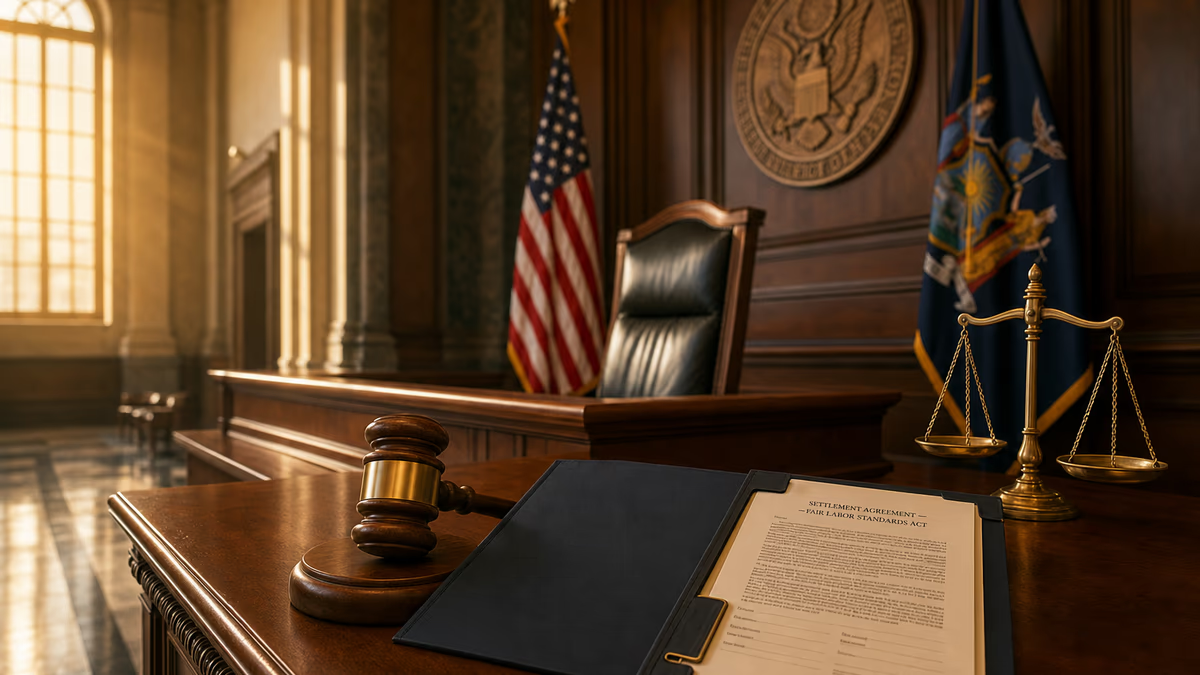
Cheeks Fairness Hearings (2026): How FLSA Settlements Get Approved (or Rejected) in the Second Circuit
Cheeks v. Freeport Pancake House (2d Cir. 2015): why an FLSA settlement needs court or DOL approval, what Fisher and Yu v. Hasaki hold, and how to draft one.
May 20, 2026
How NY Lawsuits are Reshaping the App Economy
New York lawsuits are transforming the gig economy by redefining worker classification for app drivers.
Sep 2, 2025
Pre-Existing Injuries and Accident Claims: Know Your Rights
Learn how pre-existing conditions affect personal injury claims & get tips to protect your rights when filing a claim after an accident.
Dec 24, 2024
New York's Personnel File Law: What Employers Must Change Before November 8
Labor Law § 210-b takes effect November 8, 2026. Jason Tenenbaum's Law360 analysis of what every New York employer now owes: notice, copies, retention.
Sep 28, 2026Was this article helpful?
Disclaimer: This article is published by the Law Office of Jason Tenenbaum, P.C. for informational and educational purposes only. It does not constitute legal advice, and no attorney-client relationship is formed by reading this content. The legal principles discussed may not apply to your specific situation, and the law may have changed since this article was last updated.
New York law varies by jurisdiction — court decisions in one Appellate Division department may not be followed in another, and local court rules in Nassau County Supreme Court differ from those in Suffolk County Supreme Court, Kings County Civil Court, or Queens County Supreme Court. The Appellate Division, Second Department (which covers Long Island, Brooklyn, Queens, and Staten Island) and the Appellate Term (which hears appeals from lower courts) each have distinct procedural requirements and precedents that affect litigation strategy.
If you need legal help with a employment law matter, contact our office at (516) 750-0595 for a free consultation. We serve clients throughout Long Island (Huntington, Babylon, Islip, Brookhaven, Smithtown, Riverhead, Southampton, East Hampton), Nassau County (Hempstead, Garden City, Mineola, Great Neck, Manhasset, Freeport, Long Beach, Rockville Centre, Valley Stream, Westbury, Hicksville, Massapequa), Suffolk County (Hauppauge, Deer Park, Bay Shore, Central Islip, Patchogue, Brentwood), Queens, Brooklyn, Manhattan, the Bronx, Staten Island, and Westchester County. Prior results do not guarantee a similar outcome.