Key Takeaway
New York lawsuits are transforming the gig economy by redefining worker classification for app drivers.
This article is part of our ongoing employment law coverage, with 84 published articles analyzing employment law issues across New York State. Attorney Jason Tenenbaum brings 24+ years of hands-on experience to this analysis, drawing from his work on more than 1,000 appeals, over 100,000 no-fault cases, and recovery of over $100 million for clients throughout Nassau County, Suffolk County, Queens, Brooklyn, Manhattan, and the Bronx. For personalized legal advice about how these principles apply to your specific situation, contact our Long Island office at (516) 750-0595 for a free consultation.
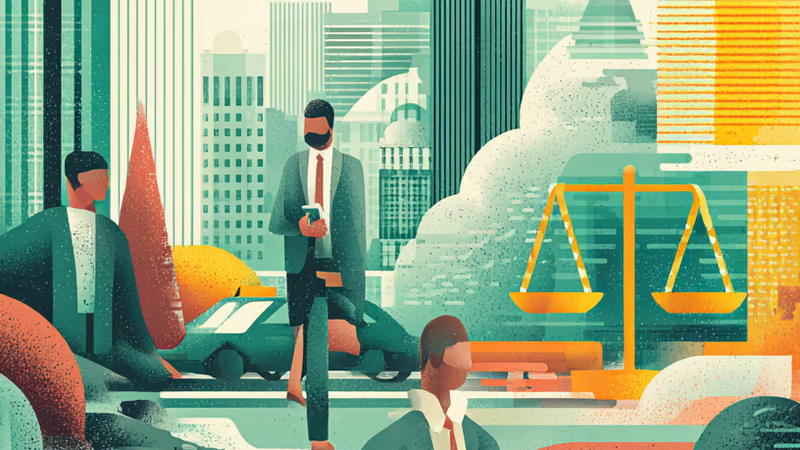
Introduction: The Gig Economy Revolution and Legal Challenges
Over the past decade, the gig economy has changed how New Yorkers commute, order meals, and get around. Platforms like Uber, Lyft, and DoorDash now compete with traditional taxis and public transit. The New York State Department of Labor reports that more than 200,000 drivers do rideshare or delivery work across the state. Most of them work within New York City.
This rapid growth has sparked major legal disputes around one key question: should app-based drivers be classified as independent contractors or employees? The answer has big effects on wages, benefits, and workplace protections. Recent high-profile cases keep reshaping worker rights in New York. Both employees and employers should watch these legal changes closely.
The Legal Landscape: Worker Classification at the Heart of the Debate
At the core of New York’s gig economy litigation is the question of worker classification. The state uses the ABC test. This test looks at three things: how much control a company has over a worker, whether the work falls outside the company’s normal business, and whether the worker runs their own independent trade. Under this test, many app-based drivers count as employees, not independent contractors.
The Fair Labor Standards Act sets federal baseline protections. But New York adds stricter rules that often clash with platform companies’ positions. When workers are wrongly labeled as independent contractors, they lose key protections. These include minimum wage, overtime pay, and employer health insurance. They also cannot collect unemployment benefits. This hurts most during slow periods from seasonal dips, bad weather, or economic downturns.
Free Consultation · No Fee Unless We Win
Does this apply to your situation?
Every case is different. Get a free, confidential case review from an experienced attorney who can tell you exactly where you stand.
Platform companies say the independent contractor model gives workers flexibility. Workers argue the setup strips them of basic labor protections. This tension remains one of the most actively litigated issues in New York employment law.
Major Gig Economy Lawsuits in New York: Case Studies and Outcomes
Several landmark lawsuits have shaped the rules for gig work in New York. In 2016, a group of drivers filed a class action against Uber. They claimed misclassification as independent contractors denied them tips and expense paybacks. The case ended in a multi-million-dollar settlement and set key precedents for the industry. DoorDash faced a similar lawsuit in 2020 over pay disputes. That case also ended with a large settlement for affected workers.
Not all claims succeed, though. Many platform contracts include mandatory arbitration clauses. These force workers to resolve disputes alone rather than through group litigation. Still, class action lawsuits remain a strong tool. They combine individual claims into cases with major financial risk for platform companies. Lyft’s most recent New York settlement addressed overtime shortfalls and required better pay transparency.
Case outcomes vary widely. Some courts have sided with drivers, especially when evidence shows the platform controls routing, sets performance targets, and dictates work rules. Other courts have upheld the independent contractor label based on drivers’ flexible schedules. Together, these decisions are pushing the gig economy to change.
Key Legal Issues and Driver Rights Violations
Wage and Hour Violations
Wage and hour disputes are the most common claims from gig economy drivers. Many say that after paying for fuel, car upkeep, and insurance, their real hourly pay falls below minimum wage. Platforms usually don’t track work time the way traditional employers must. This leads to frequent fights over unpaid overtime. Drivers also seek payback for vehicle costs that push their take-home pay below legal minimums.
Benefits and Protections
Whether a worker counts as an employee or independent contractor controls what benefits they get. Employees receive workers’ comp for on-the-job injuries, unemployment insurance when work dries up, and other legal protections. Independent contractors get none of these. Some platforms now offer voluntary benefit programs. But the coverage — especially for healthcare and paid time off — falls far short of what employees receive under New York law.
Safety and Working Conditions
Driver safety is a growing concern. Reports of assaults and dangerous conditions have risen in New York City. Rules require background checks for drivers, but enforcement varies by platform. Drivers must maintain their own vehicles, yet platforms set the safety and performance standards. Courts have started to address these safety gaps directly. This is especially true for drivers who work overnight shifts and face higher risks.
The Role of Legal Representation and Class Action Litigation
Experienced employment attorneys play a key role in holding platform companies accountable. They review data from app logs, trip records, and driver journals to build strong cases. These cases often prove misclassification, wage theft, and other violations. Class action lawsuits work well here because they let workers take on well-funded companies on a more level playing field. Many attorneys handle these cases on contingency. That means workers pay no fees unless their claim wins.
In New York, The Law Office of Jason Tenenbaum, P.C. represents drivers and gig workers in employment and personal injury matters. Drivers who believe their rights have been violated can contact the firm at 516-750-0595 for a consultation. Beyond securing relief for individual clients, class action litigation drives systemic change — establishing precedents that benefit workers across the industry.
Legislative and Regulatory Responses
New York lawmakers have responded to gig economy concerns with targeted legislation. In 2018, New York City implemented minimum pay standards for app-based drivers, guaranteeing $17.22 per hour after expenses — the first regulation of its kind in the nation. At the state level, proposed legislation continues to seek broader reclassification of gig workers and enhanced labor protections.
These efforts fit a growing national trend. California’s Assembly Bill 5 (AB5) expanded employee classification rules before voters changed the law through Proposition 22. At the federal level, the PRO Act would boost union rights for gig workers. But no broad federal law has passed yet. Without a national framework, states keep building their own rules. New York’s push to tackle workforce challenges puts the state at the front of this changing area of law.
Future Outlook: What’s Next for Gig Worker Rights
Litigation involving gig economy platforms shows no signs of slowing. As drivers become more organized and advocacy groups such as the Independent Drivers Guild gain influence, the volume and sophistication of legal challenges are likely to increase. Some platforms may respond by developing hybrid employment models that offer certain benefits while preserving elements of contractor-style flexibility.
These developments have the potential to reshape New York’s labor market in fundamental ways. If conflicts between state and federal standards continue to escalate, the United States Supreme Court may ultimately be called upon to resolve the underlying classification questions — a decision that would have nationwide implications.
Conclusion: Balancing Innovation with Worker Protection
The wave of gig economy litigation in New York has exposed systemic issues including worker misclassification, wage deficiencies, and inadequate safety protections. Court decisions and settlements are already forcing platform companies to reevaluate their practices, and legislative efforts continue to strengthen the legal framework governing this sector.
Gig workers who suspect that their rights have been violated should document the specifics of their situation — including hours worked, expenses incurred, and communications with the platform — and seek guidance from experienced legal counsel. The Law Office of Jason Tenenbaum, P.C. can be reached at 516-750-0595 for assistance with employment and personal injury matters.
As the gig economy continues to evolve, the challenge for lawmakers, courts, and the industry is to balance technological innovation with meaningful protections for the workers who make these platforms possible.
Legal Context
Why This Matters for Your Case
Employment law in New York provides some of the strongest worker protections in the nation. The New York State Human Rights Law (Executive Law §296) prohibits discrimination based on race, sex, age, disability, sexual orientation, gender identity, and other protected characteristics. The New York City Human Rights Law goes even further, applying a broader standard and covering more employers.
Federal protections under Title VII, the ADA, the ADEA, and the FLSA provide additional layers of protection. The Law Office of Jason Tenenbaum represents employees facing workplace discrimination, wrongful termination, wage theft, hostile work environments, and employer retaliation throughout Long Island, Nassau County, Suffolk County, and the five boroughs of New York City.
Whether your case involves EEOC filings, NYS Division of Human Rights complaints, or direct court action under CPLR Article 78, this article provides the expert legal analysis that workers and practitioners need to understand their rights and develop effective litigation strategies under current New York employment law.
About This Topic
New York Employment Law
New York has some of the strongest worker protections in the nation — from the NYC Human Rights Law to state-level whistleblower statutes. Whether you're dealing with discrimination, wage theft, wrongful termination, or hostile work environments, understanding your rights is the first step. Attorney Jason Tenenbaum represents employees across Long Island and NYC in federal and state employment claims.
84 published articles in Employment Law
Keep Reading
More Employment Law Analysis

Can Your Employer Force You onto Medical Leave Instead of Accommodating You in New York?
Sent home on leave when a workable change would keep you on the job? New York's accommodation rules, the cooperative dialogue, forced FMLA, and retaliation.
Oct 26, 2026
Laid Off After a Merger in New York? Severance, WARN and Discrimination Rights
A group layoff release must give 45 days, 7 days to revoke and a list of ages. What a missing list means, when WARN pays, and where age claims start.
Oct 22, 2026
New York Pay Transparency Law: 2026 Compliance Guide for Employers and Employee Rights
New York's pay transparency requirements mandate salary disclosure in job postings. Learn compliance rules and what to do if your employer violates the law.
Apr 13, 2026
Trump EEOC Executive Orders and Employment Law
New executive orders transform EEOC compliance, eliminating federal DEI programs and contractor requirements in 2025.
Jan 23, 2025
Why a New York Employment Case Is Worth More Than It Was in 2019
Seven years after chapter 160 of 2019: no severe-or-pervasive test, every employer covered, punitive damages, liberal construction. Why the dismissals stopped.
Oct 6, 2026
Can a Teacher Be Fired for Speaking Out? First Amendment Retaliation in NY Schools
New York teachers don't lose their First Amendment rights at the schoolhouse gate — but Garcetti, Pickering, and a pair of unforgiving deadlines decide.
Jul 7, 2026Was this article helpful?
Disclaimer: This article is published by the Law Office of Jason Tenenbaum, P.C. for informational and educational purposes only. It does not constitute legal advice, and no attorney-client relationship is formed by reading this content. The legal principles discussed may not apply to your specific situation, and the law may have changed since this article was last updated.
New York law varies by jurisdiction — court decisions in one Appellate Division department may not be followed in another, and local court rules in Nassau County Supreme Court differ from those in Suffolk County Supreme Court, Kings County Civil Court, or Queens County Supreme Court. The Appellate Division, Second Department (which covers Long Island, Brooklyn, Queens, and Staten Island) and the Appellate Term (which hears appeals from lower courts) each have distinct procedural requirements and precedents that affect litigation strategy.
If you need legal help with a employment law matter, contact our office at (516) 750-0595 for a free consultation. We serve clients throughout Long Island (Huntington, Babylon, Islip, Brookhaven, Smithtown, Riverhead, Southampton, East Hampton), Nassau County (Hempstead, Garden City, Mineola, Great Neck, Manhasset, Freeport, Long Beach, Rockville Centre, Valley Stream, Westbury, Hicksville, Massapequa), Suffolk County (Hauppauge, Deer Park, Bay Shore, Central Islip, Patchogue, Brentwood), Queens, Brooklyn, Manhattan, the Bronx, Staten Island, and Westchester County. Prior results do not guarantee a similar outcome.