Key Takeaway
Bystander intervention is now a real anti-retaliation lane in New York.
This article is part of our ongoing employment law coverage, with 83 published articles analyzing employment law issues across New York State. Attorney Jason Tenenbaum brings 24+ years of hands-on experience to this analysis, drawing from his work on more than 1,000 appeals, over 100,000 no-fault cases, and recovery of over $100 million for clients throughout Nassau County, Suffolk County, Queens, Brooklyn, Manhattan, and the Bronx. For personalized legal advice about how these principles apply to your specific situation, contact our Long Island office at (516) 750-0595 for a free consultation.
 Workplace discrimination remains a major challenge, even with strong state and federal laws in place. Discrimination and employment lawyers handle many cases each year. But a powerful way to prevent it has emerged: bystander intervention. This article explores how witnesses who step in can fight biased practices. It also covers the legal rules that apply.
Introduction
Discrimination at work breaks several federal laws. These laws include:
– Title VII of the Civil Rights Act
– The Americans with Disabilities Act
Free Consultation · No Fee Unless We Win
Does this apply to your situation?
Every case is different. Get a free, confidential case review from an experienced attorney who can tell you exactly where you stand.
– The Age Discrimination in Employment Act
These laws protect workers from unfair treatment. This includes protection based on race, gender, age, disability, and medical conditions.
The Equal Employment Opportunity Commission (EEOC) receives thousands of complaints each year. This shows how widespread the problem is. Discrimination hurts company culture, output, and staff retention. Bystander intervention – where witnesses speak up against biased behavior – offers a real solution for fair workplaces.
Understanding Workplace Discrimination
Employment discrimination takes many forms and affects protected classes. Recent cases show the problem is far from solved. In one 2022 lawsuit, a marketing executive sued her employer for gender discrimination. She also claimed they created a hostile work environment.
The numbers speak for themselves: The EEOC received 67,448 workplace discrimination charges in fiscal year 2020. Discrimination causes emotional harm, hurts careers, and leads to costly lawsuits. It also drives down output and raises turnover. State and federal laws ban this conduct and set rules for employment.
What is Bystander Intervention?
In workplace settings, bystander intervention occurs when employees who witness discrimination take action to address it. This approach draws from social psychology research about helping behaviors. It now focuses on preventing harassment, bias, and other workplace issues.
Psychological barriers often prevent intervention – like assuming others will act or feeling afraid in groups. Research shows that teaching employees about these obstacles helps them feel more confident. When they learn clear response strategies, they are more likely to speak up.
The Role of Bystander Intervention
When bystanders speak up against discrimination, they can stop misconduct right away and keep it from getting worse. Case studies show that regular intervention changes workplace norms around respectful behavior.
When employees challenge biased conduct, it strengthens company values and builds a culture of inclusion. This ripple effect makes bystander action a powerful tool for lasting change.
Challenges to Implementation
Despite clear benefits, several obstacles block workplace intervention programs. Common barriers include fear of retaliation, not knowing how to respond, and worries about legal risks.
Corporate cultures discouraging reporting also block intervention progress. A recent case showed how some workplace policies can create barriers. For example rules against talking about pay can hide Equal Pay Act violations.
Risks grow when discrimination comes from leadership or when stepping in could raise tensions. Employment discrimination attorneys stress the need to understand legal protections before filing a complaint or lawsuit.
Strategies for Success
Organizations can implement several approaches to support intervention:
- Training on discrimination recognition and response techniques
- Clear policies protecting those who report violations
- Anti-retaliation measures
- Reward systems for appropriate intervention
- Leadership modeling of expected behaviors
When executives consistently demonstrate and discuss the importance of speaking up, it normalizes intervention as standard practice rather than extraordinary action.
Legal and Ethical Framework
Federal and state laws prohibiting workplace discrimination include:
- Title VII of the Civil Rights Act
- Americans with Disabilities Act
- Age Discrimination in Employment Act
- Equal Pay Act
- State human rights laws
These statutes generally protect employees who stand up against discrimination from retaliation. However, how you intervene must fit within company policies and legal rules. Employment discrimination lawyers can advise on the protections available to you.
Companies have legal and ethical duties to prevent discrimination. Bystander intervention programs help meet these duties while giving employees the power to keep workplaces fair. Having access to a good discrimination lawyer is more important than ever.
Conclusion
Bystander intervention is a strong tool against workplace discrimination. It creates both quick results and lasting cultural change. But putting it in place requires attention to legal rules and real-world challenges. A qualified workplace harassment lawyer can make all the difference.
Success demands clear policies, comprehensive training and consistent support for intervening employees. Organizations embracing these strategies demonstrate serious commitment to workplace equity.
Choosing Legal Representation
Employment discrimination cases are complicated. They involve understanding labor laws and workplace issues. It is important to hire a good workplace discrimination lawyer. An experienced employee lawyer can provide crucial guidance on protections for discrimination victims and intervening bystanders.
Employment discrimination lawyers help clients:
- File EEOC complaints
- Gather evidence
- Pursue lawsuits when necessary
- Navigate state and federal requirements
- Challenge wrongful termination
- Implement compliant intervention policies
If you live in Long Island or NYC and face workplace discrimination, the Law Office of Jason Tenenbaum, P.C. and Tenenbaum Law Group can help. We handle employment law, family and medical leave, leave of absence, and other discrimination cases. Our team works to protect your rights and build a fair workplace that meets legal standards.
May 2026 Practitioner Update — The Two-Front War Changes What Bystanders Should Actually Do
When this post originally went up at the end of 2024, the bystander-intervention conversation was largely cultural — HR programs, training modules, “speak up” framing. The legal architecture supporting that cultural conversation has shifted significantly under both the Trump-era EEOC pivot and Albany’s parallel pro-worker expansion. The 2026 practical answer to what should I do as a witness is no longer purely about company policy. It is about identifying which lane the activity sits in under the current federal-state employment-law collision we cover in depth in The Two-Front War: How New York Employers Got Caught Between Trump’s EEOC and Albany’s Pro-Worker Backlash.
Title VII anti-retaliation
Protected activity
42 U.S.C. §2000e-3 protects bystanders who oppose unlawful practices, file a charge, or participate in an investigation — regardless of whether they themselves are in the protected class.
Remedy
Reinstatement, back pay, compensatory and punitive damages, attorneys' fees and costs.
NYSHRL §296(7) retaliation
Scope (2026)
Materially expanded — covers a wider range of adverse actions, longer limitations window, lower employer-size threshold (4+ employees) than federal Title VII (15+).
Strategic value
State lane is now meaningfully stronger than federal for most Long Island workplaces.
NY Labor Law §740 whistleblower
Coverage
2022 amendments broadened §740 dramatically — now covers reasonable-belief disclosures of any law, rule, or regulation, with prevailing-party fee shifting.
When it applies
Bystander reporting an EEOC-actionable practice qualifies; the disclosure can be internal or external.
Federal contractor / FCA layer
Qui tam path
Bystanders at federal contractors and Medicare-billing employers now have a False Claims Act qui tam vector covered in our DEI False Claims Act analysis.
Stakes
15-30% of recovery to the relator. Treble damages. 31 U.S.C. §3730(h) anti-retaliation.
What this means in practice for a Long Island witness
The cultural framework in the original post still applies — speaking up is the right thing to do, training matters, leadership modeling matters. The legal framework has changed in one important way: a bystander who reports or opposes discriminatory conduct in 2026 has a more robust, more clearly-mapped set of anti-retaliation protections than at any time in the last decade. The right move, before raising the issue internally, is to (1) document the conduct and the date you witnessed it in a private, contemporaneous note, (2) note any other witnesses, and (3) understand which lane the activity sits in — covered employment discrimination under Title VII or NYSHRL, a §740 covered disclosure, or, at a federal-contractor or Medicare-billing employer, an FCA-implicated representation.
Our recognizing covert harassment guide, wrongful-termination overview, and whistleblower analysis walk through the specific evidence-preservation steps that turn a witness report into a defensible record.
What it means for employers
For management-side clients, the 2026 framework cuts both ways. The same expanded retaliation lanes that protect bystanders also expand the universe of conduct an employer can be sued for. The most common single failure I see on the management side is treating a bystander complaint as an HR matter and adjusting that employee’s role, schedule, or compensation in a way that — when reverse-engineered later — looks like adverse action against protected activity. The cleanest defensive posture is a written bystander-complaint policy, a no-retaliation acknowledgment that the bystander signs on the way in, a documented investigation, and a paper trail showing no adverse action was taken against the witness for raising the issue. For the broader federal-state employment-law architecture management clients are operating in, see The Two-Front War and our Long Island employment discrimination practice page.
Editor’s note (May 13, 2026): This article was originally published in December 2024 and has been refreshed with the 2026 federal-state employment-law framework. The structural collision between the Trump-era EEOC and the expanded New York State Human Rights Law is evolving on both sides. Nothing in this article is legal advice. For analysis tied to your specific workplace situation — operator-side or employee-side — contact the Law Office of Jason Tenenbaum directly at (516) 750-0595.
Related Articles
- The Two-Front War — How New York Employers Got Caught Between Trump’s EEOC and Albany’s Pro-Worker Backlash
- DEI as a False Claims Act Trap — IBM $17M settlement + NY federal-contractor risk
- The EEOC’s War on DEI — Complete Timeline 2024-2026
- Recognizing covert harassment at work
- Whistleblowers — exposing discrimination in the workplace
- Wrongful termination — know your rights
- Understanding pregnancy discrimination in the workplace
- Key employment law compliance issues for Long Island employers
- How long employment discrimination lawsuits typically take
- Long Island Employment Discrimination Practice
Legal Context
Why This Matters for Your Case
Employment law in New York provides some of the strongest worker protections in the nation. The New York State Human Rights Law (Executive Law §296) prohibits discrimination based on race, sex, age, disability, sexual orientation, gender identity, and other protected characteristics. The New York City Human Rights Law goes even further, applying a broader standard and covering more employers.
Federal protections under Title VII, the ADA, the ADEA, and the FLSA provide additional layers of protection. The Law Office of Jason Tenenbaum represents employees facing workplace discrimination, wrongful termination, wage theft, hostile work environments, and employer retaliation throughout Long Island, Nassau County, Suffolk County, and the five boroughs of New York City.
Whether your case involves EEOC filings, NYS Division of Human Rights complaints, or direct court action under CPLR Article 78, this article provides the expert legal analysis that workers and practitioners need to understand their rights and develop effective litigation strategies under current New York employment law.
About This Topic
New York Employment Law
New York has some of the strongest worker protections in the nation — from the NYC Human Rights Law to state-level whistleblower statutes. Whether you're dealing with discrimination, wage theft, wrongful termination, or hostile work environments, understanding your rights is the first step. Attorney Jason Tenenbaum represents employees across Long Island and NYC in federal and state employment claims.
83 published articles in Employment Law
Keep Reading
More Employment Law Analysis

Laid Off After a Merger in New York? Severance, WARN and Discrimination Rights
A group layoff release must give 45 days, 7 days to revoke and a list of ages. What a missing list means, when WARN pays, and where age claims start.
Oct 22, 2026
No Small-Business Exemption: Which New York Employment Laws Cover a One-Employee Business
Title VII starts at 15 employees. New York's Human Rights Law starts at one. Which state laws reach the smallest employers, and where size still counts.
Oct 15, 2026
A Legal Guide to Remote Work Employment Law
Comprehensive guide to remote work employment law: regulations, contracts, safety, data security, discrimination & tax implications for employers.
Jan 6, 2025
Can a New York Employer Deny Remote Work as a Disability Accommodation?
A New York appeals court reversed a state agency that ended a disabled employee's telework. When remote work is a reasonable accommodation, and what proves it.
Sep 25, 2026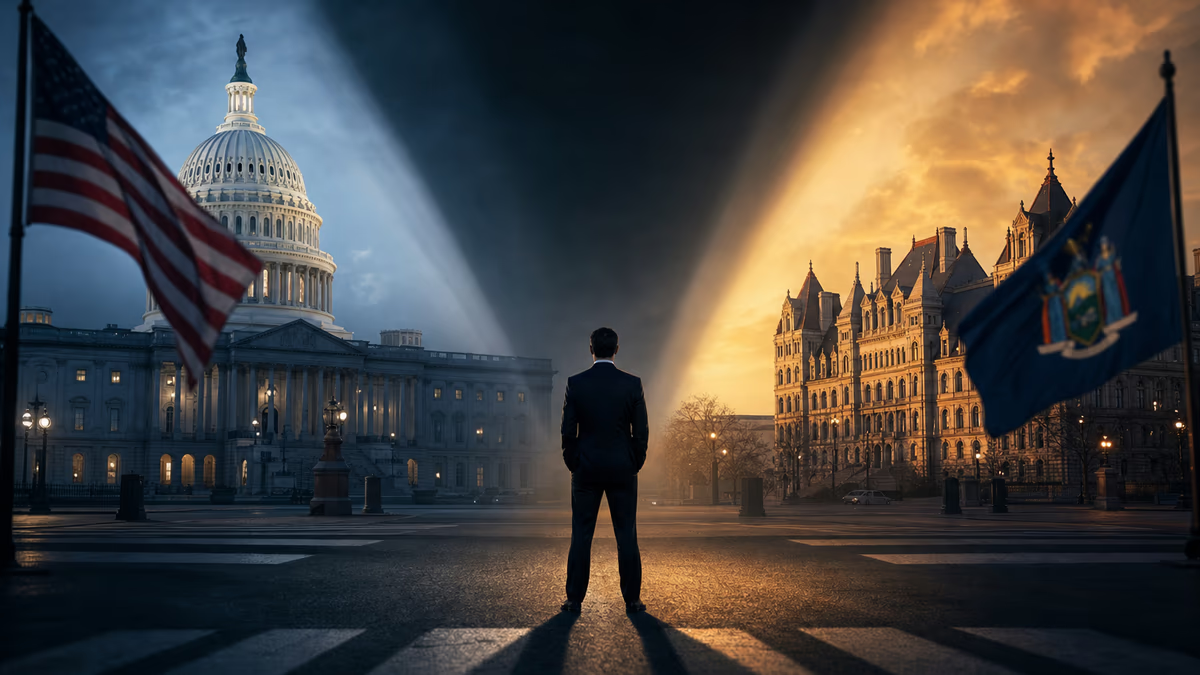
EEOC Harassment Guidance Rescinded: Why New York's Protections Didn't Shrink With It
The EEOC voted 2-1 on January 22, 2026 to rescind its 2024 harassment guidance. NYSHRL and NYC protections are unchanged — what Long Island workers should know.
Jun 15, 2026
The EEOC's War on DEI: A Complete Timeline of Reverse Discrimination Enforcement (2024-2026)
The EEOC just settled its first major reverse discrimination case against Planned Parenthood.
Mar 20, 2026Was this article helpful?
Disclaimer: This article is published by the Law Office of Jason Tenenbaum, P.C. for informational and educational purposes only. It does not constitute legal advice, and no attorney-client relationship is formed by reading this content. The legal principles discussed may not apply to your specific situation, and the law may have changed since this article was last updated.
New York law varies by jurisdiction — court decisions in one Appellate Division department may not be followed in another, and local court rules in Nassau County Supreme Court differ from those in Suffolk County Supreme Court, Kings County Civil Court, or Queens County Supreme Court. The Appellate Division, Second Department (which covers Long Island, Brooklyn, Queens, and Staten Island) and the Appellate Term (which hears appeals from lower courts) each have distinct procedural requirements and precedents that affect litigation strategy.
If you need legal help with a employment law matter, contact our office at (516) 750-0595 for a free consultation. We serve clients throughout Long Island (Huntington, Babylon, Islip, Brookhaven, Smithtown, Riverhead, Southampton, East Hampton), Nassau County (Hempstead, Garden City, Mineola, Great Neck, Manhasset, Freeport, Long Beach, Rockville Centre, Valley Stream, Westbury, Hicksville, Massapequa), Suffolk County (Hauppauge, Deer Park, Bay Shore, Central Islip, Patchogue, Brentwood), Queens, Brooklyn, Manhattan, the Bronx, Staten Island, and Westchester County. Prior results do not guarantee a similar outcome.