Key Takeaway
Learn how whistleblowers fight workplace discrimination, understand legal protections, and discover steps to report violations safely.
This article is part of our ongoing employment law coverage, with 83 published articles analyzing employment law issues across New York State. Attorney Jason Tenenbaum brings 24+ years of hands-on experience to this analysis, drawing from his work on more than 1,000 appeals, over 100,000 no-fault cases, and recovery of over $100 million for clients throughout Nassau County, Suffolk County, Queens, Brooklyn, Manhattan, and the Bronx. For personalized legal advice about how these principles apply to your specific situation, contact our Long Island office at (516) 750-0595 for a free consultation.
Workplace discrimination is still a big problem in modern companies. Whistleblowers play a key role in fighting it. They shine a light on unfair practices that might stay hidden. This guide looks at how whistleblowers’ fight workplace discrimination and the laws that protect them.
What Makes Someone a Whistleblower in Employment Discrimination?
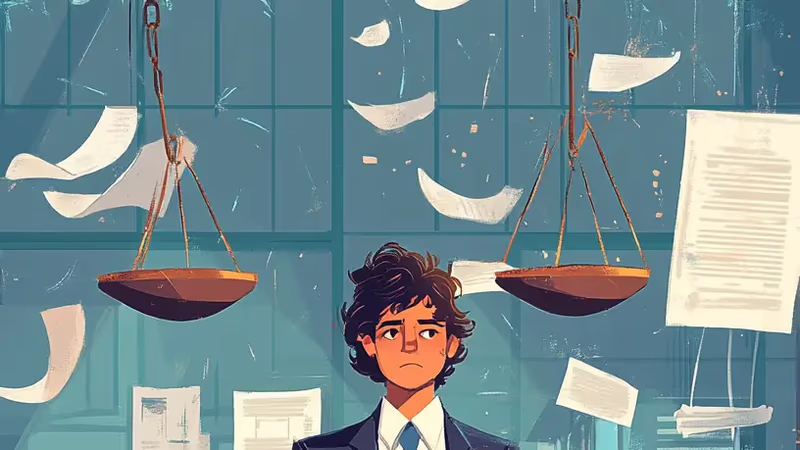
Employment discrimination whistleblowers report illegal practices that harm workers based on protected traits. These include pay gaps, sexual harassment, racial bias, and age-based prejudice. By speaking up, these people often risk their careers to defend coworkers and uphold workplace rights.
Legal Safeguards for Speaking Up
The law recognizes that whistleblowers’ are vulnerable and offers several layers of protection. Key laws include:
- Sarbanes-Oxley Act (2002)
- Dodd-Frank Wall Street Reform and Consumer Protection Act
- Title VII of the Civil Rights Act
- New York State Human Rights Law
- New York City Human Rights Law
Free Consultation · No Fee Unless We Win
Does this apply to your situation?
Every case is different. Get a free, confidential case review from an experienced attorney who can tell you exactly where you stand.
These laws shield workers from retaliation and set clear paths for reporting discrimination. Recent cases against Silicon Valley and Wall Street firms show how these protections work in practice.
Steps to Report Discrimination Effectively
Employees who spot discriminatory practices should follow these key steps:
- Keep detailed records of incidents
- Study workplace policies
- Submit internal reports through official channels
- Talk to an employment law specialist
- Contact government agencies when needed
Professional legal guidance strengthens each step, helping whistleblowers protect themselves while building solid cases.
Real-World Impact: Recent Cases That Made Headlines
Whistleblower actions keep driving workplace reform. A Silicon Valley whistleblower recently exposed efforts to block salary talks, forcing the company to change its policies. Another case revealed deep gender bias at a major media company. It showed how hard it can be to break down exclusionary corporate cultures.
Real Risks, Real Consequences
Speaking up carries significant personal stakes:
- Job security threats
- Damaged career prospects
- Workplace ostracism
- Money pressures
- Mental health strain
Strong legal representation and solid evidence help shield whistleblowers from these negative consequences.
Reshaping Workplace Culture
Successful whistleblower cases push organizations to improve their practices by implementing:
- Stronger anti-discrimination standards
- Better reporting systems
- Regular staff education
- Outside monitoring groups
- Clear investigation protocols
A legal approach to workplace culture and discrimination can help organizations create more inclusive environments and prevent discriminatory practices.
What’s Next for Whistleblowing?
Technology is changing how workers report discrimination. Secure platforms, encrypted messaging, and blockchain tools give whistleblowers safer ways to document and report violations.
Getting Legal Support
Legal guidance can make or break a whistleblower case. The Law Office of Jason Tenenbaum, P.C. on Long Island has deep experience in employment discrimination. The firm helps workers who speak up navigate the legal process and protect their interests.
Making the Decision to Act
Spotting workplace discrimination puts you at a crossroads. Speaking up is hard. But skilled legal support helps protect your interests and moves workplace justice forward. Understanding disability rights and legal protections for workers can empower employees to recognize and report discrimination more effectively.
Long Island residents considering whistleblower actions can contact The Law Office of Jason Tenenbaum, P.C. Their employment discrimination lawyers provide strategic guidance through each phase of the process.
Workplace harassment has hidden costs, including lost employees. Companies must take whistleblower reports seriously and act fast.
Note: This article provides educational information only. Each employment discrimination situation requires individual analysis by a qualified attorney.
Legal Context
Why This Matters for Your Case
Employment law in New York provides some of the strongest worker protections in the nation. The New York State Human Rights Law (Executive Law §296) prohibits discrimination based on race, sex, age, disability, sexual orientation, gender identity, and other protected characteristics. The New York City Human Rights Law goes even further, applying a broader standard and covering more employers.
Federal protections under Title VII, the ADA, the ADEA, and the FLSA provide additional layers of protection. The Law Office of Jason Tenenbaum represents employees facing workplace discrimination, wrongful termination, wage theft, hostile work environments, and employer retaliation throughout Long Island, Nassau County, Suffolk County, and the five boroughs of New York City.
Whether your case involves EEOC filings, NYS Division of Human Rights complaints, or direct court action under CPLR Article 78, this article provides the expert legal analysis that workers and practitioners need to understand their rights and develop effective litigation strategies under current New York employment law.
About This Topic
New York Employment Law
New York has some of the strongest worker protections in the nation — from the NYC Human Rights Law to state-level whistleblower statutes. Whether you're dealing with discrimination, wage theft, wrongful termination, or hostile work environments, understanding your rights is the first step. Attorney Jason Tenenbaum represents employees across Long Island and NYC in federal and state employment claims.
83 published articles in Employment Law
Keep Reading
More Employment Law Analysis

Laid Off After a Merger in New York? Severance, WARN and Discrimination Rights
A group layoff release must give 45 days, 7 days to revoke and a list of ages. What a missing list means, when WARN pays, and where age claims start.
Oct 22, 2026
No Small-Business Exemption: Which New York Employment Laws Cover a One-Employee Business
Title VII starts at 15 employees. New York's Human Rights Law starts at one. Which state laws reach the smallest employers, and where size still counts.
Oct 15, 2026
Forced Arbitration: Challenges in Discrimination Claims
Explores forced arbitration in discrimination claims, examining laws with the 2021 EFAA, impacting employee rights and employer policies.
Feb 11, 2025
Why a New York Employment Case Is Worth More Than It Was in 2019
Seven years after chapter 160 of 2019: no severe-or-pervasive test, every employer covered, punitive damages, liberal construction. Why the dismissals stopped.
Oct 6, 2026
Can a Teacher Be Fired for Speaking Out? First Amendment Retaliation in NY Schools
New York teachers don't lose their First Amendment rights at the schoolhouse gate — but Garcetti, Pickering, and a pair of unforgiving deadlines decide.
Jul 7, 2026Workplace Retaliation Claims Surge in New York: What Employees Need to Know About Rising 2026 Trends
What New York's retaliation statutes give a worker in 2026: Labor Law § 215 and § 740, Executive Law § 296(7), Civil Service Law § 75-b and Heinrichs.
Apr 20, 2026Was this article helpful?
Disclaimer: This article is published by the Law Office of Jason Tenenbaum, P.C. for informational and educational purposes only. It does not constitute legal advice, and no attorney-client relationship is formed by reading this content. The legal principles discussed may not apply to your specific situation, and the law may have changed since this article was last updated.
New York law varies by jurisdiction — court decisions in one Appellate Division department may not be followed in another, and local court rules in Nassau County Supreme Court differ from those in Suffolk County Supreme Court, Kings County Civil Court, or Queens County Supreme Court. The Appellate Division, Second Department (which covers Long Island, Brooklyn, Queens, and Staten Island) and the Appellate Term (which hears appeals from lower courts) each have distinct procedural requirements and precedents that affect litigation strategy.
If you need legal help with a employment law matter, contact our office at (516) 750-0595 for a free consultation. We serve clients throughout Long Island (Huntington, Babylon, Islip, Brookhaven, Smithtown, Riverhead, Southampton, East Hampton), Nassau County (Hempstead, Garden City, Mineola, Great Neck, Manhasset, Freeport, Long Beach, Rockville Centre, Valley Stream, Westbury, Hicksville, Massapequa), Suffolk County (Hauppauge, Deer Park, Bay Shore, Central Islip, Patchogue, Brentwood), Queens, Brooklyn, Manhattan, the Bronx, Staten Island, and Westchester County. Prior results do not guarantee a similar outcome.