Key Takeaway
Hurt in a ladder fall on a New York school roofing job? Who can be sued under Labor Law 240, why your employer is out, and the 90-day notice of claim.
This article is part of our ongoing personal injury coverage, with 185 published articles analyzing personal injury issues across New York State. Attorney Jason Tenenbaum brings 24+ years of hands-on experience to this analysis, drawing from his work on more than 1,000 appeals, over 100,000 no-fault cases, and recovery of over $100 million for clients throughout Nassau County, Suffolk County, Queens, Brooklyn, Manhattan, and the Bronx. For personalized legal advice about how these principles apply to your specific situation, contact our Long Island office at (516) 750-0595 for a free consultation.
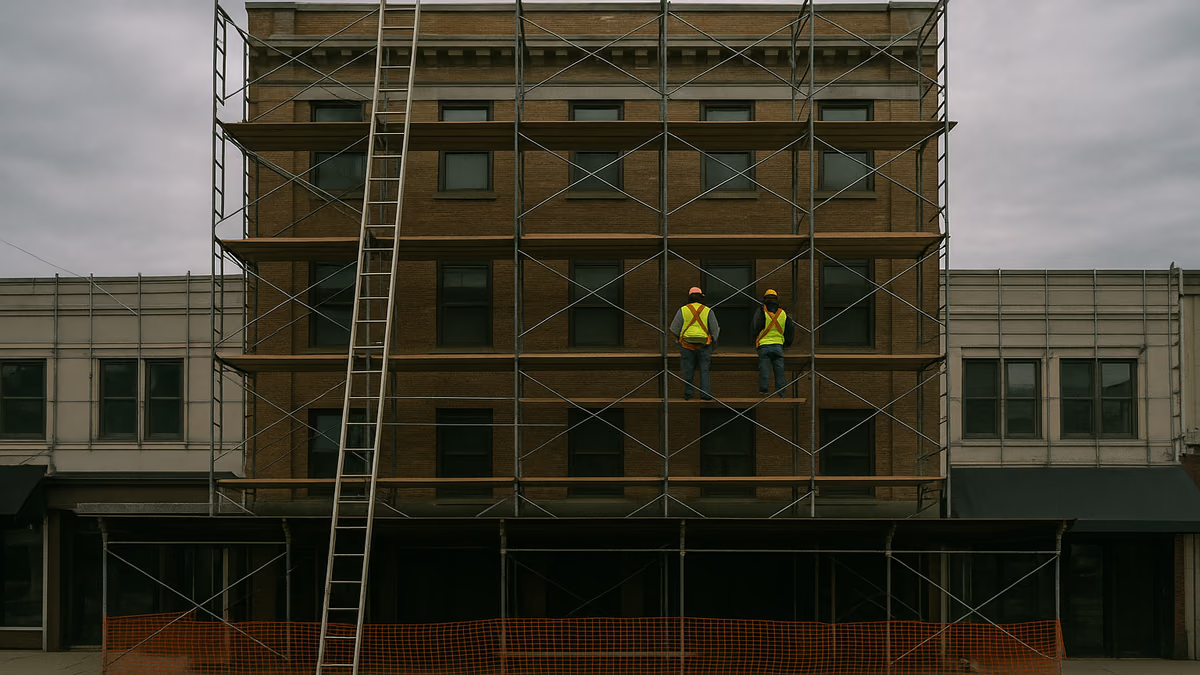
Take a hypothetical. A roofer from Patchogue is replacing flashing on a public middle school on Long Island during the summer break. The roofing company that employs him is a subcontractor; a general contractor runs the project for the school district. He climbs down an extension ladder that nobody tied off and nobody is holding. Halfway down, it shifts, and he falls to the asphalt.
Who pays, who can he sue, and what deadline is already running? The answers turn on the Scaffold Law, on workers’ compensation, and on the fact that the owner is a public school district. Our Long Island construction accident lawyer page covers construction claims generally; this post stays with the school job. It is general information, not advice about any one claim.
The short version
Labor Law § 240(1) puts the duty to furnish a properly placed ladder on "all contractors and owners and their agents." A school district that owns the building is an owner; the general contractor is a contractor; a subcontractor with authority over the work can be an agent. The worker's own employer is ordinarily out of the lawsuit because workers' compensation is its exclusive liability. On September 23, 2026, the Appellate Division, Second Department, affirmed summary judgment for a roofer against a Suffolk County school district and its general contractor after an unsecured ladder shifted. Against the district, a notice of claim is due within 90 days of the fall, and the lawsuit within one year and 90 days. Claims against the private contractors follow the ordinary three-year rule.
Who can be sued when a worker falls on a school roofing job
The statute names the parties. Labor Law § 240(1) requires “all contractors and owners and their agents,” in the repair or alteration of “a building or structure,” to furnish “scaffolding, hoists, stays, ladders” and other devices “so constructed, placed and operated as to give proper protection to a person so employed.” The exception for owners of one- and two-family dwellings does not reach a school district.
The owner’s duty does not depend on whether the owner was on the roof. The Court of Appeals, in Blake v Neighborhood Hous. Servs. of N.Y. City, 1 NY3d 280 (2003), described owners and contractors as liable “regardless of whether they exercise supervision or control over the work.” A third party becomes an “agent” under the statute “only when work is delegated to a third party who obtains the authority to supervise and control the job.” So the subcontractor that ran the roofing crew can be in the case; a trade that never had authority over the roofing work is not an agent under the statute.
Free Case Review
Tell us what happened — free case review
Time-sensitive: NY injury claims have strict deadlines
Details received. The fastest next step is a call.
Injury cases are won early. Evidence fades, witnesses move, and New York's no-fault rules can require paperwork within 30 days of a crash. Don't wait for a callback. Call now and a real person takes your information: our office during business hours, and our intake line after hours and on weekends, answered 24/7.
Call (631) 349-3928Free Consultation · Nothing is filed or shared until you decide
Can't call right now? We'll reach out during business hours.
A September 2026 decision shows the structure on a real Suffolk County project. In Rojas v Riverhead Cent. Sch. Dist., 2026 NY Slip Op 05432 (2d Dept Sept. 23, 2026), a roofer employed by a subcontractor fell at a building owned by the Riverhead Central School District. He sued the district and the general contractor, won summary judgment on liability against both, and the Second Department affirmed.
The card below lays out each party on a public school job.
At a glance
Who answers for a ladder fall on a New York public school construction job
- School district (the owner)
- Liable as an owner when a § 240(1) violation is a proximate cause of the fall, whether or not it supervised or controlled the work (Blake, 1 NY3d 280). Sued only after a notice of claim (Education Law § 3813(2); General Municipal Law § 50-e).
- General contractor
- Liable as a contractor on the same showing, unless it is the injured worker's own employer. In Rojas (2d Dept 2026), liability was granted against the district and the general contractor together. No notice of claim; three years to sue (CPLR 214(5)).
- Other subcontractors
- Liable as a statutory "agent" only if the work was delegated to it with "the authority to supervise and control the job" (Blake). Three years to sue.
- The worker's own employer
- Not sued by the worker: its workers' compensation liability "shall be exclusive" (Workers' Compensation Law § 11). Exception: an employer that failed to secure compensation can be sued. The owner or general contractor can seek contribution or indemnity from it only for a "grave injury" or under a written indemnity contract signed before the accident.
- Architects and engineers
- No § 240(1) liability for licensed engineers and architects (and the other design professionals the statute names) "who do not direct or control the work for activities other than planning and design." Common-law claims are not affected.
- Fault of the worker
- Comparative negligence is not a defense to a § 240(1) violation. No liability where there was no violation and the worker's own conduct was the "sole proximate cause," or where a "recalcitrant worker" refused available safety devices (Blake).
You got to sue everybody. Owner, they have a non-delegable duty under Labor Law section 240, so the school district is in the case, even if they never set foot on the roof, right? You just do a little bit of research and you find out who the general contractor was. The general contractor has a duty to oversee the job unless it’s your actual employer. You don’t put in your actual employer because that’s workers’ comp. So the subcontractors that have control over the job, they’re in the case too.
The practical step is to identify every company on the job before memories fade: the contract documents, the permit, the sign on the fence and the names on the trucks.
Why the direct employer stays out of the lawsuit
Workers’ Compensation Law § 11 makes the employer’s liability for a work injury “exclusive and in place of any other liability whatsoever” to the employee. The injured roofer collects compensation benefits through his employer’s carrier and does not sue the roofing company that employs him. The statute makes one exception for the worker: if the employer failed to secure compensation coverage, the employee may elect to claim compensation or to sue the employer in court.
The “grave injury” language in the same section is often misread. It does not let the worker sue the employer. It decides whether the school district or the general contractor can pass part of its own liability back to the employer through contribution or indemnity, and the list is short: death, permanent and total loss of use or amputation of an arm, leg, hand or foot, paraplegia or quadriplegia, and a few others the statute names.
The worker’s case therefore has two tracks. Compensation pays without regard to fault, from the employer’s carrier. The lawsuit runs against the owner, the general contractor and any subcontractor with authority over the work.
When a ladder fall is a Labor Law § 240 violation
A fall alone does not decide the case. The Second Department said so in Rojas: “A fall from a ladder, by itself, is not sufficient to impose liability under Labor Law § 240(1).” Liability attaches when the evidence shows that the “ladder was defective or inadequately secured and that the defect, or the failure to secure the ladder, was a substantial factor in causing the plaintiff’s injuries.” The court then stated the rule that decided the appeal: “where a ladder slides, shifts, tips over, or otherwise collapses for no apparent reason, the plaintiff has established a violation.”
The proof in Rojas was the worker’s own testimony: his deposition and his testimony at a General Municipal Law § 50-h hearing, which “established that the unsecured ladder shifted, causing him to fall.” The defendants “failed to raise a triable issue of fact.” The fall had happened in August 2013.
Blake holds that comparative negligence is not a defense to a § 240(1) violation. It also holds there is no liability where there was no violation and the worker’s own negligence was the “sole proximate cause” of the fall, and it notes the statute does not reach a “recalcitrant worker” who refused available safety devices. Defendants raise both, and each turns on the facts: what device was there, whether it was adequate, and what the worker was told. In Jason Tenenbaum’s experience, “those defenses very rarely succeed. You’d have to show that the employee’s conduct was the sole proximate cause of his injuries, and you just can’t do that. It’s just very difficult.”
Whether § 240 changes in the 2027 budget is an open question; our neutral explainer on the Scaffold Law in the 2027 budget sets out the bills and both sides’ arguments. In practice, the ladder itself is evidence: who supplied it, whether it was tied off or footed, and what it was standing on.
A school district is a public owner, so the notice of claim comes first
Education Law § 3813(2) provides that no action “founded upon tort” shall be maintained against a school district “unless a notice of claim shall have been made and served in compliance with section fifty-e of the general municipal law.” General Municipal Law § 50-e(1)(a) sets the clock: “within ninety days after the claim arises.”
Subdivision 1 of the same section has a separate three-month verified claim for other claims against districts, such as contract and employment claims; our post on the § 3813 deadline for school employees covers that clock. An injured worker’s claim is a tort claim, so the 90 days apply.
It’s a government entity, so the notice of claim comes first. You only have 90 days to file a notice of claim against a school district. So if you’re going to file against a school district, you always need to file a notice of claim. You can’t go wrong by filing a notice of claim. You can go wrong by waiting and missing it.
The notice must be in writing and sworn, and it must state “the time when, the place where and the manner in which the claim arose” and the injuries claimed so far as then practicable, without a dollar amount. It is served personally or by registered or certified mail.
A missed deadline is not always the end, but it is a motion, not a right. A court “in its discretion” may extend the time, weighing “in particular” whether the district or its insurer “acquired actual knowledge of the essential facts constituting the claim” in time. The general contractor and the subcontractors are private companies: no notice of claim, and three years to sue under CPLR 214(5). Consequently, the district’s clock runs out first; serve well inside 90 days.
The 50-h examination and the deadline to sue the district
Once the notice is served, the district may demand an examination of the claimant “relative to the occurrence and extent of the injuries,” upon oral questions and possibly with a physical examination by a physician, and no action may be commenced until the claimant complies. Our post on the 50-h hearing explains what happens in the room.
Treat the 50-h testimony as trial testimony. In Rojas, it was one of the two transcripts that won summary judgment; it would have been used against him just as readily if his account had changed.
The lawsuit against the district “shall be commenced within one year and ninety days after the happening of the event upon which the claim is based,” under General Municipal Law § 50-i(1). The clocks below run from the day of the fall.
The clocks
Deadlines after a fall on a New York school construction job
- 90days Serve the notice of claim on the school districtWithin 90 days after the claim arises (General Municipal Law § 50-e(1)(a), applied by Education Law § 3813(2)). Sworn; personal delivery or registered or certified mail.
- 30days Waiting period before suing the districtAt least 30 days after service of the notice, with adjustment or payment neglected or refused (General Municipal Law § 50-i(1)(b)).
- 50-h Examination, if the district demands oneNo action until the claimant complies; if the district does not conduct it within 90 days of service of the demand, the claimant may sue (General Municipal Law § 50-h(5)).
- 1 yr 90days Lawsuit against the school districtCommenced within one year and ninety days after the fall (General Municipal Law § 50-i(1)(c)). A court-ordered extension to serve a late notice cannot go past this date (§ 50-e(5); Education Law § 3813(2-a)).
- 3years Lawsuit against the general contractor and subcontractorsPersonal injury actions against private parties: three years (CPLR 214(5)). No notice of claim.
The district’s deadlines set the pace for the whole case.
Indemnification fights and the workers’ compensation lien
The second half of Rojas was a fight among the defendants. The district sought contractual indemnification from the roofing subcontractor and lost: it “was not a party to the agreement” between the general contractor and the subcontractor, nor “named as an indemnitee therein,” and the subcontractor was not bound by the indemnification clause in the district’s own contract with the general contractor.
So the owner and the general contractor are gonna fight over who pays what, right? And that’s their problem, not yours. What matters to you is that whatever they’re going to pay in workers’ compensation benefits is going to come out of your settlement because the comp carrier has a lien. So just know that number before you even start talking about settling.
The lien comes from Workers’ Compensation Law § 29(1): the carrier is repaid from any recovery, “whether by judgment, settlement or otherwise,” for the compensation and medical benefits it paid, after the reasonable costs of the recovery, including attorney’s fees, are deducted and apportioned. A settlement for less than the compensation provided needs the carrier’s written approval or a court compromise order. Consequently, the lien and the carrier’s consent belong in the settlement discussion from the start.
Back to the roofer from Patchogue
The roofer has a workers’ compensation claim through his employer’s carrier, whatever caused the fall. He has a § 240(1) claim against the school district as owner and against the general contractor, and against any subcontractor that had authority to supervise and control the roofing work; his own employer is not a defendant. If the ladder shifted while he was using it, Rojas is close to his facts, and his account at the deposition and at any 50-h examination has to be the same account.
The first deadline is the district’s: a sworn notice of claim within 90 days of the fall. Our Long Island scaffold accident lawyer page covers preserving the evidence before a site is cleaned up.
Bring these to the first call
If you fell on a school or other public construction job
- 1. The date and exact place of the fallThe school, the building and the part of the roof or wall; the 90-day clock runs from that date.
- 2. Every company name on the jobYour employer, the general contractor, other trades, and anything printed on the ladder, the trucks or the site sign.
- 3. Photos of the ladder and how it was setTied off or not, footed or not, what it stood on, and who supplied it. Names of anyone who saw the fall.
- 4. Your workers' compensation papersThe carrier's name, the claim number and any notice of the benefits paid.
- 5. Anything the school district has sent youA claim form, a letter from its insurer, or a demand for a 50-h examination.
Sources
- Rojas v Riverhead Cent. Sch. Dist., 2026 NY Slip Op 05432 (2d Dept Sept. 23, 2026)
- Blake v Neighborhood Hous. Servs. of N.Y. City, 1 NY3d 280 (2003)
- New York Labor Law § 240, Scaffolding and other devices for use of employees
- New York Labor Law § 241, Construction, excavation and demolition work
- New York Workers’ Compensation Law § 11, Alternative remedy
- New York Workers’ Compensation Law § 29, Remedies of employees; subrogation
- New York Education Law § 3813, Presentation of claims against school districts
- New York General Municipal Law § 50-e, Notice of claim
- New York General Municipal Law § 50-h, Examination of claims
- New York General Municipal Law § 50-i, Presentation of tort claims; commencement of actions
- New York CPLR 214, Actions to be commenced within three years
- New York General Construction Law § 66, Definitions
A fall on a public school job runs on two tracks: workers’ compensation through the employer, and a Labor Law § 240(1) claim against everyone else, with the district’s deadline first. Our construction accident practice handles the second track.
If you fell from a ladder or scaffold on a school or other public construction job, call (516) 750-0595 with the date of the fall and your workers’ compensation claim number, or request a free case review.
Legal Context
Why This Matters for Your Case
Personal injury law in New York is governed by a complex web of statutes, case law, and procedural rules that differ from most other states. The statute of limitations for most personal injury claims is three years under CPLR 214(5), but claims against municipalities require a Notice of Claim within 90 days. Motor vehicle accident victims must meet the serious injury threshold under Insurance Law §5102(d) before they can recover pain and suffering damages.
The Law Office of Jason Tenenbaum has recovered over $100 million for injured clients across Long Island, Nassau County, Suffolk County, Queens, Brooklyn, Manhattan, and the Bronx. With 24+ years of trial and appellate experience, more than 1,000 appeals written, and 2,600+ published legal articles, Jason Tenenbaum provides the authoritative legal analysis that practitioners and injury victims need to understand their rights.
This article reflects real courtroom experience and a deep understanding of how New York courts actually evaluate personal injury claims — from the initial filing through discovery, summary judgment, trial, and appeal.
About This Topic
New York Personal Injury Law
When negligence causes serious injury, New York law entitles victims to compensation for medical bills, lost income, pain and suffering, and more. From car accidents and slip-and-falls to construction injuries and medical malpractice, the Law Office of Jason Tenenbaum has recovered over $100 million for injured Long Islanders and New Yorkers since 2002.
185 published articles in Personal Injury
Keep Reading
More Personal Injury Analysis

Carbon Monoxide Poisoning at a Restaurant or Mall: Who Can Be Liable in New York?
A Second Department ruling on a fatal Walt Whitman Mall leak shows when a repair contractor answers for carbon monoxide, and how owners and tenants are judged.
Oct 29, 2026
Hit by an Illegal E-Moto in New York? Who Pays When It Was Sold as an E-Bike
A device sold as an e-bike that exceeds New York's limits is a motor vehicle. Who pays the person it hits, what the seller faces, and what the owner risks.
Oct 25, 2026
Types of Dog Bite Laws in New York
Learn about New York's dog bite laws after the landmark 2025 Flanders v. Goodfellow ruling that ended the "one free bite" rule and expanded victim rights.
Jun 9, 2025
Don’t Sign the Check! – Insurance Settlements Considerations
Learn why quick insurance settlements can risk your financial future and how to protect your rights after an accident.
Jan 27, 2025
Back to School in New York: Who's Liable When a Child Is Hit Near a School Zone?
The first weeks of school are the most dangerous of the year for child pedestrians in New York.
Aug 18, 2026
Drowsy Driving Accident Settlement Amounts in New York (2024–2026)
How much is a drowsy driving accident settlement worth in New York?
Apr 4, 2026Frequently Asked Questions
Common Questions About This Topic
5 answers from the firm's New York personal-injury and employment-law practice. Click any question to expand.
Can I sue a school district if I fell from a ladder on a school construction job?
Yes, if the facts show a Labor Law § 240(1) violation. The statute puts the duty on owners as well as contractors, and a district that owns the building is an owner. Serve a sworn notice of claim within 90 days of the fall and sue within one year and 90 days.
Can I sue my employer for a fall at work in New York?
Generally no. The employer's workers' compensation liability is exclusive, so you collect benefits through its carrier and sue the owner and the other contractors instead. The exception is an employer that failed to carry coverage.
Is a fall from a ladder automatically a Labor Law 240 case?
No. The Second Department repeated in 2026 that a fall from a ladder, by itself, is not enough. The worker must show the ladder was defective or inadequately secured and that this was a substantial factor in the injury; a ladder that slides, shifts or tips for no apparent reason establishes a violation.
I was hurt on a school job in Suffolk or Nassau County. How long do I have?
Ninety days to serve a notice of claim on the school district, and one year and 90 days to sue it. Claims against the general contractor and subcontractors, which are private companies, have three years and need no notice of claim. Nassau and Suffolk districts follow the same state statutes.
Does workers' compensation get paid back out of a Labor Law 240 settlement?
Usually, yes. The carrier has a lien on the recovery for the compensation and medical benefits it paid, after deduction of the reasonable and necessary costs of the recovery, including attorney's fees, which a court may apportion between the worker and the carrier. A settlement for less than the compensation provided needs the carrier's written consent or a court order.
Was this article helpful?
Disclaimer: This article is published by the Law Office of Jason Tenenbaum, P.C. for informational and educational purposes only. It does not constitute legal advice, and no attorney-client relationship is formed by reading this content. The legal principles discussed may not apply to your specific situation, and the law may have changed since this article was last updated.
New York law varies by jurisdiction — court decisions in one Appellate Division department may not be followed in another, and local court rules in Nassau County Supreme Court differ from those in Suffolk County Supreme Court, Kings County Civil Court, or Queens County Supreme Court. The Appellate Division, Second Department (which covers Long Island, Brooklyn, Queens, and Staten Island) and the Appellate Term (which hears appeals from lower courts) each have distinct procedural requirements and precedents that affect litigation strategy.
If you need legal help with a personal injury matter, contact our office at (516) 750-0595 for a free consultation. We serve clients throughout Long Island (Huntington, Babylon, Islip, Brookhaven, Smithtown, Riverhead, Southampton, East Hampton), Nassau County (Hempstead, Garden City, Mineola, Great Neck, Manhasset, Freeport, Long Beach, Rockville Centre, Valley Stream, Westbury, Hicksville, Massapequa), Suffolk County (Hauppauge, Deer Park, Bay Shore, Central Islip, Patchogue, Brentwood), Queens, Brooklyn, Manhattan, the Bronx, Staten Island, and Westchester County. Prior results do not guarantee a similar outcome.