
Key Takeaway
Pedestrian accident settlements in New York typically range from $50,000 to over $1 million.
This article is part of our ongoing personal injury coverage, with 182 published articles analyzing personal injury issues across New York State. Attorney Jason Tenenbaum brings 24+ years of hands-on experience to this analysis, drawing from his work on more than 1,000 appeals, over 100,000 no-fault cases, and recovery of over $100 million for clients throughout Nassau County, Suffolk County, Queens, Brooklyn, Manhattan, and the Bronx. For personalized legal advice about how these principles apply to your specific situation, contact our Long Island office at (516) 750-0595 for a free consultation.
This article was published April 4, 2026. Corrected October 5, 2026: The earlier text cited Vehicle and Traffic Law § 375(41) as a headlight-dimming and pedestrian-safety rule; subdivision 41 governs colored and flashing lights, so that line was removed. The pedestrian due-care duty is § 1146. The text below states the rule as verified.
Pedestrians who are struck by vehicles in New York suffer some of the most severe injuries of any accident type — often involving fractures, traumatic brain injury, spinal cord damage, or death. Unlike car accident occupants protected by seatbelts and airbags, pedestrians have no protection at all. When a driver’s negligence causes these injuries, New York law provides strong protections for victims.
Quick Answer: Pedestrian Accident Settlement Ranges
| Injury Severity | Typical Settlement Range |
|---|---|
| Soft tissue, minor fracture (full recovery) | $30,000 – $100,000 |
| Moderate fracture, surgery, several months recovery | $100,000 – $350,000 |
| Serious fracture(s), TBI, significant recovery time | $350,000 – $750,000 |
| Catastrophic injury (spinal cord, severe TBI, amputation) | $750,000 – $5,000,000+ |
| Wrongful death | $500,000 – $3,000,000+ |
Pedestrian cases consistently settle higher than occupant car accident cases of equivalent injury severity because liability is typically clearer — drivers are almost always required to yield to pedestrians in crosswalks — and injuries are almost always more severe.
New York Pedestrian Rights
New York Vehicle and Traffic Law (VTL) establishes clear rights for pedestrians:
- VTL § 1151: Drivers must yield the right-of-way to pedestrians in marked or unmarked crosswalks
- VTL § 1152: Pedestrians crossing outside a crosswalk must yield to vehicles, but drivers still must exercise due care
- VTL § 1146: Drivers must exercise due care to avoid colliding with any pedestrian — even outside a crosswalk, even if the pedestrian was jaywalking
Free Consultation · No Fee Unless We Win
Does this apply to your situation?
Every case is different. Get a free, confidential case review from an experienced attorney who can tell you exactly where you stand.
The key principle: Even when a pedestrian is jaywalking or crosses against a signal, a driver who strikes them is almost always negligent. The driver’s duty of care to avoid hitting people does not disappear because the pedestrian made a mistake.
No-Fault Insurance Applies to Pedestrians Too
A critical fact many pedestrians don’t know: New York’s no-fault insurance system covers pedestrians struck by vehicles, not just vehicle occupants.
Under Insurance Law § 5202, pedestrians injured by motor vehicles are entitled to no-fault Personal Injury Protection (PIP) benefits — up to $50,000 for medical bills and 80% of lost wages (up to $2,000/month) — from the at-fault vehicle’s insurer.
If the at-fault vehicle’s insurer denies coverage (e.g., the vehicle was unregistered or uninsured), the pedestrian can seek no-fault benefits through their own auto insurer if they have one, a resident relative’s auto policy, or the Motor Vehicle Accident Indemnification Corporation (MVAIC) for truly uninsured/hit-and-run situations.
No-fault application deadline: The NF-2 form must be filed within 30 days of the accident. This deadline applies to pedestrian victims just as it does to vehicle occupants.
The Serious Injury Threshold and Pedestrians
To pursue a pain and suffering lawsuit beyond no-fault, pedestrian victims must meet the same serious injury threshold under Insurance Law § 5102(d) that applies to car accident occupants. However, pedestrian injuries are so frequently severe that meeting this threshold is rarely the contested issue it is in soft-tissue car accident cases.
Fractures alone — broken legs, arms, pelvis, or skull — qualify as “fracture” under § 5102(d) and automatically satisfy the threshold. TBI, spinal cord injury, and permanent disability also qualify under the “permanent loss of use,” “permanent consequential limitation,” or “significant limitation” categories.
For pedestrians with serious injuries, the real litigation is typically over how much the case is worth, not whether the case qualifies.
Who Is Liable When a Pedestrian Is Hit?
The Driver
The driver of the vehicle is almost always the primary defendant. Negligence theories include:
- Failure to yield at a crosswalk (VTL § 1151)
- Distracted driving (cell phone use, VTL § 1225-d)
- Speeding
- Failure to exercise due care (VTL § 1146)
- Running a red light or stop sign
- Driving under the influence of alcohol or drugs (VTL § 1192)
- Failure to yield when turning
The Vehicle Owner (If Different From the Driver)
Under VTL § 388, the registered owner of a vehicle is vicariously liable for damages caused by anyone driving the vehicle with their permission, express or implied. This allows victims to access the owner’s insurance even when someone else was driving.
The Municipality (Road Design and Signage)
If the accident was caused or contributed to by a defective crosswalk design, absent crosswalk markings, missing traffic signals, inadequate lighting, or improper road design, the municipality (City, Town, County, or State) may be liable.
Critical municipal deadline: Under General Municipal Law § 50-e, you have only 90 days from the date of the accident to file a Notice of Claim against a municipality. Missing this deadline permanently bars your claim against the government defendant. In Nassau County cases, the notice goes to Nassau County; in Suffolk County, to the relevant Town or County.
The Employer (If the Driver Was Working)
If the driver was operating the vehicle in the course of employment — a delivery driver, Uber/Lyft driver, municipal employee, or commercial vehicle operator — the employer may be jointly liable under the doctrine of respondeat superior.
Property Owner or Contractor
If a temporary obstruction, construction hazard, or improperly placed object reduced visibility and contributed to the accident, a property owner or contractor may share liability.
Comparative Fault and the “Jaywalking” Defense
New York follows pure comparative negligence under CPLR § 1411. Even if a pedestrian was jaywalking, crossing against a signal, or not paying attention, they can still recover damages — but the recovery is reduced by their percentage of fault.
For example: If a jury finds a pedestrian 20% at fault for crossing against a signal, and awards $500,000 in damages, the pedestrian collects $400,000 (reduced by 20%).
Defense attorneys routinely overstate pedestrian fault to reduce payouts. A skilled pedestrian accident attorney anticipates these arguments and builds a case around the driver’s independent negligence — speed, distraction, failure to observe, failure to brake.
What Determines the Value of a Pedestrian Accident Settlement?
Injury Severity
The single biggest driver of settlement value. Fractures requiring surgery, traumatic brain injury, spinal cord injury, and amputations produce the highest settlements. Soft-tissue injuries, while real, produce lower settlements.
Permanent Disabilities and Future Care Needs
A pedestrian who suffers a TBI and cannot return to work has ongoing lost income and future medical costs. Life care planners and vocational rehabilitation experts calculate these numbers, which can easily exceed $1 million in catastrophic cases.
Age
Younger victims have longer life expectancies over which to suffer with their injuries and accumulate future losses. A 25-year-old with a permanent disability typically receives a larger award than a 70-year-old with the same injury.
Liability Clarity
Hit in a marked crosswalk on a green light by a driver who was on their phone? Liability is crystal clear. Cases with undisputed liability settle faster and higher.
Insurance Policy Limits
The at-fault driver’s minimum liability coverage in New York is only $25,000/$50,000 — wholly inadequate for serious pedestrian injuries. Attorneys investigate umbrella policies, employer policies, vehicle owner policies, and all available coverage to maximize recovery. Underinsured motorist (UIM) coverage on the victim’s own auto policy (or a resident relative’s policy) may also provide additional recovery.
Venue
Manhattan and Bronx juries historically award higher verdicts than suburban juries. Nassau and Suffolk County cases may be venued in Supreme Court but tend to produce more conservative verdicts than NYC. However, well-prepared cases with strong evidence and compelling expert testimony achieve significant verdicts on Long Island.
Steps to Take After Being Hit by a Car in New York
-
Call 911 immediately. A police report is essential for the insurance claim and any subsequent lawsuit.
-
Seek emergency medical care. Even if you feel well enough to walk, internal injuries, TBI, and fractures may not produce immediate pain. Go to the ER.
-
Photograph everything — the vehicle, license plate, driver, scene, crosswalk markings, traffic signals, your injuries.
-
Get witness contact information. Witnesses who saw the driver’s behavior before impact are invaluable.
-
Do not give a statement to the driver’s insurance company. You are not required to. They will use your words against you.
-
File the no-fault application within 30 days. Get the NF-2 form from the at-fault vehicle’s insurer (or MVAIC if unknown/uninsured).
-
If a government vehicle or road defect was involved, call an attorney immediately. The 90-day Notice of Claim deadline under GML § 50-e cannot be extended in most cases.
-
Keep all medical records and bills. Document every treatment, every expense, every day you missed work.
For a complete checklist, see our First 24 Hours After a Car Accident on Long Island guide — the same principles apply to pedestrian accidents.
Hit-and-Run Pedestrian Accidents
If the driver fled the scene, you have options:
MVAIC (Motor Vehicle Accident Indemnification Corporation): New York’s no-fault insurer of last resort. If you were struck by an unidentified hit-and-run vehicle and have no auto insurance (or no resident relative with auto insurance), MVAIC provides no-fault benefits and up to $25,000/$50,000 in liability coverage. Physical contact with the vehicle must be proven.
Uninsured motorist coverage: If you or a resident relative has auto insurance with UM coverage, this coverage can respond to hit-and-run accidents.
Immediate reporting requirement: MVAIC requires the accident to be reported to police within 24 hours and a MVAIC claim filed within 90 days. These deadlines are strict.
If the vehicle was a commercial truck, our Long Island truck accident lawyer guide explains the additional defendants and evidence.
Pedestrian Accident FAQs
Is New York a fault or no-fault state for pedestrians? New York is a no-fault state — meaning pedestrians are entitled to no-fault PIP benefits from the at-fault vehicle’s insurer (or MVAIC if uninsured) for medical bills and lost wages, regardless of fault. A separate negligence lawsuit for pain and suffering requires meeting the serious injury threshold.
How long do I have to sue after being hit by a car in New York? The statute of limitations for personal injury is 3 years under CPLR § 214. For wrongful death, it is 2 years under EPTL § 5-4.1. If a government vehicle or road defect is involved, the Notice of Claim under GML § 50-e must be served within 90 days.
What if I was hit in a parking lot? Parking lot accidents may involve the property owner (if the lot’s design contributed to the accident) as well as the driver. The same liability and no-fault principles apply.
What if the driver was uninsured? No-fault benefits are available through MVAIC (if you have no auto policy of your own). For liability coverage, your own UM coverage (or a resident relative’s) responds. MVAIC also provides liability coverage up to its statutory limits.
Can I sue if I was crossing outside a crosswalk? Yes. Under VTL § 1146, drivers must exercise due care to avoid striking any pedestrian, regardless of where they are crossing. Your recovery will be reduced by your percentage of fault under CPLR § 1411, but you are not barred from recovery.
For a complete guide to Long Island car and pedestrian accident claims, visit our Long Island car accident lawyer page, or use our settlement calculator to estimate your case value.
The Law Office of Jason Tenenbaum, P.C. represents pedestrians struck by vehicles throughout Long Island and New York City. Free consultation — no fee unless we win.
Legal Context
Why This Matters for Your Case
Personal injury law in New York is governed by a complex web of statutes, case law, and procedural rules that differ from most other states. The statute of limitations for most personal injury claims is three years under CPLR 214(5), but claims against municipalities require a Notice of Claim within 90 days. Motor vehicle accident victims must meet the serious injury threshold under Insurance Law §5102(d) before they can recover pain and suffering damages.
The Law Office of Jason Tenenbaum has recovered over $100 million for injured clients across Long Island, Nassau County, Suffolk County, Queens, Brooklyn, Manhattan, and the Bronx. With 24+ years of trial and appellate experience, more than 1,000 appeals written, and 2,600+ published legal articles, Jason Tenenbaum provides the authoritative legal analysis that practitioners and injury victims need to understand their rights.
This article reflects real courtroom experience and a deep understanding of how New York courts actually evaluate personal injury claims — from the initial filing through discovery, summary judgment, trial, and appeal.
About This Topic
New York Personal Injury Law
When negligence causes serious injury, New York law entitles victims to compensation for medical bills, lost income, pain and suffering, and more. From car accidents and slip-and-falls to construction injuries and medical malpractice, the Law Office of Jason Tenenbaum has recovered over $100 million for injured Long Islanders and New Yorkers since 2002.
182 published articles in Personal Injury
Keep Reading
More Personal Injury Analysis
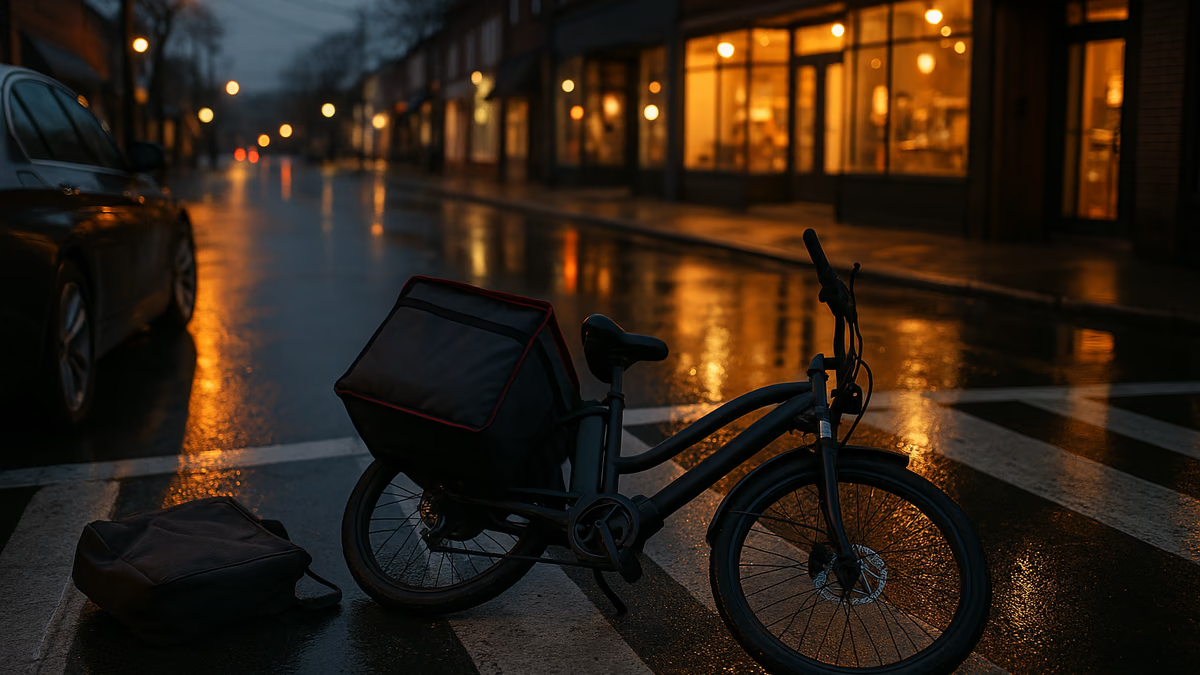
NYC's Pending E-Bike Bills: What They Would Change for People Hurt in a Crash
NYC heard 23 e-bike and delivery bills on September 30, 2026. What each text would change for hurt pedestrians and riders, and the law that applies today.
Oct 21, 2026
New York's Scaffold Law in the 2027 Budget: What Happens If Labor Law 240 Changes, and What Happens If It Doesn't
Labor Law 240 and the 2027 New York budget: what each side argues, the bills on file, and what each possible outcome would change.
Oct 19, 2026Knee Injury Car Accident Settlements in New York: What Your Claim Is Worth
ACL tears, meniscus injuries, and knee fractures after a car accident in New York — how serious injury threshold, surgery, and long-term impairment affect settlement value.
Apr 4, 2026
Uninsured Driver Car Accidents
Learn about uninsured driver car accidents in NY. Understand UM/UIM coverage, when to file claims, and how to protect yourself when at-fault drivers lack insurance.
May 21, 2025
New York Slip-and-Fall Claims: When Is a Hazard "Open and Obvious"?
"I saw it before I fell" does not automatically end a New York slip-and-fall case — but a new Second Department decision shows exactly.
Sep 3, 2026
What to Do After a Car Accident in New York: A Step-by-Step Guide
After a New York car accident, the actions you take in the first hours and days determine the strength of your legal claim.
Apr 5, 2026Was this article helpful?
Disclaimer: This article is published by the Law Office of Jason Tenenbaum, P.C. for informational and educational purposes only. It does not constitute legal advice, and no attorney-client relationship is formed by reading this content. The legal principles discussed may not apply to your specific situation, and the law may have changed since this article was last updated.
New York law varies by jurisdiction — court decisions in one Appellate Division department may not be followed in another, and local court rules in Nassau County Supreme Court differ from those in Suffolk County Supreme Court, Kings County Civil Court, or Queens County Supreme Court. The Appellate Division, Second Department (which covers Long Island, Brooklyn, Queens, and Staten Island) and the Appellate Term (which hears appeals from lower courts) each have distinct procedural requirements and precedents that affect litigation strategy.
If you need legal help with a personal injury matter, contact our office at (516) 750-0595 for a free consultation. We serve clients throughout Long Island (Huntington, Babylon, Islip, Brookhaven, Smithtown, Riverhead, Southampton, East Hampton), Nassau County (Hempstead, Garden City, Mineola, Great Neck, Manhasset, Freeport, Long Beach, Rockville Centre, Valley Stream, Westbury, Hicksville, Massapequa), Suffolk County (Hauppauge, Deer Park, Bay Shore, Central Islip, Patchogue, Brentwood), Queens, Brooklyn, Manhattan, the Bronx, Staten Island, and Westchester County. Prior results do not guarantee a similar outcome.