Key Takeaway
Injured in a winter slip and fall in NYC or Long Island? Learn what to do, who is liable, and how a personal injury lawyer can help. Call 516-750-0595.
This article is part of our ongoing car accidents coverage, with 89 published articles analyzing car accidents issues across New York State. Attorney Jason Tenenbaum brings 24+ years of hands-on experience to this analysis, drawing from his work on more than 1,000 appeals, over 100,000 no-fault cases, and recovery of over $100 million for clients throughout Nassau County, Suffolk County, Queens, Brooklyn, Manhattan, and the Bronx. For personalized legal advice about how these principles apply to your specific situation, contact our Long Island office at (516) 750-0595 for a free consultation.
Introduction
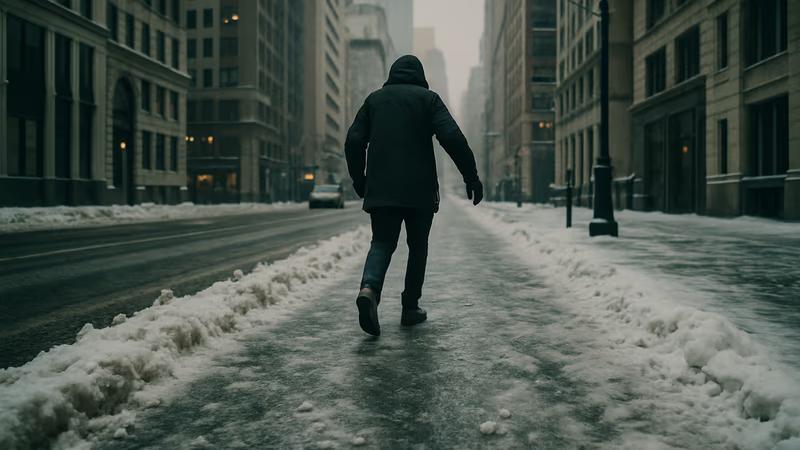
Winter weather transforms New York’s sidewalks, parking lots, and building entrances into potential hazard zones. Ice, snow, and slush create treacherous conditions that lead to thousands of slip and fall accidents across NYC and Long Island every year. When you’re injured in a winter slip and fall accident, knowing how to respond in those crucial first moments can make the difference between a successful injury claim and a missed opportunity for fair compensation.
Property owners have a legal duty to maintain safe premises, even during harsh winter weather. However, insurance companies often try to minimize payouts by claiming that winter accidents are simply “acts of nature” that no one could have prevented. The reality is that many winter slip and fall accidents result from negligent snow and ice removal, inadequate salting, or failure to post warning signs about dangerous conditions.
Winter Slip and Fall Hazards in New York
New York’s unpredictable winter weather creates a perfect storm of slip and fall hazards throughout the region. From the busy sidewalks of Manhattan to the suburban shopping centers of Nassau and Suffolk Counties, dangerous conditions can develop rapidly and catch pedestrians off guard.
Snow accumulation followed by melting and refreezing creates particularly treacherous ice patches that may not be immediately visible to pedestrians. Property owners are required under New York law to clear snow and ice within a reasonable time after a storm ends, typically within 24-48 hours depending on the municipality. However, many property owners fail to meet this obligation, leaving visitors vulnerable to serious injuries.
Parking lots present unique winter hazards, as melting snow often pools and refreezes into thick sheets of ice. Shopping centers, office buildings, and residential complexes frequently neglect proper snow removal from parking areas, focusing only on building entrances while ignoring the pathways customers and tenants must traverse. This selective maintenance approach often leads to preventable accidents and substantial liability for property owners.
Indoor hazards also multiply during winter months as wet boots and clothing create slippery conditions on hard floors. Restaurants, retail stores, and office buildings must take extra precautions to address these seasonal risks through proper matting, frequent mopping, and clear warning signs. When businesses fail to adapt their safety protocols for winter conditions, they may face premises liability claims for resulting injuries.
What To Do If You’re Injured in a Winter Slip and Fall
Taking the right steps immediately after a winter slip and fall accident is crucial for protecting your health and legal rights. Your actions in the first 24 hours can significantly impact the strength of your potential injury claim.
-
Seek immediate medical attention – Even if you feel fine initially, winter falls often cause delayed-onset injuries like concussions or soft tissue damage. Get evaluated by a medical professional right away and follow all treatment recommendations.
-
Document the scene thoroughly – Take photographs of the exact location where you fell, including wide shots showing the overall area and close-ups of ice, snow, or other hazardous conditions. Capture any nearby warning signs (or lack thereof) and document weather conditions.
-
Report the incident – Notify the property owner, manager, or responsible party immediately. Many businesses have formal incident report procedures, and getting your accident on record creates important documentation for your case.
-
Gather witness information – Collect names and contact information from anyone who saw your fall. Independent witnesses can provide crucial testimony about the dangerous conditions and how the accident occurred.
-
Preserve your clothing and footwear – Don’t wash or discard the items you were wearing during the fall. They may serve as evidence of the conditions you encountered and help reconstruct the accident.
-
Keep detailed records – Maintain a journal documenting your injuries, pain levels, medical treatments, and how the accident impacts your daily life. This information becomes valuable evidence of your damages.
-
Contact an experienced attorney – Winter slip and fall cases involve complex legal issues around property maintenance obligations and seasonal weather defenses. Professional legal guidance helps ensure you don’t miss critical deadlines or make statements that could hurt your case.
Why You Need a Lawyer
Winter slip and fall cases present unique challenges that require specialized legal expertise. Property owners and their insurance companies routinely argue that winter accidents are unavoidable “acts of God” rather than the result of negligent maintenance. Successfully overcoming these defenses requires thorough knowledge of New York’s premises liability laws and experience with seasonal accident litigation.
An experienced slip and fall attorney can identify all potentially responsible parties and investigate whether proper snow removal protocols were followed. Many cases involve multiple defendants, including property owners, snow removal contractors, and management companies, each of whom may try to shift blame to others.
Insurance companies often pressure winter accident victims to accept quick settlements before the full extent of their injuries becomes apparent. Professional legal representation ensures you don’t settle for less than fair compensation while dealing with the physical and financial impacts of your injuries.
FAQ
How long do I have to file a slip and fall lawsuit in New York?
You generally have three years from the date of your accident to file a personal injury lawsuit in New York. However, claims against government entities may have much shorter notice requirements, sometimes as brief as 90 days. It’s important to consult with an attorney as soon as possible to ensure you meet all applicable deadlines.
Can I still recover compensation if the weather was particularly bad?
Yes, severe weather doesn’t automatically bar recovery. Property owners still have duties to address hazardous conditions within reasonable timeframes after storms end. The key question is whether the property owner acted reasonably under the circumstances, not whether the weather was severe.
What if I was wearing inappropriate footwear for winter conditions?
New York follows comparative negligence rules, meaning your recovery may be reduced if you contributed to the accident through your own negligence. However, wearing regular shoes doesn’t prevent you from recovering damages if the property owner failed to maintain safe conditions.
How do I prove the property owner was negligent?
Successful winter slip and fall claims typically require evidence that the property owner had actual or constructive notice of the dangerous condition and failed to address it within a reasonable time. This can include photographs, weather records, maintenance logs, and witness testimony about how long hazardous conditions existed.
What damages can I recover in a winter slip and fall case?
You may be entitled to compensation for medical expenses, lost wages, pain and suffering, and other damages resulting from your injuries. In cases involving severe or permanent injuries, damages can be substantial and may include future medical costs and reduced earning capacity.
Contact Us
If you or a loved one has been injured in a winter slip and fall accident in NYC or Long Island, don’t let property owners and insurance companies minimize your claim. The Law Office of Jason Tenenbaum has successfully handled hundreds of personal injury cases throughout Nassau County, Suffolk County, and the five boroughs of New York City.
Our experienced team understands the complexities of winter accident cases and fights aggressively to secure full compensation for our clients. We work on a contingency fee basis, meaning you pay nothing unless we win your case.
Call the Law Offices of Jason Tenenbaum at 516-750-0595 for a free consultation. Don’t wait—evidence can disappear quickly, and New York’s statute of limitations puts time limits on your right to pursue compensation.
Related Articles
Legal Context
Why This Matters for Your Case
Personal injury law in New York is governed by a complex web of statutes, case law, and procedural rules that differ from most other states. The statute of limitations for most personal injury claims is three years under CPLR 214(5), but claims against municipalities require a Notice of Claim within 90 days. Motor vehicle accident victims must meet the serious injury threshold under Insurance Law §5102(d) before they can recover pain and suffering damages.
The Law Office of Jason Tenenbaum has recovered over $100 million for injured clients across Long Island, Nassau County, Suffolk County, Queens, Brooklyn, Manhattan, and the Bronx. With 24+ years of trial and appellate experience, more than 1,000 appeals written, and 2,353+ published legal articles, Jason Tenenbaum provides the authoritative legal analysis that practitioners and injury victims need to understand their rights.
This article reflects real courtroom experience and a deep understanding of how New York courts actually evaluate personal injury claims — from the initial filing through discovery, summary judgment, trial, and appeal.
About This Topic
Car Accident Law in New York
Car accidents in New York involve both no-fault insurance claims for immediate medical coverage and potential third-party lawsuits for pain and suffering — but only if the injured person meets the serious injury threshold under Insurance Law 5102(d). Understanding the interplay between first-party benefits and third-party litigation, police reports, comparative fault rules, and damages calculations is critical. These articles analyze the legal issues that arise in New York car accident cases across Long Island and NYC.
89 published articles in Car Accidents
Keep Reading
More Car Accidents Analysis

Social Media Addiction Lawsuits in New York: What Families Need to Know in 2026
Over 2,407 social media addiction cases are consolidated in MDL 3047. Learn what New York families need to know about filing claims against Meta, TikTok, and Snapchat in 2026.
Mar 27, 2026
$5 Million Verdict Affirmed for Childhood Sexual Abuse Survivor Under NY Survivors Act
NY appellate court affirms $5M verdict for childhood sexual abuse survivor under the Survivors Act. Learn your rights. Call 516-750-0595 for a free consultation.
Feb 18, 2026
New York’s Leash Law Realities
Learn New York's leash laws and their impact on dog bite liability. Understand statewide regulations, local variations, and legal responsibilities for pet owners.
Aug 6, 2025
Expert Witness in Car Accident Lawsuits
Learn how expert witnesses in New York car accident lawsuits help establish fault, causation, and damages through accident reconstruction, medical testimony, and economic analysis.
May 14, 2025
Is Your NY Insurer Acting in Bad Faith?
Learn how insurers commit bad faith under NY's No-Fault Law and how to fight denied claims with legal strategies.
Feb 25, 2025
Cómo tratar con las aseguradoras después de un accidente
Guía completa sobre cómo tratar con aseguradoras tras un accidente. Estrategias, derechos y pasos esenciales para proteger sus intereses legales.
May 12, 2024Was this article helpful?

About the Author
Jason Tenenbaum, Esq.
Jason Tenenbaum is the founding attorney of the Law Office of Jason Tenenbaum, P.C., headquartered at 326 Walt Whitman Road, Suite C, Huntington Station, New York 11746. With over 24 years of experience since founding the firm in 2002, Jason has written more than 1,000 appeals, handled over 100,000 no-fault insurance cases, and recovered over $100 million for clients across Long Island, Nassau County, Suffolk County, Queens, Brooklyn, Manhattan, the Bronx, and Staten Island. He is one of the few attorneys in the state who both writes his own appellate briefs and tries his own cases.
Jason is admitted to practice in New York, New Jersey, Florida, Texas, Georgia, and Michigan state courts, as well as multiple federal courts. His 2,353+ published legal articles analyzing New York case law, procedural developments, and litigation strategy make him one of the most prolific legal commentators in the state. He earned his Juris Doctor from Syracuse University College of Law.
Disclaimer: This article is published by the Law Office of Jason Tenenbaum, P.C. for informational and educational purposes only. It does not constitute legal advice, and no attorney-client relationship is formed by reading this content. The legal principles discussed may not apply to your specific situation, and the law may have changed since this article was last updated.
New York law varies by jurisdiction — court decisions in one Appellate Division department may not be followed in another, and local court rules in Nassau County Supreme Court differ from those in Suffolk County Supreme Court, Kings County Civil Court, or Queens County Supreme Court. The Appellate Division, Second Department (which covers Long Island, Brooklyn, Queens, and Staten Island) and the Appellate Term (which hears appeals from lower courts) each have distinct procedural requirements and precedents that affect litigation strategy.
If you need legal help with a car accidents matter, contact our office at (516) 750-0595 for a free consultation. We serve clients throughout Long Island (Huntington, Babylon, Islip, Brookhaven, Smithtown, Riverhead, Southampton, East Hampton), Nassau County (Hempstead, Garden City, Mineola, Great Neck, Manhasset, Freeport, Long Beach, Rockville Centre, Valley Stream, Westbury, Hicksville, Massapequa), Suffolk County (Hauppauge, Deer Park, Bay Shore, Central Islip, Patchogue, Brentwood), Queens, Brooklyn, Manhattan, the Bronx, Staten Island, and Westchester County. Prior results do not guarantee a similar outcome.