Key Takeaway
Learn New York's leash laws and their impact on dog bite liability.
This article is part of our ongoing dog bites coverage, with 6 published articles analyzing dog bites issues across New York State. Attorney Jason Tenenbaum brings 24+ years of hands-on experience to this analysis, drawing from his work on more than 1,000 appeals, over 100,000 no-fault cases, and recovery of over $100 million for clients throughout Nassau County, Suffolk County, Queens, Brooklyn, Manhattan, and the Bronx. For personalized legal advice about how these principles apply to your specific situation, contact our Long Island office at (516) 750-0595 for a free consultation.

The Intersection of Pet Ownership and Legal Responsibility
Key Takeaway
Violating New York's leash laws in public spaces can be treated as negligence per se in a dog bite lawsuit — turning a simple regulatory infraction into a powerful liability-establishing fact for injured plaintiffs.
New York attracts dog lovers from everywhere. Over 1.7 million households have at least one dog, according to the American Veterinary Medical Association. Owning a pet delivers plenty of happiness, but it also requires real responsibility, particularly with leash laws. These regulations go far beyond picking up after dogs on sidewalks. They tie straight into liability for dog bites. A simple walk in the park can turn into a courtroom dispute. This post breaks down key legal concepts, from statewide statutes to real-world implications. Dog owners, bite victims, and attorneys dealing with these cases all need to understand them. Knowing the rules helps dodge heavy fines or lawsuits. Some owners let their dogs roam free and ignore the dangers. That choice often leads to serious trouble.
One day, a neighbor’s Labrador chased a squirrel right into traffic without a leash. Chaos erupted, but nobody got hurt that time. What if the dog had bitten someone instead? Stories like this show why leash laws matter so much.
Understanding New York’s Leash Law Framework
Article 7 of New York’s Agriculture and Markets Law sets the basic rules for controlling dogs statewide. Owners need to keep their dogs in check at all times. In public spaces, that usually means using a leash unless exceptions apply. Local governments add their own specifics. New York City requires leashes in most public areas under its Health Code. Rules vary by borough—Manhattan parks enforce them tightly, while some spots in Queens allow more flexibility. Cities upstate, like Albany or Buffalo, create their own versions. They might limit leash needs to certain hours or places.
The main guidelines cover when and where to use leashes. Owners must secure dogs on sidewalks, streets, and most public property to prevent roaming. Service animals get a pass under the Americans with Disabilities Act. Off-leash dog runs, such as those in Central Park during early morning, also qualify as exceptions. Private property works too, as long as owners supervise. Authorities impose fines for breaking these rules. In New York City, a first offense starts at $25 and can reach $100 or more. Repeat issues might lead to impoundment or even criminal charges. Police or animal control officers enforce the laws, but spotty application frustrates many people.
Free Consultation · No Fee Unless We Win
Does this apply to your situation?
Every case is different. Get a free, confidential case review from an experienced attorney who can tell you exactly where you stand.
In a bustling place like New York, these laws sometimes feel outdated. Dogs run off-leash in quiet areas all the time. Still, owners who skip them invite real problems.
The Legal Foundation of Dog Bite Liability in New York
New York uses a blended approach for dog bite cases. It mixes strict liability with negligence instead of picking just one. Section 123 of the Agriculture and Markets Law makes owners liable if their dogs showed vicious behavior before. This connects to the old “one bite rule” from common law. That rule warns owners after an initial bite or aggressive move. Courts now include actions like growling or lunging in their assessments.
Plaintiffs seeking damages must show that owners knew or should have known about the dog’s patterns. Past complaints or vet records help build a strong case. Courts also consider comparative negligence. Victims who provoke dogs or trespass might get reduced awards. The setup balances owner responsibilities with fairness, but arguments can turn complicated fast.
Other states make bite lawsuits easier. New York requires solid proof, which protects owners but sometimes blocks victims from justice.
How Leash Law Violations Influence Liability Decisions
Judges often see leash violations as clear signs of negligence in bite lawsuits. If an unleashed dog attacks in a no-off-leash area, that points to poor judgment. Courts might apply negligence per se, treating the broken law as proof of failed responsibility. Cases from other states, like Bard v. Jahnke, influence thinking on unleashed dogs and boost liability risks.
New York decisions reinforce this view. In Petrone v. Fernandez, the Court of Appeals ruled that failing local leash requirements can support negligence claims, especially with injuries involved. Results hinge on specifics. If victims provoke or trespass, owners face less blame. Insurers sometimes deny coverage under home policies for these breaches, blaming owner carelessness.
Even a small mistake can lead to big money losses.
Practical Scenarios and Case Studies
Picture a Brooklyn park with clear leash signs. A dog breaks free and bites a jogger. Section 123 kicks in for liability, and the leash violation makes it worse.
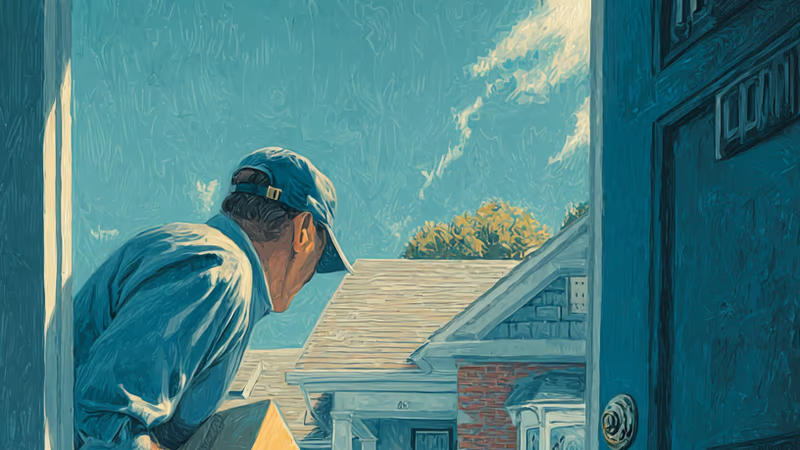
Things shift on private property. A mail carrier bitten on a porch might succeed in a claim if the dog had a history of aggression. Leash laws apply less there, unless local rules extend to yards.
Dog fights bring their own issues. Owners pay vet bills if negligence appears, like failing to leash in public spaces.
Incidents with kids raise the stakes. Children act in unpredictable ways, so owners must take extra steps to prevent harm.
Off-leash areas provide no full shield. Owners stay liable if their dogs have prior issues.
These examples illustrate how everyday choices lead to legal outcomes. Courts look closely at what owners did or didn’t do. One case in upstate New York involved a loose dog in a neighborhood that bit a child on a bike. The owner claimed the area allowed off-leash time, but records showed otherwise. The family won a substantial settlement after proving the dog’s past lunges at strangers. Stories like this remind owners to stay vigilant.
Defenses and Mitigation Strategies for Dog Owners
Owners strengthen their position by keeping records of vaccinations, training, and rule compliance. These documents prove responsible behavior.
Provocation offers a strong defense. If victims tease or bother the dog, owners might avoid liability altogether.
Trespassing works as another shield. Owners don’t owe protection to uninvited people, as courts confirmed in Haymon v. Pettit.
Most homeowner or renter policies cover bites. Owners should review limits and gaps in coverage.
To cut risks, owners invest in obedience classes and socialize their dogs. Fences and gates stop escapes effectively.
Plenty of owners skip basic training and pay the price later. Smart habits make a difference.
Communities push for better education too. Some neighborhoods host workshops on pet safety, helping everyone avoid conflicts.
Best Practices and Future Considerations
Dog owners prevent liability by sticking to leash rules. Victims document incidents thoroughly for stronger claims. Training and insurance act as key protections. Crowded cities mean more clashes in parks and shared spaces. Judges scrutinize owner knowledge closely these days, even without major law shifts.
Check the New York State Department of Agriculture and Markets site for details, or reach out to local animal control. Anyone dealing with a bite case can consult experts at The Law Office of Jason Tenenbaum, P.C. They focus on personal injury. Dial 516-750-0595 for guidance.
Staying on top of local leash rules now spares future troubles. Small efforts keep pets and people safe.
(Word count: 987)
Related Articles
Legal Context
Why This Matters for Your Case
Personal injury law in New York is governed by a complex web of statutes, case law, and procedural rules that differ from most other states. The statute of limitations for most personal injury claims is three years under CPLR 214(5), but claims against municipalities require a Notice of Claim within 90 days. Motor vehicle accident victims must meet the serious injury threshold under Insurance Law §5102(d) before they can recover pain and suffering damages.
The Law Office of Jason Tenenbaum has recovered over $100 million for injured clients across Long Island, Nassau County, Suffolk County, Queens, Brooklyn, Manhattan, and the Bronx. With 24+ years of trial and appellate experience, more than 1,000 appeals written, and 2,600+ published legal articles, Jason Tenenbaum provides the authoritative legal analysis that practitioners and injury victims need to understand their rights.
This article reflects real courtroom experience and a deep understanding of how New York courts actually evaluate personal injury claims — from the initial filing through discovery, summary judgment, trial, and appeal.
Keep Reading
More Dog Bites Analysis

Long Island Pedestrian Crashes After Dark: State Data Before the Clocks Change
From November through January, 485 of 520 evening pedestrian crashes in Nassau and Suffolk happened in the dark. State and federal data, with the CSV files.
Oct 8, 2026
Can New York Be Liable for a Parkway Crash Where There Was No Median Barrier?
A Patchogue family says a Bethpage Parkway crossover crash was preventable. What a claim against the State needs: notice, design immunity, and the 90-day clock.
Oct 2, 2026
Hit and Run Car Accidents in NY & Long Island
Hit and run accidents in NY create unique challenges for victims. Learn your rights under no-fault insurance, uninsured motorist coverage, and recovery options.
May 12, 2025
Product Liability: Who Pays When Things Go Wrong?
Discover how product liability law protects consumers from defective products, exploring defect types, legal foundations, strategies, and emerging tech issues.
Jan 10, 2025
Heat Stroke at Work in New York? You May Have a Claim
New York workers injured by heat stroke on construction sites or outdoor jobs may be entitled to compensation beyond workers' comp. Know your rights.
Jul 6, 2026
Pain and Suffering After a Car Accident in New York: How It's Calculated and What It's Worth
Pain and suffering is often the largest component of a New York car accident settlement.
Apr 4, 2026Frequently Asked Questions
Common Questions About This Topic
4 answers from the firm's New York personal-injury and employment-law practice. Click any question to expand.
Is New York a 'one bite rule' state for dog bites?
New York uses a hybrid approach. Section 123 of the Agriculture and Markets Law imposes strict liability on owners for medical costs when their dog has a known history of vicious behavior. Negligence principles also apply, particularly when leash law violations contribute to an attack.
What happens if a dog bites someone while off-leash in New York?
A leash law violation can be treated as negligence per se, meaning the violation itself constitutes evidence of negligence. This can significantly strengthen a bite victim's claim for damages and may make it harder for the owner to argue they exercised reasonable care.
Can a dog owner be liable even in a designated off-leash area?
Yes. Off-leash areas do not insulate owners from liability if their dog has a known history of aggression. The owner's knowledge of prior vicious behavior is a critical factor in New York dog bite liability cases regardless of location.
What should I do if I'm bitten by a dog in New York?
Seek medical attention immediately, document the incident with photos, obtain the owner's contact information, report the bite to animal control, and consult a personal injury attorney. Time limits apply to personal injury claims in New York, so acting quickly is important.
Was this article helpful?
Disclaimer: This article is published by the Law Office of Jason Tenenbaum, P.C. for informational and educational purposes only. It does not constitute legal advice, and no attorney-client relationship is formed by reading this content. The legal principles discussed may not apply to your specific situation, and the law may have changed since this article was last updated.
New York law varies by jurisdiction — court decisions in one Appellate Division department may not be followed in another, and local court rules in Nassau County Supreme Court differ from those in Suffolk County Supreme Court, Kings County Civil Court, or Queens County Supreme Court. The Appellate Division, Second Department (which covers Long Island, Brooklyn, Queens, and Staten Island) and the Appellate Term (which hears appeals from lower courts) each have distinct procedural requirements and precedents that affect litigation strategy.
If you need legal help with a dog bites matter, contact our office at (516) 750-0595 for a free consultation. We serve clients throughout Long Island (Huntington, Babylon, Islip, Brookhaven, Smithtown, Riverhead, Southampton, East Hampton), Nassau County (Hempstead, Garden City, Mineola, Great Neck, Manhasset, Freeport, Long Beach, Rockville Centre, Valley Stream, Westbury, Hicksville, Massapequa), Suffolk County (Hauppauge, Deer Park, Bay Shore, Central Islip, Patchogue, Brentwood), Queens, Brooklyn, Manhattan, the Bronx, Staten Island, and Westchester County. Prior results do not guarantee a similar outcome.