Key Takeaway
Learn about New York's dog bite laws after the landmark 2025 Flanders v. Goodfellow ruling that ended the "one free bite" rule and expanded victim rights.
This article is part of our ongoing dog bites coverage, with 6 published articles analyzing dog bites issues across New York State. Attorney Jason Tenenbaum brings 24+ years of hands-on experience to this analysis, drawing from his work on more than 1,000 appeals, over 100,000 no-fault cases, and recovery of over $100 million for clients throughout Nassau County, Suffolk County, Queens, Brooklyn, Manhattan, and the Bronx. For personalized legal advice about how these principles apply to your specific situation, contact our Long Island office at (516) 750-0595 for a free consultation.

Dog attacks happen far more frequently than most New Yorkers expect. Health department reports confirm thousands of documented cases occur statewide each year, with many more never officially recorded. These statistics represent real people facing physical injuries, emotional trauma, and financial strain that can reshape lives.
If you’ve experienced a dog bite, understanding your legal options matters now more than ever. Recent legal developments have transformed how victims seek justice. The Law Office of Jason Tenenbaum, P.C. helps injured clients navigate these changes daily.
New York’s Legal Landscape Shifts
Until recently, New York operated under a complex “mixed” liability system. While Agriculture and Markets Law Section 123 provided some protection, victims often struggled with legal barriers. The infamous “one free bite” rule allowed owners to avoid responsibility unless their dog had previously shown aggression.
On April 17, 2025, everything changed. A landmark New York Court of Appeals decision in Flanders v. Goodfellow dismantled this controversial doctrine, creating fairer paths to justice for bite victims. The court explicitly ended the “one free bite” rule that required victims to prove known “vicious propensities” before a bite occurred. This expansion of legal rights fundamentally reshapes protections for dog bite victims. You can learn more about the New York Court of Appeals on their official website.
Free Consultation · No Fee Unless We Win
Does this apply to your situation?
Every case is different. Get a free, confidential case review from an experienced attorney who can tell you exactly where you stand.
Your Legal Pathways After an Attack
Medical Cost Coverage
State law still mandates automatic coverage for medical and veterinary expenses through Agriculture and Markets Law § 123. Owners bear this responsibility regardless of their pet’s history. You don’t need to prove negligence or prior knowledge – the statute imposes this duty directly.
However, this law historically covered only basic medical bills. Seeking broader compensation required different legal strategies.
The Game-Changer: Negligence Claims
The 2025 Flanders v. Goodfellow decision revolutionized New York’s legal approach. The case involved Rebecca Flanders, a postal carrier seriously injured by a dog bite in 2018. Lower courts initially rejected her negligence claim under the old rule from Bard v. Jahnke (2006). The Court of Appeals, led by Judge Halligan, determined the prior standard was “unworkable and at times unjust,” overturning it completely.
This major legal shift now allows negligence claims by showing an owner failed to control their animal – without proving dangerous tendencies. Understanding negligence is key in these cases. Victims now have two distinct legal routes to hold owners accountable:
- Establishing known aggressive behavior (traditional strict liability)
- Demonstrating owner carelessness in controlling their pet (new negligence standard)
This dual approach significantly eases recovery for victims seeking financial compensation.
Why Evidence Still Counts
Proving a dog’s violent history remains valuable for maximum compensation. Evidence like previous biting incidents, growling warnings, or territorial aggression strengthens cases. Witness statements, animal control records, and veterinary documentation often prove decisive.
What Affects Liability Today
Location plays a crucial role. Did the incident happen on public property? Were you legally present where it occurred? These details impact case viability.
Your own actions matter too. New York’s comparative negligence rules may reduce compensation if your conduct contributed to the incident. Still, owners can no longer claim ignorance about their pet’s potential danger as a full defense. They must exercise reasonable control at all times, with increased responsibility to prevent attacks even without aggression history.
Local leash laws and breed-specific regulations add further layers. Municipal rule violations often support negligence claims under the updated legal framework. Check your local ordinances for specific regulations.
Compensation Available to Victims
New York dog bite victims may recover several damage types:
- Medical expenses: Emergency care, surgeries, rehabilitation, and ongoing treatment
- Pain and suffering: Especially significant for permanent scarring or disfigurement
- Lost income: Wages during recovery and reduced future earning potential
- Emotional trauma: Increasingly recognized in psychological injury cases
In rare situations involving extreme recklessness, punitive damages might apply, though courts award these sparingly.
Navigating the Legal Process
Act quickly after any dog attack. While New York allows three years to file most injury claims, evidence collection should start immediately.
Critical steps include:
- Photographing injuries and the location
- Obtaining medical documentation
- Identifying witnesses
- Reporting to animal control
Insurance adjusters often contact victims rapidly, but remember – their interests differ from yours. Professional legal guidance helps level the playing field during settlement talks or potential litigation.
The Law Office of Jason Tenenbaum, P.C. guides clients through each phase, from evidence preservation to courtroom representation. While recent legal changes simplify many cases, experienced advocacy remains essential.
Moving Forward with Stronger Protections
New York’s expanded dog bite laws represent significant progress for victims. The elimination of outdated doctrines like the “one free bite” rule and establishment of negligence claims offer clearer paths to justice. This legal transformation ensures pet owners bear greater responsibility while empowering injured individuals. If you’ve suffered an attack, understanding these rights empowers your recovery journey.
Related Articles
Legal Context
Why This Matters for Your Case
Personal injury law in New York is governed by a complex web of statutes, case law, and procedural rules that differ from most other states. The statute of limitations for most personal injury claims is three years under CPLR 214(5), but claims against municipalities require a Notice of Claim within 90 days. Motor vehicle accident victims must meet the serious injury threshold under Insurance Law §5102(d) before they can recover pain and suffering damages.
The Law Office of Jason Tenenbaum has recovered over $100 million for injured clients across Long Island, Nassau County, Suffolk County, Queens, Brooklyn, Manhattan, and the Bronx. With 24+ years of trial and appellate experience, more than 1,000 appeals written, and 2,600+ published legal articles, Jason Tenenbaum provides the authoritative legal analysis that practitioners and injury victims need to understand their rights.
This article reflects real courtroom experience and a deep understanding of how New York courts actually evaluate personal injury claims — from the initial filing through discovery, summary judgment, trial, and appeal.
Keep Reading
More Dog Bites Analysis

Long Island Pedestrian Crashes After Dark: State Data Before the Clocks Change
From November through January, 485 of 520 evening pedestrian crashes in Nassau and Suffolk happened in the dark. State and federal data, with the CSV files.
Oct 8, 2026
Can New York Be Liable for a Parkway Crash Where There Was No Median Barrier?
A Patchogue family says a Bethpage Parkway crossover crash was preventable. What a claim against the State needs: notice, design immunity, and the 90-day clock.
Oct 2, 2026
How Long Do You Have to File a Motorcycle Accident Claim in NY?
Learn about New York's 3-year statute of limitations for motorcycle accident claims, exceptions for government cases, and critical filing deadlines.
Jun 6, 2025
How to Handle Insurers After an Accident
Learn how to handle insurance companies after an accident. Expert tips on documentation, adjuster tactics, and protecting your claim from experienced Long Island attorneys.
Jan 30, 2025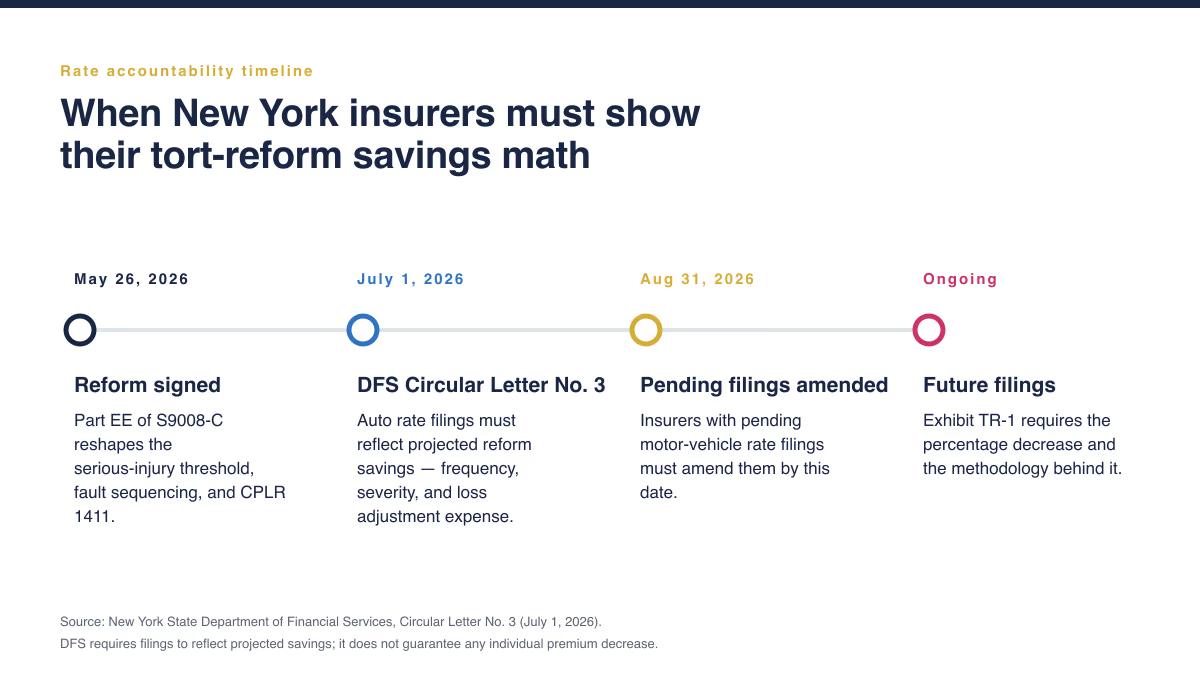
NY Auto Insurance Rating Rules 2026: Job, Education, Homeownership and Zip Code Limits
Insurance Law §2341, effective Nov. 23, 2026, limits NY auto insurers' use of occupation, education, homeownership, prior-insurance gaps, and tiny.
Aug 17, 2026
NY Commercial Vehicle Accident Settlements (2026)
Commercial vehicle crash in NY: $750K–$5M insurance minimums, employer liability, FMCSR violations. Delivery truck & van accident attorney. 516-750-0595.
Apr 4, 2026Was this article helpful?
Disclaimer: This article is published by the Law Office of Jason Tenenbaum, P.C. for informational and educational purposes only. It does not constitute legal advice, and no attorney-client relationship is formed by reading this content. The legal principles discussed may not apply to your specific situation, and the law may have changed since this article was last updated.
New York law varies by jurisdiction — court decisions in one Appellate Division department may not be followed in another, and local court rules in Nassau County Supreme Court differ from those in Suffolk County Supreme Court, Kings County Civil Court, or Queens County Supreme Court. The Appellate Division, Second Department (which covers Long Island, Brooklyn, Queens, and Staten Island) and the Appellate Term (which hears appeals from lower courts) each have distinct procedural requirements and precedents that affect litigation strategy.
If you need legal help with a dog bites matter, contact our office at (516) 750-0595 for a free consultation. We serve clients throughout Long Island (Huntington, Babylon, Islip, Brookhaven, Smithtown, Riverhead, Southampton, East Hampton), Nassau County (Hempstead, Garden City, Mineola, Great Neck, Manhasset, Freeport, Long Beach, Rockville Centre, Valley Stream, Westbury, Hicksville, Massapequa), Suffolk County (Hauppauge, Deer Park, Bay Shore, Central Islip, Patchogue, Brentwood), Queens, Brooklyn, Manhattan, the Bronx, Staten Island, and Westchester County. Prior results do not guarantee a similar outcome.