Key Takeaway
Learn how vicarious liability impacts personal injury cases and how our Long Island lawyers can help maximize your compensation.
This article is part of our ongoing personal injury coverage, with 180 published articles analyzing personal injury issues across New York State. Attorney Jason Tenenbaum brings 24+ years of hands-on experience to this analysis, drawing from his work on more than 1,000 appeals, over 100,000 no-fault cases, and recovery of over $100 million for clients throughout Nassau County, Suffolk County, Queens, Brooklyn, Manhattan, and the Bronx. For personalized legal advice about how these principles apply to your specific situation, contact our Long Island office at (516) 750-0595 for a free consultation.

Our personal injury lawyers can assist with such matters.
When dominoes fall, each piece triggers the next in a chain reaction. Vicarious liability works the same way in personal injury law—It holds parties responsible for others’ actions when a specific relationship exists. Over one-third of personal injury cases now involve some form of vicarious liability. That number keeps growing.
Vicarious liability lets injured people seek compensation beyond just the person who harmed them. They can also go after others tied to that person through employment or ownership. Whether you’re seeking justice after an injury or defending against a claim, this concept can mean the difference between fair compensation and financial hardship.
At The Law Office of Jason Tenenbaum, P.C., we specialize in guiding Long Island residents through these complex cases. Our team works to secure maximum compensation for injury victims while protecting clients from unjust liability claims. Below, we break down how vicarious liability works, its real-world applications, and why skilled legal support matters.
Free Consultation · No Fee Unless We Win
Does this apply to your situation?
Every case is different. Get a free, confidential case review from an experienced attorney who can tell you exactly where you stand.
The Mechanics of Vicarious Liability
What Vicarious Liability Means for Injury Cases
Vicarious liability makes one party legally responsible for another’s harmful actions. It applies when a specific relationship exists between them. This principle focuses on connections, not personal fault.
Say a delivery driver causes an accident while on the job. The injured person could file claims against both the driver and the employer. The company didn’t cause the crash directly. But liability applies because the driver acted within their job duties. Businesses that profit from their workers’ actions should share the blame for related harms.
Three Pillars of Vicarious Liability
For this principle to apply, three elements must align:
- Recognized Relationship: The parties must have a formal connection like employer-employee, business partnerships, or parent-child (in limited cases).
- Action Within Scope: The wrongful act must occur during activities tied to the relationship. A server causing a car accident while delivering supplies for a restaurant might involve the employer, but not if they were running personal errands off-duty.
- Proven Harm: The action must directly cause measurable injury or damage.
Common Situations Where Vicarious Liability Applies
- Workplace Incidents: Employers often bear responsibility for employee actions during job-related tasks.
- Business Partnerships: A company might be liable if a partner commits negligence while representing the firm.
- Vehicle Ownership: Lending your car to someone who then causes an accident could trigger liability.
- Parental Responsibility: While rare, parents might face liability for deliberate property damage caused by minor children.
How Vicarious Liability Shapes Injury Claims
Expanding Recovery Options
This legal doctrine helps injury victims access more than one source of payment. When a negligent driver has little insurance, their employer’s commercial policy often covers more. Vicarious liability also pushes companies to be safer. Businesses that know they could face liability spend more on training and safety.
Real-World Case Examples
Delivery Driver Incentives Backfire
A local restaurant’s delivery guarantee program pressured drivers to meet unrealistic deadlines, leading to a pedestrian accident during a rainstorm. By proving the employer’s policies encouraged reckless driving, we secured a settlement covering the victim’s medical bills and lost income from both the driver and restaurant.
Medical Oversight Failure
A patient suffered complications after a procedure performed by a poorly supervised physician’s assistant. We demonstrated the clinic’s systemic supervision failures, winning compensation from both the assistant and overseeing physician.
Faulty Contractor Decisions
A property owner insisted a contractor use inadequate materials to install a sign, which later fell and injured a visitor. Evidence showing the owner’s direct control over installation methods led to a successful claim against their insurance.
Recent Legal Shifts Impacting Liability
- Franchise Accountability: Courts now hold franchisors liable for franchisee workers’ actions more often. This happens when the franchisor has major control over operations.
- Gig Economy Challenges: Companies like Uber face more scrutiny over how they classify workers. Some regions now treat contractors as employees for liability purposes.
- UK vs. US Approaches: A British ruling limited corporate liability for independent contractors. This differs from broader U.S. rules, showing how location matters.
Overcoming Vicarious Liability Challenges
Common Hurdles in Proving Claims
- Relationship Complexity: Telling employees apart from independent contractors often means looking at payment methods, equipment use, and job controls.
- Scope Disputes: Defense teams often argue the actions fell outside job duties. You may need GPS data or work schedules to prove otherwise.
- Corporate Shields: Businesses may use subsidiaries or franchises to limit liability. Lawyers must then work to “pierce the corporate veil.”
Defense Tactics and Counterstrategies
- Independent Contractor Claims: Employers may present contracts classifying workers as contractors. Counter with evidence of actual control, like mandatory uniforms or performance metrics.
- Scope Arguments: Show how tasks benefited the employer, even if methods violated policies. A delivery driver taking unauthorized shortcuts to meet quotas still serves company interests.
- Third-Party Blame Shifting: Identify all potential liable parties early through thorough evidence review.
Why Experience Matters in Vicarious Liability Cases
Our Approach at The Law Office of Jason Tenenbaum, P.C.
- Deep Investigation: We uncover hidden relationships through employment records, communications, and financial documents.
- Proactive Discovery: Early deposition requests and subpoenas reveal critical details about operational controls.
- Adaptive Strategies: From gig economy apps to healthcare systems, we apply evolving legal standards to modern challenges.
Notable Outcomes
- Construction Site Collapse: Secured a five-fold higher settlement by proving a general contractor’s control over subcontractor safety protocols.
- Rideshare Coverage Win: Overcame a driver’s “independent contractor” label to access the company’s insurance for a passenger’s injuries.
- Medical Malpractice Expansion: Held a clinic liable for lax supervision of staff, ensuring lifelong care costs for an injured patient.
The Future of Vicarious Liability
Emerging trends continue reshaping this legal landscape:
- AI Accountability: Courts may soon grapple with liability for self-driving car crashes or automated system errors.
- Corporate Responsibility Expansion: Public pressure could increase liability for supply chain practices or environmental impacts.
- Legislative Changes: New laws may redefine worker classifications in the gig economy, altering liability exposure.
Take Action with Skilled Guidance
Vicarious liability cases demand nuanced understanding of relationships and legal standards. Whether you’re seeking compensation or managing liability risks, professional counsel proves invaluable.
The Law Office of Jason Tenenbaum, P.C. offers free consultations to evaluate your case. We’ll identify all potential avenues for recovery or defense, ensuring your rights stay protected.
Contact us at 516-750-0595 or intake@jtnylaw.com for a case review. Let our expertise in vicarious liability work for you.
Property owners face the same analysis when a contractor’s or managing agent’s neglect causes a fall; our Long Island slip and fall attorney page explains how notice is proven against each of them.
Disclaimer: This article provides general information, not legal advice. Consult an attorney about your specific situation.
For more information on vicarious liability, check out this video:
Related Articles
Watch: Vicarious Liability Explained
Legal Context
Why This Matters for Your Case
Personal injury law in New York is governed by a complex web of statutes, case law, and procedural rules that differ from most other states. The statute of limitations for most personal injury claims is three years under CPLR 214(5), but claims against municipalities require a Notice of Claim within 90 days. Motor vehicle accident victims must meet the serious injury threshold under Insurance Law §5102(d) before they can recover pain and suffering damages.
The Law Office of Jason Tenenbaum has recovered over $100 million for injured clients across Long Island, Nassau County, Suffolk County, Queens, Brooklyn, Manhattan, and the Bronx. With 24+ years of trial and appellate experience, more than 1,000 appeals written, and 2,600+ published legal articles, Jason Tenenbaum provides the authoritative legal analysis that practitioners and injury victims need to understand their rights.
This article reflects real courtroom experience and a deep understanding of how New York courts actually evaluate personal injury claims — from the initial filing through discovery, summary judgment, trial, and appeal.
About This Topic
New York Personal Injury Law
When negligence causes serious injury, New York law entitles victims to compensation for medical bills, lost income, pain and suffering, and more. From car accidents and slip-and-falls to construction injuries and medical malpractice, the Law Office of Jason Tenenbaum has recovered over $100 million for injured Long Islanders and New Yorkers since 2002.
180 published articles in Personal Injury
Keep Reading
More Personal Injury Analysis

Nassau Police Ordered to Pay $34,690.50 in FOIL Fees: What Meyer Means After a Crash
The Second Department raised a FOIL fee award against the Nassau County Police Department from $12,000 to $34,690.50. The statute, the math, and the FOIL clock.
Oct 8, 2026
Long Island Pedestrian Crashes After Dark: State Data Before the Clocks Change
From November through January, 485 of 520 evening pedestrian crashes in Nassau and Suffolk happened in the dark. State and federal data, with the CSV files.
Oct 8, 2026
How Long Do You Have to File a Motorcycle Accident Claim in NY?
Learn about New York's 3-year statute of limitations for motorcycle accident claims, exceptions for government cases, and critical filing deadlines.
Jun 6, 2025
Don’t Sign the Check! – Insurance Settlements Considerations
Learn why quick insurance settlements can risk your financial future and how to protect your rights after an accident.
Jan 27, 2025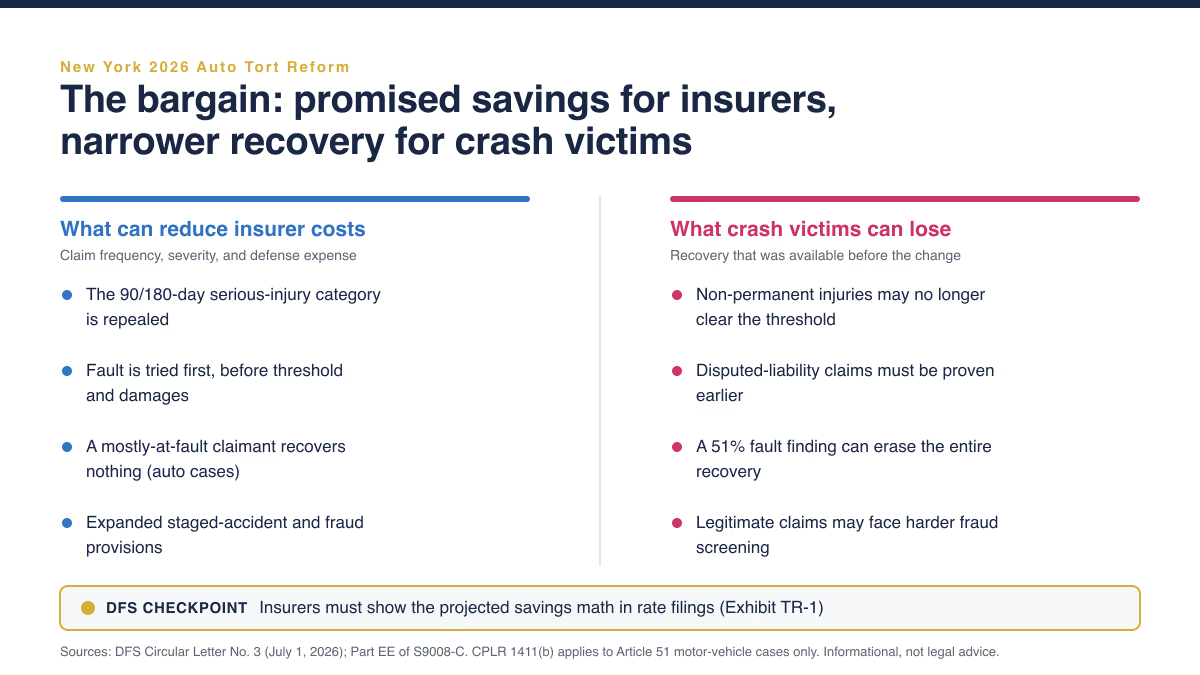
Will NY Auto Insurance Rates Go Down After Tort Reform? What Crash Victims Give Up
DFS Circular Letter No. 3 orders NY auto insurers to show their tort-reform savings math by Aug. 31, 2026. Here is what crash victims traded for it.
Aug 13, 2026
Drowsy Driving Accident Settlement Amounts in New York (2024–2026)
How much is a drowsy driving accident settlement worth in New York?
Apr 4, 2026Was this article helpful?
Disclaimer: This article is published by the Law Office of Jason Tenenbaum, P.C. for informational and educational purposes only. It does not constitute legal advice, and no attorney-client relationship is formed by reading this content. The legal principles discussed may not apply to your specific situation, and the law may have changed since this article was last updated.
New York law varies by jurisdiction — court decisions in one Appellate Division department may not be followed in another, and local court rules in Nassau County Supreme Court differ from those in Suffolk County Supreme Court, Kings County Civil Court, or Queens County Supreme Court. The Appellate Division, Second Department (which covers Long Island, Brooklyn, Queens, and Staten Island) and the Appellate Term (which hears appeals from lower courts) each have distinct procedural requirements and precedents that affect litigation strategy.
If you need legal help with a personal injury matter, contact our office at (516) 750-0595 for a free consultation. We serve clients throughout Long Island (Huntington, Babylon, Islip, Brookhaven, Smithtown, Riverhead, Southampton, East Hampton), Nassau County (Hempstead, Garden City, Mineola, Great Neck, Manhasset, Freeport, Long Beach, Rockville Centre, Valley Stream, Westbury, Hicksville, Massapequa), Suffolk County (Hauppauge, Deer Park, Bay Shore, Central Islip, Patchogue, Brentwood), Queens, Brooklyn, Manhattan, the Bronx, Staten Island, and Westchester County. Prior results do not guarantee a similar outcome.