Key Takeaway
Discover how product liability law protects consumers from defective products, exploring defect types, legal foundations, strategies, and emerging tech issues.
This article is part of our ongoing consumer protection coverage, with 1 published articles analyzing consumer protection issues across New York State. Attorney Jason Tenenbaum brings 24+ years of hands-on experience to this analysis, drawing from his work on more than 1,000 appeals, over 100,000 no-fault cases, and recovery of over $100 million for clients throughout Nassau County, Suffolk County, Queens, Brooklyn, Manhattan, and the Bronx. For personalized legal advice about how these principles apply to your specific situation, contact our Long Island office at (516) 750-0595 for a free consultation.

Product liability law empowers consumers by holding manufacturers, distributors, and sellers accountable when their defective products cause injuries. This area of personal injury law protects the public and shapes how companies approach product safety. From dangerous car parts to malfunctioning appliances, product liability touches many aspects of daily life.
The Three Categories of Product Defects
Product liability covers three types of defects, each with its own legal rules. Design defects make products dangerous even when built correctly. Think of a power tool with no safety guard — every unit has the same flaw. Manufacturing defects happen during production when items stray from specs. A tire with weak structure due to a factory error is a good example.
Marketing defects occur when makers fail to warn about product dangers. An inner tube with no safety info about inflation limits fits this category.
Legal Foundations
Three legal theories support product liability claims: negligence, strict liability, and breach of warranty. Negligence means the maker failed to use reasonable care and caused injury. Strict liability gives plaintiffs a big edge. They only need to prove the product was defective and caused harm. The maker’s level of care does not matter. Breach of warranty claims focus on broken promises about product quality.
Free Consultation · No Fee Unless We Win
Does this apply to your situation?
Every case is different. Get a free, confidential case review from an experienced attorney who can tell you exactly where you stand.
Recent cases show courts paying closer attention to product safety in cars, medical devices, and consumer electronics.
Building a Strong Claim
Winning a product liability case means proving three things. First, the product had a design, manufacturing, or warning defect. Second, that defect caused the injury. In brake failure cases, for example, you must prove the faulty brakes – not driver error – caused the crash. Third, you need records of all damages, from medical costs to lost income.
Evidence forms the foundation of these claims. Critical elements include:
– The defective product itself
– Photos and videos
– Medical records
– Witness statements
– Expert testimony
Expert analysis often proves indispensable, especially for technical cases. These specialists help judges and juries understand complex issues by examining products, determining defects, and explaining how those flaws caused injuries.
Strategic Approaches
Winning a product liability claim takes a careful plan. Start with a thorough investigation to gather all the evidence you can. Next, identify every possible defendant – from designers to retailers. Each party in the supply chain may share liability. Both makers and sellers who knowingly ship defective items can face consequences.
Discovery tools help uncover key evidence like internal documents, emails, and expert reports. Class action lawsuits can help when many people are hurt by the same defect. This approach pools resources and pressures large companies to fix widespread problems.
Common Challenges
Product liability cases often involve complex technical evidence. Judges and juries need clear explanations. Expert testimony fills this gap by breaking down engineering concepts in plain terms. Makers often fight back with defenses like assumption of risk or contributory negligence. They claim victims knew about the dangers or caused their own injuries. Beating these defenses takes thorough preparation.
Product recalls and regulatory rules add another layer. Recalls don’t prove liability on their own, but they help the plaintiff’s case. Breaking safety standards can show negligence. Following them may help a maker’s defense. Knowing this regulatory landscape is key to building a strong case.
Recent Legal Developments
Current cases involving autonomous vehicles and medical devices continue shaping product liability law. These matters often tackle novel issues like software defects and unexpected product interactions. Appeals court rulings establish new standards influencing future cases. Major suits involving asbestos, tobacco and pharmaceuticals have driven important reforms in corporate behavior and consumer protection. See more on recent developments in product liability law.
Paths to Resolution
Some cases go to trial. But settlements and other options can work well too. Settlements give you a sure outcome and skip long court fights. Mediation uses a neutral third party to help both sides reach a deal. Arbitration lets a neutral decision-maker resolve the dispute after reviewing evidence. These paths often cost less than a trial and keep things private. Learn about the process of filing a product liability claim.
The product liability landscape keeps evolving through new technologies, precedents and regulations. Success requires understanding these changes while building strong cases through evidence, expertise and strategic planning. Those injured by defective products should consult qualified attorneys to explore their options and protect their rights. If you’ve been injured, explore your options with an attorney experienced in product liability claims.
Emerging Issues in Product Liability
Technology continues reshaping product liability law through:
- Artificial intelligence liability questions
- Connected device failures
- 3D printing defect cases
- Software malfunction incidents
The firm maintains current knowledge of these developments to provide excellent representation.
One of the fastest-growing categories is lithium-ion battery fires; our guide to an e-bike battery fire lawsuit in New York explains how strict liability reaches the manufacturer, importer, and retailer.
Legal Support When You Need It
Product-related injuries demand experienced legal guidance. The Law Office of Jason Tenenbaum, P.C. team evaluates cases thoroughly, explains legal rights clearly, and fights persistently for maximum compensation. A free consultation allows exploration of available legal options.
Disclaimer: This blog post provides general information only and should not be considered legal advice. Each case presents different circumstances affecting potential outcomes. Please contact the office directly for specific legal guidance.
Related Articles
Legal Context
Why This Matters for Your Case
Personal injury law in New York is governed by a complex web of statutes, case law, and procedural rules that differ from most other states. The statute of limitations for most personal injury claims is three years under CPLR 214(5), but claims against municipalities require a Notice of Claim within 90 days. Motor vehicle accident victims must meet the serious injury threshold under Insurance Law §5102(d) before they can recover pain and suffering damages.
The Law Office of Jason Tenenbaum has recovered over $100 million for injured clients across Long Island, Nassau County, Suffolk County, Queens, Brooklyn, Manhattan, and the Bronx. With 24+ years of trial and appellate experience, more than 1,000 appeals written, and 2,600+ published legal articles, Jason Tenenbaum provides the authoritative legal analysis that practitioners and injury victims need to understand their rights.
This article reflects real courtroom experience and a deep understanding of how New York courts actually evaluate personal injury claims — from the initial filing through discovery, summary judgment, trial, and appeal.
Keep Reading
More Consumer Protection Analysis
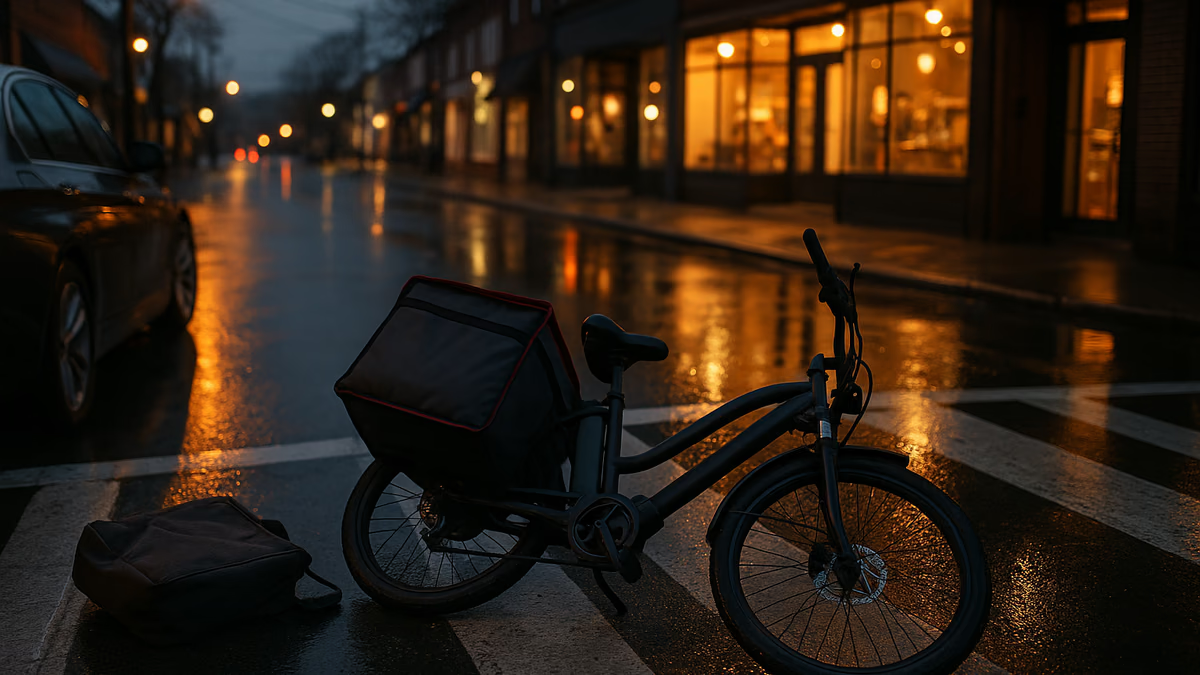
NYC's Pending E-Bike Bills: What They Would Change for People Hurt in a Crash
NYC heard 23 e-bike and delivery bills on September 30, 2026. What each text would change for hurt pedestrians and riders, and the law that applies today.
Oct 21, 2026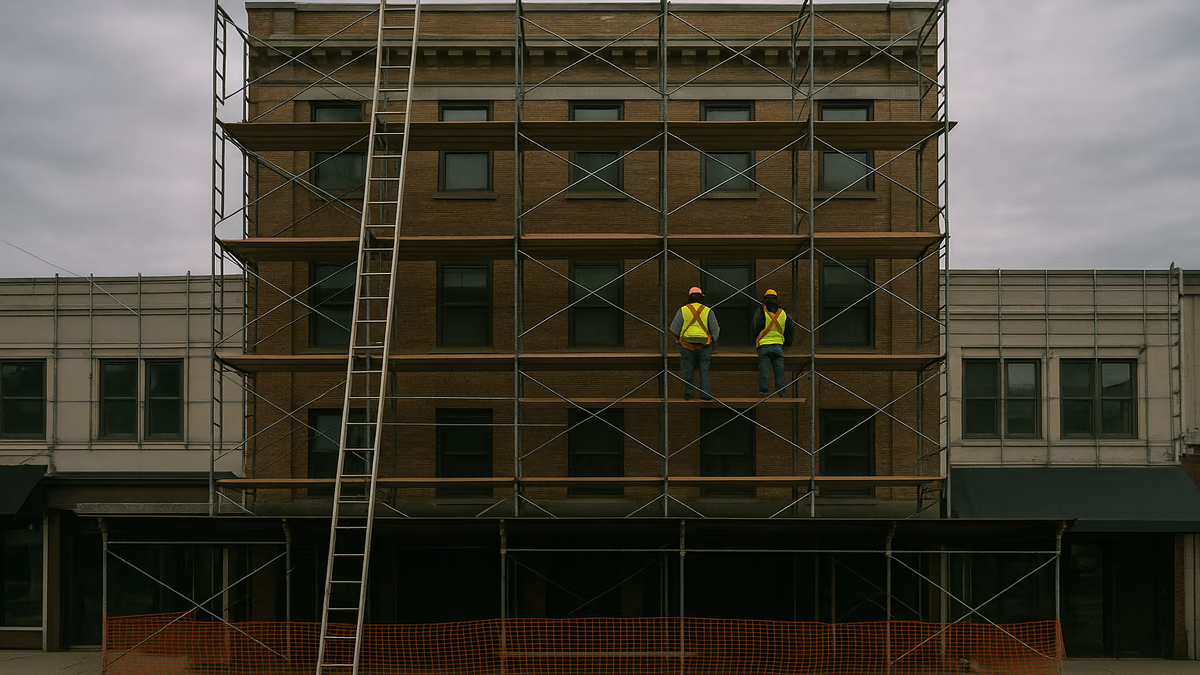
New York's Scaffold Law in the 2027 Budget: What Happens If Labor Law 240 Changes, and What Happens If It Doesn't
Labor Law 240 and the 2027 New York budget: what each side argues, the bills on file, and what each possible outcome would change.
Oct 19, 2026
Slip and Fall: 7 Steps to Take in the First 24 Hours
Learn the 7 critical steps to take in the first 24 hours after a slip and fall accident in New York to protect your rights and build a strong injury claim.
Aug 8, 2025
Vicarious Liability Explained
Learn how vicarious liability impacts personal injury cases and how our Long Island lawyers can help maximize your compensation.
Mar 14, 2025
Hurt by a Drunk Driver in New York? No-Fault, the Lawsuit, and the 2026 Rules
Two Long Island DWI crashes this month. What no-fault pays a victim, what the lawsuit needs after the 2026 reform, why the criminal case is not your case.
Oct 1, 2026
$8 Million Yonkers Verdict Highlights Municipal Liability for Truck Accidents in New York
Recent $8 million Westchester verdict against City of Yonkers shows how municipalities face substantial liability when their vehicles cause accidents.
Apr 13, 2026Was this article helpful?
Disclaimer: This article is published by the Law Office of Jason Tenenbaum, P.C. for informational and educational purposes only. It does not constitute legal advice, and no attorney-client relationship is formed by reading this content. The legal principles discussed may not apply to your specific situation, and the law may have changed since this article was last updated.
New York law varies by jurisdiction — court decisions in one Appellate Division department may not be followed in another, and local court rules in Nassau County Supreme Court differ from those in Suffolk County Supreme Court, Kings County Civil Court, or Queens County Supreme Court. The Appellate Division, Second Department (which covers Long Island, Brooklyn, Queens, and Staten Island) and the Appellate Term (which hears appeals from lower courts) each have distinct procedural requirements and precedents that affect litigation strategy.
If you need legal help with a consumer protection matter, contact our office at (516) 750-0595 for a free consultation. We serve clients throughout Long Island (Huntington, Babylon, Islip, Brookhaven, Smithtown, Riverhead, Southampton, East Hampton), Nassau County (Hempstead, Garden City, Mineola, Great Neck, Manhasset, Freeport, Long Beach, Rockville Centre, Valley Stream, Westbury, Hicksville, Massapequa), Suffolk County (Hauppauge, Deer Park, Bay Shore, Central Islip, Patchogue, Brentwood), Queens, Brooklyn, Manhattan, the Bronx, Staten Island, and Westchester County. Prior results do not guarantee a similar outcome.