Key Takeaway
Consecuencias legales graves por no presentarse a la corte en Nueva York: multas, órdenes de arresto, sentencias en rebeldía y suspensión de licencia.
This article is part of our ongoing faq coverage, with 30 published articles analyzing faq issues across New York State. Attorney Jason Tenenbaum brings 24+ years of hands-on experience to this analysis, drawing from his work on more than 1,000 appeals, over 100,000 no-fault cases, and recovery of over $100 million for clients throughout Nassau County, Suffolk County, Queens, Brooklyn, Manhattan, and the Bronx. For personalized legal advice about how these principles apply to your specific situation, contact our Long Island office at (516) 750-0595 for a free consultation.
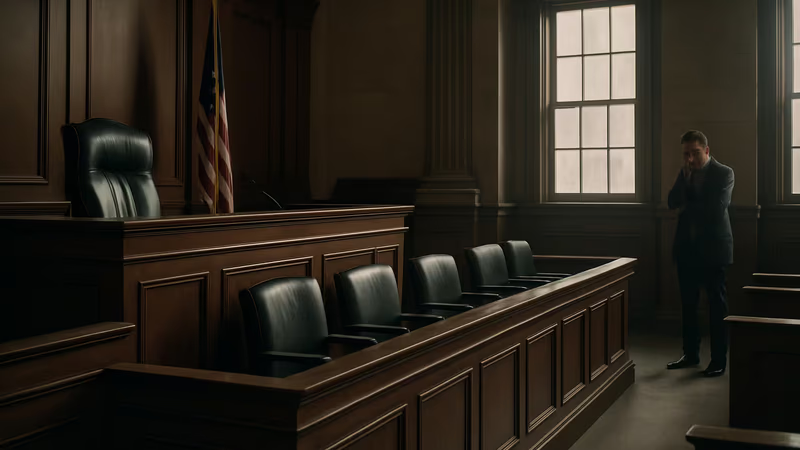
¿Qué pasa si no se presenta a la corte? No presentarse a la corte puede arruinar todo su caso. Datos recientes revelan que las llegadas tarde interrumpen el 15% de los procedimientos judiciales, desperdiciando recursos judiciales y potencialmente perjudicando los resultados de los casos. Pregúntele a James Miller, quien perdió su demanda por discriminación laboral en Nueva York el año pasado simplemente por llegar 45 minutos tarde. El juez desestimó su caso con perjuicio, lo que significa que perdió permanentemente la oportunidad de buscar justicia, a pesar de contar con pruebas contundentes.
Cuando la tardanza golpea tu billetera y tu libertad

Una cita en el tribunal crea una obligación legal vinculante. Los jueces gestionan sus salas con precisión, y llegar tarde es una falta de respeto a todo el proceso legal. Las sanciones por llegar tarde son muy duras:
- Los jueces pueden emitir inmediatamente órdenes de arresto por su ausencia
- Puede enfrentarse a multas elevadas, que a menudo alcanzan miles de dólares.
- El tribunal podría declararlo en desacato, lo que podría derivar en una pena de cárcel.
- Los casos civiles podrían terminar en pérdida automática por sentencia en rebeldía
- Los problemas de tráfico pueden provocar la suspensión de la licencia
Las estadísticas de los tribunales del estado de Nueva York revelan que las llegadas tarde y las incomparecencias retrasan aproximadamente el 10 % de los casos cada año. Estos retrasos generan millones en costos legales adicionales y desperdician incontables horas de tiempo en los tribunales.
Cómo la tardanza perjudica tu defensa legal
Llegar tarde no solo irrita al juez, sino que perjudica toda su estrategia legal. Es probable que su abogado haya pasado horas preparándose para esta audiencia. Cuando llega tarde:
- Las discusiones críticas sobre estrategia previas a la audiencia se interrumpen
- Su abogado debe esforzarse por ajustar el enfoque planificado
- El juez puede darle menos tiempo para presentar su caso
- La reputación de su abogado ante el tribunal se ve afectada
Muchos jueces consideran que la tardanza de un cliente refleja mal la capacidad del abogado y potencialmente debilita su eficacia para representarlo.
Los costos ocultos de llegar tarde
La tardanza en los tribunales crea un efecto dominó de gastos y estrés: Impacto financiero:
- Más honorarios de abogados por reprogramación
- Costas judiciales extraordinarias
- Trabajo faltante por nuevas fechas de corte
- Gastos de viaje adicionales
Costo personal:
- Aumento de los niveles de ansiedad
- Tensión con familiares y empleadores
- Posibles problemas laborales por múltiples ausencias
- Daño a la reputación profesional
Historias reales, consecuencias reales
Considere este ejemplo reciente: El dueño de un pequeño negocio en Queens llegó con solo 30 minutos de retraso debido a un retraso en el metro. El juez le impuso una multa de $500 y denegó su solicitud de plano. Su caso prácticamente terminó antes de que pudiera presentar argumentos.
Estrategias inteligentes para llegar a su cita judicial
Llegar a tiempo a los tribunales comienza con una preparación sólida:
1. Planificación anticipada
- Visita el juzgado con antelación para cronometrar tu ruta.
- Deje un margen de 30 minutos
- Investigar los patrones de tráfico y el clima
- Prepare su documentación la noche anterior
2. Plan de juego matutino
- Utilice alarmas de respaldo
- Prepare su atuendo para la corte con anticipación
- Guarde el número de su abogado en un lugar destacado de su teléfono.
- Empaque sus documentos sistemáticamente
3. En el juzgado
- Memoriza la sala del tribunal que te fue asignada
- Revisar las reglas de seguridad
- Llevar una identificación válida
- Conozca su número de caso
Si se producen retrasos
A veces ocurren emergencias. Si vas con retraso y vas a perderte la cita en el juzgado:
- Llame a su abogado de inmediato
- Registra el motivo de tu retraso (fotografías de accidentes, prueba de retrasos en el transporte público)
- Alertar al secretario del tribunal
- Reúna evidencia de su emergencia
Trabajar con un asesor legal
La asesoría legal experta resulta invaluable para las comparecencias judiciales. El bufete de abogados de Jason Tenenbaum, PC, ayuda a sus clientes a prepararse a fondo para su comparecencia. Nuestro equipo legal proporciona instrucciones claras sobre los protocolos judiciales y los plazos, lo que reduce el riesgo de retrasos costosos. Planificar adecuadamente las fechas de comparecencia es crucial. Las consecuencias de no presentarse a una comparecencia programada pueden ser graves, como se detalló anteriormente. Comprender todos los requisitos de su situación también puede ser beneficioso para su proceso legal.
Reflexiones finales
La puntualidad demuestra respeto por el sistema judicial y compromiso con su caso. Una preparación inteligente protege sus derechos y le permite obtener el mejor resultado posible. Es importante encontrar un representante legal que sepa cómo reprogramar una cita judicial si no la cumple. ¿Necesita ayuda para gestionar eficazmente sus comparecencias ante el tribunal? Contacte con el bufete de abogados de Jason Tenenbaum, PC. Nuestros abogados con experiencia guían a los clientes en cada paso del proceso legal, incluyendo la asistencia correcta al tribunal. Nota: Este artículo solo ofrece información general. Consulte con un abogado cualificado para obtener asesoramiento sobre su situación legal específica.
Related Articles
Legal Context
Why This Matters for Your Case
New York law is among the most complex and nuanced in the country, with distinct procedural rules, substantive doctrines, and court systems that differ significantly from other jurisdictions. The Civil Practice Law and Rules (CPLR) governs every stage of civil litigation, from service of process through trial and appeal. The Appellate Division, Appellate Term, and Court of Appeals create a rich and ever-evolving body of case law that practitioners must follow.
Attorney Jason Tenenbaum has practiced across these areas for over 24 years, writing more than 1,000 appellate briefs and publishing over 2,353 legal articles that attorneys and clients rely on for guidance. The analysis in this article reflects real courtroom experience — from motion practice in Civil Court and Supreme Court to oral arguments before the Appellate Division — and a deep understanding of how New York courts actually apply the law in practice.
About This Topic
Frequently Asked Legal Questions
Legal issues can be complex and confusing, especially when you are dealing with an injury, an insurance dispute, or a workplace problem for the first time. These articles address the questions our clients and visitors ask most frequently — covering personal injury claims, no-fault insurance procedures, employment law protections, and New York court rules. Attorney Jason Tenenbaum draws on over two decades of practice to provide clear, practical answers.
30 published articles in FAQ
Keep Reading
More FAQ Analysis

How to Negotiate with an Insurance Company After a Car Accident in New York
Insurance companies have teams of adjusters trained to minimize your payout. Learn the exact negotiation tactics adjusters use against you — and how to counter them — after a car...
Apr 4, 2026
Uninsured and Underinsured Motorist Claims on Long Island: A Complete Guide
Hit by an uninsured driver on Long Island? You have options. Learn how UM/UIM coverage works in New York, how to file a claim, and how to maximize your recovery when the at-fault...
Apr 4, 2026
Billable Hours: A Client’s Guide to Legal Fees
Learn how New York attorneys track billable hours, calculate legal fees, and what clients should expect when working with law firms on Long Island.
Mar 21, 2025
Wrongful Termination: Know Your Rights
Learn about wrongful termination in Long Island: legal protections, steps to take, and how to fight back against unfair dismissal.
Jan 7, 2025
Cómo tratar con las aseguradoras después de un accidente
Guía completa sobre cómo tratar con aseguradoras tras un accidente. Estrategias, derechos y pasos esenciales para proteger sus intereses legales.
May 12, 2024
Is a Dog Sitter Responsible for a Dog Bite in NY?
Is a dog sitter responsible when their dog bites you in New York? Learn your rights and get expert legal help. Call 516-750-0595 for free consultation.
Sep 25, 2023Common Questions
Frequently Asked Questions
How do I find the right attorney for my case in New York?
Look for an attorney who specializes in your specific area of need — personal injury, employment law, no-fault insurance, or medical malpractice. Check their track record, read client reviews, and schedule a consultation. In New York, most personal injury attorneys work on contingency, meaning you pay nothing unless they win your case.
How much does it cost to hire a lawyer in New York?
For personal injury and employment discrimination cases, most New York attorneys work on a contingency fee basis — typically 33% of the recovery. For no-fault insurance disputes, attorney fees are governed by 11 NYCRR §65-4.6 and may be awarded separately. Initial consultations are usually free.
How long do I have to file a lawsuit in New York?
Statutes of limitations vary by claim type. Personal injury lawsuits must be filed within 3 years (CPLR §214). Employment discrimination claims under the NYSHRL must be filed within 3 years, though EEOC charges have a 300-day deadline. Medical malpractice claims have a 2.5-year limit (CPLR §214-a). Missing these deadlines usually bars your claim entirely.
Was this article helpful?

About the Author
Jason Tenenbaum, Esq.
Jason Tenenbaum is the founding attorney of the Law Office of Jason Tenenbaum, P.C., headquartered at 326 Walt Whitman Road, Suite C, Huntington Station, New York 11746. With over 24 years of experience since founding the firm in 2002, Jason has written more than 1,000 appeals, handled over 100,000 no-fault insurance cases, and recovered over $100 million for clients across Long Island, Nassau County, Suffolk County, Queens, Brooklyn, Manhattan, the Bronx, and Staten Island. He is one of the few attorneys in the state who both writes his own appellate briefs and tries his own cases.
Jason is admitted to practice in New York, New Jersey, Florida, Texas, Georgia, and Michigan state courts, as well as multiple federal courts. His 2,353+ published legal articles analyzing New York case law, procedural developments, and litigation strategy make him one of the most prolific legal commentators in the state. He earned his Juris Doctor from Syracuse University College of Law.
Disclaimer: This article is published by the Law Office of Jason Tenenbaum, P.C. for informational and educational purposes only. It does not constitute legal advice, and no attorney-client relationship is formed by reading this content. The legal principles discussed may not apply to your specific situation, and the law may have changed since this article was last updated.
New York law varies by jurisdiction — court decisions in one Appellate Division department may not be followed in another, and local court rules in Nassau County Supreme Court differ from those in Suffolk County Supreme Court, Kings County Civil Court, or Queens County Supreme Court. The Appellate Division, Second Department (which covers Long Island, Brooklyn, Queens, and Staten Island) and the Appellate Term (which hears appeals from lower courts) each have distinct procedural requirements and precedents that affect litigation strategy.
If you need legal help with a faq matter, contact our office at (516) 750-0595 for a free consultation. We serve clients throughout Long Island (Huntington, Babylon, Islip, Brookhaven, Smithtown, Riverhead, Southampton, East Hampton), Nassau County (Hempstead, Garden City, Mineola, Great Neck, Manhasset, Freeport, Long Beach, Rockville Centre, Valley Stream, Westbury, Hicksville, Massapequa), Suffolk County (Hauppauge, Deer Park, Bay Shore, Central Islip, Patchogue, Brentwood), Queens, Brooklyn, Manhattan, the Bronx, Staten Island, and Westchester County. Prior results do not guarantee a similar outcome.