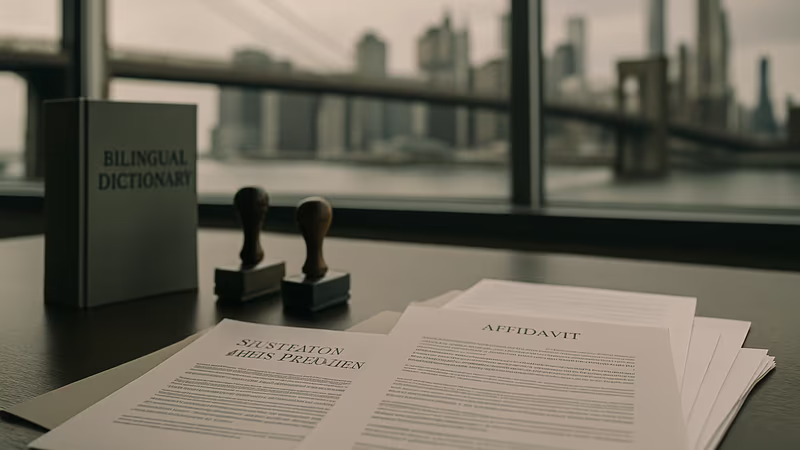
Key Takeaway
Navigate CPLR 2309 notarization requirements in NY litigation. Expert analysis of jurisdictional splits and compliance strategies. Free consultation -
This article is part of our ongoing 2106 and 2309 coverage, with 31 published articles analyzing 2106 and 2309 issues across New York State. Attorney Jason Tenenbaum brings 24+ years of hands-on experience to this analysis, drawing from his work on more than 1,000 appeals, over 100,000 no-fault cases, and recovery of over $100 million for clients throughout Nassau County, Suffolk County, Queens, Brooklyn, Manhattan, and the Bronx. For personalized legal advice about how these principles apply to your specific situation, contact our Long Island office at (516) 750-0595 for a free consultation.
Introduction
Proper notarization of affidavits and sworn statements is a foundational requirement in New York litigation, yet technical defects in notarial certificates frequently derail otherwise meritorious cases. The Appellate Term First Department’s decision in an unnamed case highlights the critical importance of strict compliance with CPLR 2309(c) and the varying approaches different appellate courts take to curing such defects.
For attorneys and parties involved in litigation throughout Long Island and New York City, understanding these technical requirements and the potential for cure can mean the difference between success and failure in summary judgment motions and other critical procedural steps. The Law Office of Jason Tenenbaum helps clients address these complex procedural requirements while avoiding the pitfalls that can undermine even strong substantive claims.
Case Analysis: The Appellate Term First Department’s Approach to CPLR 2309 Defects
The Court’s Decision and Conditional Relief
“Motion granted and complaint dismissed on the condition that defendant, within 60 days of service upon it of a copy of this order with notice of entry, files with the Clerk of the Civil Court and serves upon plaintiffs an affidavit of Steven Esteves that is accompanied by a certificate demonstrating that the notary administered the oath as prescribed by the laws of the State of New Jersey. In the event defendant fails to duly file and serve such an affidavit, the order is affirmed, without costs. The affidavit submitted by defendant of its employee (Esteves) established defendant’s entitlement to summary judgment dismissing this action to recover first-party no-fault benefits. Plaintiffs, however, raised a timely objection to the form of this affidavit, asserting that it did not comply with CPLR 2309(c). Specifically, plaintiffs correctly note that the affidavit failed to include a certificate demonstrating that the notary administered the oath as prescribed by the laws of the State of New Jersey, the state in which the oath was administered (see CPLR 2309; Real Property Law § 299-a; PRA III, LLC v Gonzalez, 54 AD3d 917 ). Inasmuch as the document can be given nunc pro tunc effect once the appropriate certificate is obtained (Nandy v Albany Med. Ctr. Hosp., 155 AD2d 833, 834 ; see Moccia v. Carrier Car Rental, Inc., 40 AD3d 504, 505 ; see also Matapos Tech. Ltd. v Compania Andina de Comercio Ltda, ___AD3d___, 2009 NY Slip Op. 09713 ), we reverse the order and grant defendant’s motion for summary judgment dismissing the complaint on the conditions stated above“
Note that under the rule of the Appellate Term, Second Department, there would not be a second chance to cure the 2309(c) defect. See, Crossbridge Diagnostic Radiology, P.C. v. Encompass Ins. Co., 24 Misc.3d 134(A)(App. Term 2d Dept. 2009).
Free Consultation · No Fee Unless We Win
Does this apply to your situation?
Every case is different. Get a free, confidential case review from an experienced attorney who can tell you exactly where you stand.
Understanding the Jurisdictional Split on Curing CPLR 2309 Defects
The contrasting approaches between the Appellate Term First and Second Departments creates a significant strategic consideration for practitioners. This jurisdictional split demonstrates how seemingly technical procedural requirements can have vastly different implications depending on where your case is pending.
The First Department’s Liberal Approach
The Appellate Term First Department’s decision reflects a more forgiving approach that:
- Allows nunc pro tunc correction of notarial defects
- Provides specific timeframes for curing deficiencies (60 days)
- Balances procedural compliance with substantive justice
- Recognizes the technical nature of notarization requirements
The Second Department’s Strict Enforcement
In contrast, the Second Department’s approach in Crossbridge Diagnostic Radiology demonstrates:
- Zero tolerance for notarial defects
- No opportunity for cure once the deficiency is identified
- Strict procedural compliance regardless of substantive merit
- Immediate dismissal of otherwise valid claims
Understanding CPLR 2309(c) Requirements
The Statutory Framework
CPLR 2309(c) establishes specific requirements for affidavits made outside New York State. The statute requires that when an affidavit is taken outside New York, the notarial certificate must demonstrate compliance with the laws of the state where the oath was administered.
Key Elements of Compliance
For out-of-state affidavits, proper CPLR 2309(c) compliance requires:
- Proper oath administration according to the laws of the relevant state
- Certificate demonstrating compliance with those state laws
- Notary authority verification in the jurisdiction where oath was taken
- Clear indication of the legal standards applied
Real Property Law § 299-a(1) Connection
The court’s reference to Real Property Law § 299-a(1) highlights the interconnected nature of New York’s notarization requirements. This statute provides additional framework for recognizing out-of-state notarial acts and establishes standards for their acceptance in New York courts.
Practical Implications for Long Island and NYC Practitioners
Attorneys practicing in Nassau County, Suffolk County, and the five boroughs of New York City must be particularly vigilant when dealing with:
- Multi-state litigation involving out-of-state witnesses
- Corporate affidavits from companies with headquarters outside New York
- Medical records and expert affidavits from out-of-state providers
- Business documents executed in other jurisdictions
The Nunc Pro Tunc Doctrine in CPLR 2309 Context
Legal Foundation for Retroactive Correction
The court’s citation to Nandy v Albany Med. Ctr. Hosp. and related cases establishes the legal foundation for allowing retroactive correction of notarial defects. This doctrine recognizes that technical procedural requirements should not necessarily defeat substantive rights when cure is possible.
Requirements for Nunc Pro Tunc Relief
Based on the cited precedent, nunc pro tunc correction is available when:
- The defect is purely technical rather than substantive
- No prejudice results to the opposing party from the correction
- The underlying oath was properly administered despite certificate defects
- Timely correction is possible within reasonable parameters
Strategic Considerations for Practitioners
The availability of nunc pro tunc relief creates important strategic opportunities and obligations:
For Parties Seeking to Cure Defects
- Act promptly upon notice of deficiencies
- Obtain proper certificates from the original notary when possible
- Document the correction process thoroughly
- Comply with all court-imposed deadlines strictly
for Parties Challenging Defective Affidavits
- Raise objections early and specifically
- Cite relevant jurisdictional precedent on cure availability
- Argue substantive prejudice when appropriate
- Monitor compliance with any cure conditions imposed
Interstate Notarization Challenges
Common Issues with Out-of-State Affidavits
In an increasingly mobile society, litigation frequently involves parties, witnesses, and evidence from multiple states. This creates recurring challenges with notarization compliance that practitioners must address proactively.
Typical Deficiencies
Common CPLR 2309(c) violations include:
- Missing acknowledgment certificates showing compliance with state law
- Inadequate notary identification and authority verification
- Failure to demonstrate proper oath administration under relevant state law
- Incomplete or unclear notarial language that doesn’t establish compliance
State-Specific Notarization Requirements
Different states have varying requirements for proper notarization, making compliance challenging for practitioners handling multi-state litigation.
New Jersey Requirements (Relevant to the Case)
The case specifically involved New Jersey notarization, which requires:
- Proper oath administration before a qualified notary
- Verification of signatory identity through acceptable identification
- Notary acknowledgment of compliance with New Jersey law
- Proper notarial certificate language as prescribed by state statute
Best Practices for Multi-State Compliance
To avoid CPLR 2309(c) defects, practitioners should:
- Research specific state requirements before taking out-of-state affidavits
- Use local counsel familiar with state-specific notarization requirements
- Obtain proper certificates demonstrating compliance at the time of execution
- Maintain documentation of notary authority and qualifications
- Review all affidavits carefully before filing to identify potential defects
Practical Compliance Strategies
Preventive Measures for Long Island and NYC Practitioners
Given the jurisdictional split on curing CPLR 2309 defects, prevention is always preferable to cure. Practitioners should implement systematic approaches to ensure compliance.
Office Procedures for Multi-State Affidavits
Establish protocols that include:
- State law research before taking out-of-state affidavits
- Checklist compliance for required certificate elements
- Local notary consultation in the relevant jurisdiction
- Quality control review before filing
- Documentation retention for potential challenge responses
Working with Out-of-State Counsel
Collaboration with local counsel can help ensure proper compliance:
Benefits of Local Counsel Coordination
- Familiarity with state requirements and common practices
- Established relationships with qualified notaries
- Understanding of local court preferences and enforcement patterns
- Ability to cure defects quickly if problems arise
Why Choose the Law Office of Jason Tenenbaum
Our firm understands the critical importance of procedural compliance in all aspects of litigation. We have extensive experience handling complex cases involving multi-state parties and evidence throughout Nassau County, Suffolk County, and the five boroughs of New York City.
Our Approach to Procedural Excellence
We maintain high standards for procedural compliance by:
- Systematic review procedures for all affidavits and sworn statements
- Current knowledge of jurisdictional variations in procedural requirements
- Established relationships with qualified professionals in multiple states
- Proactive identification and correction of potential defects
Our Experience with Complex Litigation
We have successfully handled cases involving:
- Multi-state discovery and evidence gathering
- Complex notarization requirements across different jurisdictions
- Procedural challenges and compliance issues
- Appeals of procedural rulings and their correction
Our Commitment to Long Island and NYC Clients
We serve clients throughout:
- Nassau County: Garden City, Hempstead, Levittown, Freeport, and surrounding communities
- Suffolk County: Huntington, Babylon, Islip, Brookhaven, and eastern Long Island
- New York City: Manhattan, Brooklyn, Queens, the Bronx, and Staten Island
Take Action: Protect Your Case from Procedural Pitfalls
Don’t let technical defects derail your otherwise strong case. The jurisdictional split on CPLR 2309 compliance means that proper procedure is more important than ever, and the stakes of getting it wrong continue to rise.
Whether you’re preparing for litigation that may involve out-of-state evidence, dealing with a procedural challenge to your affidavits, or trying to challenge defective submissions from opposing parties, experienced counsel can make the difference between success and failure.
Call the Law Office of Jason Tenenbaum at 516-750-0595 for a consultation about your litigation needs. We understand the technical requirements of New York practice and know how to navigate complex procedural issues while keeping your case focused on achieving the best possible outcome.
The Law Office of Jason Tenenbaum represents clients in complex litigation throughout Nassau County, Suffolk County, and the five boroughs of New York City. Our experienced attorneys understand the critical importance of procedural compliance and work diligently to protect our clients from technical defects that could undermine otherwise meritorious cases.
Related Articles
- Understanding CPLR 2309 affidavit attestation rules from the Appellate Division Second Department
- How CPLR 2309 affects the ability to submit new evidence in reply papers
- When renewal may be granted to correct improper CPLR 2106 affirmation requirements
- Why evidence in improper form cannot be cured in supplemental opposition papers
- New York No-Fault Insurance Law
Legal Update (February 2026): Since this post’s publication in 2010, CPLR 2309 notarization requirements and related procedural rules may have been modified through legislative amendments or updated court interpretations. Additionally, notarial practices and authentication procedures have evolved significantly, particularly with the introduction of remote notarization provisions. Practitioners should verify current CPLR 2309 compliance standards and consult recent appellate decisions for the most current notarization requirements.
Legal Context
Why This Matters for Your Case
New York law is among the most complex and nuanced in the country, with distinct procedural rules, substantive doctrines, and court systems that differ significantly from other jurisdictions. The Civil Practice Law and Rules (CPLR) governs every stage of civil litigation, from service of process through trial and appeal. The Appellate Division, Appellate Term, and Court of Appeals create a rich and ever-evolving body of case law that practitioners must follow.
Attorney Jason Tenenbaum has practiced across these areas for over 24 years, writing more than 1,000 appellate briefs and publishing over 2,600 legal articles that attorneys and clients rely on for guidance. The analysis in this article reflects real courtroom experience — from motion practice in Civil Court and Supreme Court to oral arguments before the Appellate Division — and a deep understanding of how New York courts actually apply the law in practice.
About This Topic
CPLR 2106 and 2309: Affirmation & Oath Requirements
CPLR 2106 governs who may submit an affirmation in lieu of an affidavit in New York courts, while CPLR 2309 addresses the requirements for oaths, affidavits, and the certification of out-of-state documents. These seemingly technical provisions have significant practical impact — an improperly executed affirmation or affidavit can render an entire summary judgment motion defective. These articles analyze the formal requirements, common defects, and court decisions that practitioners must navigate when preparing sworn statements.
31 published articles in 2106 and 2309
Keep Reading
More 2106 and 2309 Analysis
How to Talk to a Judge in New York: What to Say, What to Avoid, and How to Present Yourself
Address the judge as 'Your Honor,' stand when you speak, wait to be recognized, and keep answers short and honest. A Long Island trial lawyer explains.
Feb 24, 2026
CPLR § 2106 Amendment Eliminates Affidavit Notarization Requirement: What This Means for New York Litigation
New York's CPLR 2106 permits affirmations in place of many sworn documents. See the 2024 and 2025 changes, exceptions, and historical case notes.
Feb 18, 2026
A signature placed at the direction of the signor
Court ruling clarifies that electronic signatures placed at the direction of the signor are legally valid, even when appearing as facsimile stamps on peer review reports.
Mar 12, 2012
Fee Schedule Defense Requirements in No-Fault Insurance Cases | Long Island & NYC Legal Analysis
Expert legal analysis of fee schedule defense requirements in no-fault insurance cases.
Mar 26, 2010
CPLR 2309 Certificate of Conformity: First Department Excuses the Defect Again
Donsimoni treated a missing conformity certificate as curable and rejected summary judgment. Read the actual ruling and the current affirmation alternative.
Oct 10, 2017
The 60-day rule that was never published in the law journal
Court applies unpublished 60-day summary judgment rule in Civil Court case, raising procedural questions about timing limits and Second Department review needed.
Apr 2, 2014Frequently Asked Questions
Common Questions About This Topic
6 answers from the firm's New York personal-injury and employment-law practice. Click any question to expand.
What happens if my affidavit has a CPLR 2309(c) defect?
The consequences depend on which court is hearing your case. The Appellate Term First Department may allow you to cure the defect within 60 days, while the Second Department typically provides no opportunity for correction.
Can I cure a notarial defect after it’s been challenged?
In some jurisdictions, yes. The nunc pro tunc doctrine allows retroactive correction of purely technical defects, but this varies by court and the specific nature of the deficiency.
How do I ensure compliance with CPLR 2309(c) for out-of-state affidavits?
Research the specific notarization requirements of the state where the affidavit will be taken, work with qualified local notaries, and obtain proper certificates demonstrating compliance with state law.
What should I do if the opposing party challenges my affidavit on CPLR 2309 grounds?
Act promptly to obtain proper certificates if cure is possible in your jurisdiction, cite relevant precedent supporting nunc pro tunc relief, and comply strictly with any court-imposed deadlines.
Does the type of case affect how courts handle CPLR 2309 defects?
While the statutory requirements are the same regardless of case type, courts may be more willing to allow technical corrections in cases where substantive rights would be significantly affected by dismissal.
How can I challenge an opponent’s defective affidavit?
Raise specific objections early in the proceedings, cite the relevant CPLR provisions and supporting case law, and argue any substantive prejudice that would result from allowing correction.
Was this article helpful?
Disclaimer: This article is published by the Law Office of Jason Tenenbaum, P.C. for informational and educational purposes only. It does not constitute legal advice, and no attorney-client relationship is formed by reading this content. The legal principles discussed may not apply to your specific situation, and the law may have changed since this article was last updated.
New York law varies by jurisdiction — court decisions in one Appellate Division department may not be followed in another, and local court rules in Nassau County Supreme Court differ from those in Suffolk County Supreme Court, Kings County Civil Court, or Queens County Supreme Court. The Appellate Division, Second Department (which covers Long Island, Brooklyn, Queens, and Staten Island) and the Appellate Term (which hears appeals from lower courts) each have distinct procedural requirements and precedents that affect litigation strategy.
If you need legal help with a 2106 and 2309 matter, contact our office at (516) 750-0595 for a free consultation. We serve clients throughout Long Island (Huntington, Babylon, Islip, Brookhaven, Smithtown, Riverhead, Southampton, East Hampton), Nassau County (Hempstead, Garden City, Mineola, Great Neck, Manhasset, Freeport, Long Beach, Rockville Centre, Valley Stream, Westbury, Hicksville, Massapequa), Suffolk County (Hauppauge, Deer Park, Bay Shore, Central Islip, Patchogue, Brentwood), Queens, Brooklyn, Manhattan, the Bronx, Staten Island, and Westchester County. Prior results do not guarantee a similar outcome.