Key Takeaway
Learn to identify signs of nursing home abuse in New York. Recognize physical injuries, behavioral changes, and warning signs to protect vulnerable residents.
This article is part of our ongoing personal injury coverage, with 182 published articles analyzing personal injury issues across New York State. Attorney Jason Tenenbaum brings 24+ years of hands-on experience to this analysis, drawing from his work on more than 1,000 appeals, over 100,000 no-fault cases, and recovery of over $100 million for clients throughout Nassau County, Suffolk County, Queens, Brooklyn, Manhattan, and the Bronx. For personalized legal advice about how these principles apply to your specific situation, contact our Long Island office at (516) 750-0595 for a free consultation.
 Families entrusting loved ones to nursing homes expect safety, dignity, and proper medical care. Yet abuse and neglect continue at alarming rates across New York facilities. Recent enforcement actions highlight troubling patterns—Humboldt House Rehabilitation faced $12,000 fines for failing to prevent and report abuse, while Williamsville Suburban received a $10,000 penalty for neglect that harmed residents. These penalties reflect a broader pattern, as evidenced by New York Attorney General Letitia James’ landmark $45 million settlement with Centers for Care, LLC, which exposed financial fraud and chronic understaffing at four facilities across Bronx, Erie, Queens, and Westchester counties.
More than half of nursing home abuse cases involve family perpetrators according to the National Council on Aging. Institutional abuse presents different dangers, often concealed behind administrative procedures. The World Health Organization offers further information on types of elder abuse.
Physical Signs Requiring Immediate Action
Unexplained injuries demand urgent attention. Watch for bruises in various healing stages, medically unexplained cuts, or burns that don’t match facility reports. Rope marks or welts sometimes reveal improper restraint use—direct violations of New York regulations.
Physical neglect extends beyond visible trauma. Poor hygiene often signals deeper failures. Bedsores, malnutrition, and dehydration develop when basic care needs go unmet. Medication mistakes like withholding necessary drugs or giving incorrect dosages can devastate vulnerable residents. The FDA provides guidance on how to report medication errors.
Free Consultation · No Fee Unless We Win
Does this apply to your situation?
Every case is different. Get a free, confidential case review from an experienced attorney who can tell you exactly where you stand.
Behavioral Shifts: Silent Alarms
Sometimes the clearest signals aren’t physical. Sudden withdrawal, unexplained fear, or anxiety around particular staff may indicate emotional mistreatment. Listen carefully to what residents express—and what they avoid saying. Take direct reports of mistreatment seriously regardless of cognitive concerns. Residents occasionally describe experiences indirectly.
Particularly concerning are facilities that limit family visits or discourage resident communication. Transparency should be standard at all times.
Financial Exploitation: Growing Threat
Financial abuse tactics grow increasingly advanced. Warning signs include missing belongings, unauthorized changes to wills or powers of attorney, and new acquaintances showing sudden financial interest in your relative. As demonstrated in Attorney General James’ investigation of Centers for Care, LLC, financial fraud often coexists with systemic resident mistreatment and neglect.
Institutional Warning Signs
Some red flags point to facility-wide problems:
- Constant staff turnover creates instability and reduces care quality
- Insufficient staffing prevents residents getting essential attention
- Maintenance issues, unclean conditions, and violation histories indicate operational failures
Chronic understaffing—highlighted in both the Centers for Care settlement and routine state enforcement actions—threatens resident safety beyond comfort concerns.
Legal Rights Under New York Law
When abuse happens, New York personal injury law offers paths to justice. Families can pursue claims for living victims or wrongful death actions when misconduct contributes to fatalities. Legal professionals handling these complex cases can reference the American Association for Justice (AAJ) Press’s authoritative guide, “Litigating Nursing Home Abuse Cases, 2024-2025 edition,” written by top plaintiffs’ attorneys.
The statute of limitations typically spans three years from discovery, though circumstances might alter timelines. Recoverable damages include medical costs, pain and suffering, and in severe cases, punitive damages to penalize facilities and prevent future misconduct.
Facility liability goes beyond employee actions. Corporate negligence theory holds nursing homes responsible for inadequate hiring, training, or supervision that enables abuse. More information on corporate negligence can be found via Cornell Law School.
Taking Immediate Steps
Suspect abuse? Put your loved one’s safety first. Document everything: photograph injuries, record detailed notes about staff conversations, and preserve medical records.
Report concerns right away to:
- Adult Protective Services
- Local police
- New York State Department of Health
Never wait for “more proof” or hope problems disappear. For serious injuries or health crises, get emergency medical help. Independent medical evaluations provide vital documentation and guarantee proper treatment.
When Legal Action Becomes Essential
Not every concern means litigation, but some situations demand legal intervention:
- Repeated facility abuse incidents
- Significant injuries sustained
- Retaliation after complaints
The Law Office of Jason Tenenbaum, P.C. handles nursing home abuse cases across New York State. The team knows complex facility regulations and builds strong cases against negligent operators, utilizing resources like the AAJ’s litigation guide to strengthen claims.
Thorough investigations involve collaborating with medical experts to document injuries and neglect. The firm advocates forcefully for families to secure rightful compensation while protecting vulnerable residents.
Protection Through Vigilance
Nursing home abuse thrives when unnoticed. By staying alert, asking tough questions, and acting decisively, families safeguard loved ones and help stop future harm.
Your relative deserves dignity, proper care, and safety during their later years. When facilities fail these basic obligations, the law offers recourse. The Law Office of Jason Tenenbaum, P.C. stands ready to help pursue justice.
Suspect nursing home abuse? Act quickly. Contact the office today for a free consultation about legal options and protecting your family member’s rights and well-being.
Legal Context
Why This Matters for Your Case
Personal injury law in New York is governed by a complex web of statutes, case law, and procedural rules that differ from most other states. The statute of limitations for most personal injury claims is three years under CPLR 214(5), but claims against municipalities require a Notice of Claim within 90 days. Motor vehicle accident victims must meet the serious injury threshold under Insurance Law §5102(d) before they can recover pain and suffering damages.
The Law Office of Jason Tenenbaum has recovered over $100 million for injured clients across Long Island, Nassau County, Suffolk County, Queens, Brooklyn, Manhattan, and the Bronx. With 24+ years of trial and appellate experience, more than 1,000 appeals written, and 2,600+ published legal articles, Jason Tenenbaum provides the authoritative legal analysis that practitioners and injury victims need to understand their rights.
This article reflects real courtroom experience and a deep understanding of how New York courts actually evaluate personal injury claims — from the initial filing through discovery, summary judgment, trial, and appeal.
About This Topic
New York Personal Injury Law
When negligence causes serious injury, New York law entitles victims to compensation for medical bills, lost income, pain and suffering, and more. From car accidents and slip-and-falls to construction injuries and medical malpractice, the Law Office of Jason Tenenbaum has recovered over $100 million for injured Long Islanders and New Yorkers since 2002.
182 published articles in Personal Injury
Keep Reading
More Personal Injury Analysis

NYC's Pending E-Bike Bills: What They Would Change for People Hurt in a Crash
NYC heard 23 e-bike and delivery bills on September 30, 2026. What each text would change for hurt pedestrians and riders, and the law that applies today.
Oct 21, 2026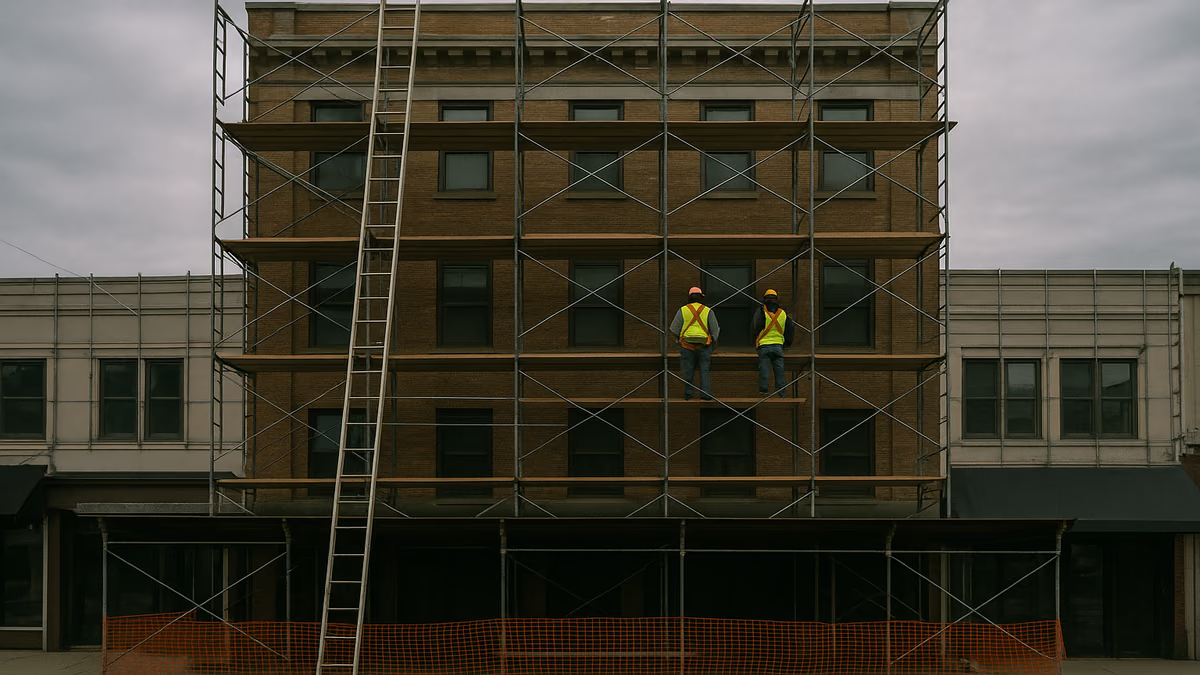
New York's Scaffold Law in the 2027 Budget: What Happens If Labor Law 240 Changes, and What Happens If It Doesn't
Labor Law 240 and the 2027 New York budget: what each side argues, the bills on file, and what each possible outcome would change.
Oct 19, 2026
Does No-Fault Pay Wages Lost Attending an EUO?
11 NYCRR 65-3.5(e) makes the insurer reimburse wages and travel lost attending an EUO. ENS Medical v Nationwide (2026) puts the dispute in no-fault arbitration.
Sep 23, 2026
What Happens When Fault Is Disputed in a New York Car Accident?
When the other driver disputes fault after a New York car accident, you still have options.
Apr 5, 2026
New York’s Leash Law Realities
New York leash law violations can trigger negligence per se in dog bite claims. Learn how Long Island and NYC leash rules affect pet owner liability.
Aug 6, 2025
What to Do After a Slip and Fall Accident?
Get a legal analysis on what do after after a slip and fall accident from expert personal injury attorneys.
Mar 11, 2025Was this article helpful?
Disclaimer: This article is published by the Law Office of Jason Tenenbaum, P.C. for informational and educational purposes only. It does not constitute legal advice, and no attorney-client relationship is formed by reading this content. The legal principles discussed may not apply to your specific situation, and the law may have changed since this article was last updated.
New York law varies by jurisdiction — court decisions in one Appellate Division department may not be followed in another, and local court rules in Nassau County Supreme Court differ from those in Suffolk County Supreme Court, Kings County Civil Court, or Queens County Supreme Court. The Appellate Division, Second Department (which covers Long Island, Brooklyn, Queens, and Staten Island) and the Appellate Term (which hears appeals from lower courts) each have distinct procedural requirements and precedents that affect litigation strategy.
If you need legal help with a personal injury matter, contact our office at (516) 750-0595 for a free consultation. We serve clients throughout Long Island (Huntington, Babylon, Islip, Brookhaven, Smithtown, Riverhead, Southampton, East Hampton), Nassau County (Hempstead, Garden City, Mineola, Great Neck, Manhasset, Freeport, Long Beach, Rockville Centre, Valley Stream, Westbury, Hicksville, Massapequa), Suffolk County (Hauppauge, Deer Park, Bay Shore, Central Islip, Patchogue, Brentwood), Queens, Brooklyn, Manhattan, the Bronx, Staten Island, and Westchester County. Prior results do not guarantee a similar outcome.