Key Takeaway
Learn when you can sue your employer for unpaid bonuses in New York. Understand discretionary vs non-discretionary bonuses and your legal rights under state law.
This article is part of our ongoing employment law coverage, with 37 published articles analyzing employment law issues across New York State. Attorney Jason Tenenbaum brings 24+ years of hands-on experience to this analysis, drawing from his work on more than 1,000 appeals, over 100,000 no-fault cases, and recovery of over $100 million for clients throughout Nassau County, Suffolk County, Queens, Brooklyn, Manhattan, and the Bronx. For personalized legal advice about how these principles apply to your specific situation, contact our Long Island office at (516) 750-0595 for a free consultation.
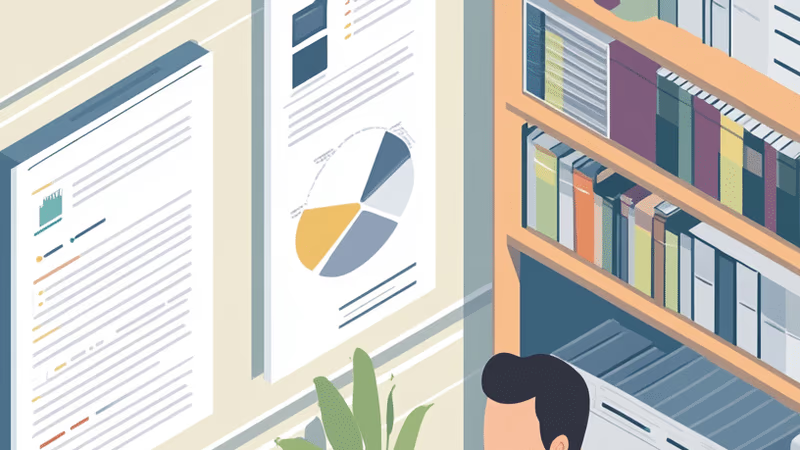
Bottom line: If your employer promised you a bonus and you met the conditions to earn it, New York law likely classifies that payment as a wage — and withholding it is illegal. Our employment lawyers have recovered six- and seven-figure bonus payments for employees across Long Island and NYC.
Last year, state labor officials recovered more than $40 million in back pay for nearly 30,000 New York workers. This eye-opening figure reveals how common wage violations remain across industries, particularly when employers withhold promised bonuses. For workers counting on these payments to cover major expenses or achieve financial goals, unpaid bonuses can derail plans and damage employer relationships.
The legal team at The Law Office of Jason Tenenbaum, P.C. regularly assists professionals facing compensation disputes, from sales representatives missing commission payouts to executives denied six-figure performance bonuses. These cases underscore why both employees and employers need clear understanding of New York’s wage protections.
Breaking Down New York’s Compensation Rules
New York’s worker protections frequently surpass federal requirements, creating a layered legal landscape for compensation disputes. Key regulations address minimum pay rates and bonus classifications that every worker should understand.
Current Pay Standards
As of January 2025, hourly workers in New York City, Long Island, and Westchester earn at least $16.50/hour, with other regions at $15.50. These rates climb to $17 and $16 respectively in 2026. Overtime rules mandate time-and-a-half pay beyond 40 weekly hours, with stricter salary thresholds for exempt positions than national standards – $1,237.50/week in downstate regions.
The Bonus Breakdown
State law distinguishes between two bonus types with major legal implications:
- Discretionary Bonuses: Voluntary payments without predetermined criteria
- Non-Discretionary Bonuses: Calculated using established metrics like sales targets or tenure
Recent court decisions continue shaping how these categories apply. A 2011 New York ruling established that upfront bonus promises during hiring negotiations typically qualify as binding wage agreements. Another 2017 decision clarified that detailed bonus formulas transform these payments into earned wages once employees meet specified conditions.
Not sure which type of bonus you were promised? The distinction between discretionary and non-discretionary is the single most important factor in your case. Call us at (516) 750-0595 for a free, confidential evaluation — we can review your offer letter or employment agreement in minutes and tell you exactly where you stand.
Legal Avenues for Unpaid Bonus Disputes
When bonuses go unpaid despite meeting requirements, employees wield multiple legal tools to recover what they’re owed.
State-Level Protections
New York Labor Law mandates timely wage payments per employment terms, with harsh penalties for violations:
- Double damages through 100% liquidated fees
- Attorney cost reimbursement
- Potential state fines up to $20,000 per violation
The landmark Truelove decision set precedent by classifying earned commissions as protected wages, a principle courts later extended to performance-based bonuses. Employers cannot legally withhold these payments through policy fine print or retroactive rule changes.
Federal Considerations
While federal law doesn’t directly regulate bonuses, it prevents employers from manipulating pay structures to skirt minimum wage or overtime rules. Historical cases like the 1942 Walling decision remain relevant today, particularly for roles where bonuses constitute major income components.
Real-World Case: Bonus Denial Backfires
Consider an actual dispute involving a financial analyst (name withheld) promised a six-figure year-end bonus contingent on personal and company metrics. After hitting all targets during a record profit year, the employer refused payment citing undisclosed “discretionary factors.”
The employee’s legal team successfully argued the bonus qualified as non-discretionary under New York law. Courts ordered full payment plus penalties and legal fees exceeding $150,000. This case highlights several critical lessons:
- Clear written policies prevent disputes
- Retroactive rule changes carry legal risk
- Detailed documentation proves essential
How Federal Changes Affect New York Cases
Recent federal actions influence bonus disputes even in states with stronger protections. The Department of Labor’s 2024 crackdown on restrictive employment contracts demonstrates shifting priorities. One notable case challenged a healthcare staffing firm’s requirement for nurses to cover legal costs if leaving before a three-year term. Courts sided with regulators, ruling such clauses illegally deterred workers from asserting rights.
New Yorkers enjoy advantages in these cases through:
- Extended six-year filing deadlines (vs. 2-3 years in most states)
- Higher damage awards (including liquidated damages)
- Broader wage definitions (bonuses, commissions, and deferred compensation)
However, combining state and federal claims often yields optimal results when appropriate.
Consequences of Withholding Bonuses
Employers risk more than back payments when mishandling bonuses. Recent cases show how violations trigger:
Financial Penalties
- Unpaid wages (the full bonus amount)
- Matching liquidated damages (double your money)
- 9% annual interest from the date owed
- Legal fee reimbursement
- State fines up to $20,000 per violation
Reputational Damage
Publicized disputes frequently lead to recruitment challenges, client relationship strains, and negative media coverage.
A 2024 Seventh Circuit case illustrates how courts scrutinize employer tactics. When a sales professional exceeded targets but received only 22% of his promised $432,040 bonus, judges rejected the company’s contractual disclaimers. The ruling emphasized that employers must exercise discretion in good faith – a standard aligning with New York’s approach.
Taking Action: Employee Checklist
If your bonus goes unpaid, here’s the exact sequence we recommend:
- Gather Documents: Employment contracts, bonus plans, performance reviews, and relevant communications — emails, Slack messages, anything in writing
- Internal Resolution: Request clarification through HR channels (and save every response)
- State Complaint: File with New York’s Labor Department within six years
- Legal Consultation: Explore litigation options for maximum recovery
The Labor Department’s 2023 recovery of $40 million in unpaid wages demonstrates their active enforcement role. While state investigations proceed, employees can simultaneously pursue private lawsuits.
Owed an unpaid bonus? You may be entitled to double the amount plus interest and attorney fees under New York law. The clock is ticking on your six-year filing deadline. Call (516) 750-0595 or contact us online for a free case evaluation. We handle bonus disputes on contingency — you pay nothing unless we recover your money.
Employer Compliance Strategies
Companies can avoid disputes through proactive measures:
Compensation Audits
Regularly review:
- Bonus plan clarity
- Manager training protocols
- Payment timelines
Policy Development
Effective bonus plans specify:
- Eligibility requirements
- Calculation methods
- Payment schedules
- Discretionary factors (if any)
The PROTECT Method
- Policies: Document all bonus criteria
- Review: Audit practices annually
- Open Dialogue: Clarify expectations with staff
- Training: Educate managers on legal obligations
- Consistency: Apply rules uniformly
- Records: Maintain detailed payment documentation
- Timeliness: Issue payments per schedule
Why Legal Guidance Matters
Bonus disputes involve intricate overlaps between employment contracts, state/federal wage laws, and evolving case law. The Law Office of Jason Tenenbaum, P.C. assists clients through:
- Case evaluations determining wage classifications
- Customized strategies for negotiation or litigation
- Full representation in Labor Department proceedings
- Damage recovery efforts including penalty assessments
Recent client successes include recovering six-figure bonuses plus penalties through aggressive litigation tactics. The firm’s attorneys stay current on regulatory changes impacting compensation agreements. See our full employment discrimination practice and wage and hour litigation services.
Final Considerations
New York’s worker-friendly laws provide strong recourse for unpaid bonuses, but timing matters. Employees should act promptly to preserve claims, while employers benefit from preventative compliance measures. Both parties gain from clear contracts and documentation practices that reduce conflict risks.
Ready to find out what your unpaid bonus claim is worth? Contact The Law Office of Jason Tenenbaum, P.C. at 516-750-0595 or intake@jtnylaw.com for a free, no-obligation consultation. We serve employees across Nassau County, Suffolk County, Queens, Brooklyn, Manhattan, and all of New York.
This content provides general information, not legal advice. Consult an attorney for case-specific guidance.
Watch: NY Unpaid Bonus Laws
Legal Context
Why This Matters for Your Case
Employment law in New York provides some of the strongest worker protections in the nation. The New York State Human Rights Law (Executive Law §296) prohibits discrimination based on race, sex, age, disability, sexual orientation, gender identity, and other protected characteristics. The New York City Human Rights Law goes even further, applying a broader standard and covering more employers.
Federal protections under Title VII, the ADA, the ADEA, and the FLSA provide additional layers of protection. The Law Office of Jason Tenenbaum represents employees facing workplace discrimination, wrongful termination, wage theft, hostile work environments, and employer retaliation throughout Long Island, Nassau County, Suffolk County, and the five boroughs of New York City.
Whether your case involves EEOC filings, NYS Division of Human Rights complaints, or direct court action under CPLR Article 78, this article provides the expert legal analysis that workers and practitioners need to understand their rights and develop effective litigation strategies under current New York employment law.
About This Topic
New York Employment Law
New York has some of the strongest worker protections in the nation — from the NYC Human Rights Law to state-level whistleblower statutes. Whether you're dealing with discrimination, wage theft, wrongful termination, or hostile work environments, understanding your rights is the first step. Attorney Jason Tenenbaum represents employees across Long Island and NYC in federal and state employment claims.
37 published articles in Employment Law
Keep Reading
More Employment Law Analysis

NYC Sick Leave Law 2026: New Workplace Rights You Need to Know
NYC's Earned Safe and Sick Time Act got major updates in February 2026. Learn about new workplace violence protections, housing court coverage, and expanded employee rights.
Mar 28, 2026
The EEOC's War on DEI: A Complete Timeline of Reverse Discrimination Enforcement (2024-2026)
The EEOC just settled its first major reverse discrimination case against Planned Parenthood. Here's the complete timeline of how federal enforcement turned against corporate DEI...
Mar 20, 2026
Whistleblowers: Exposing Discrimination in the Workplace
Learn how whistleblowers fight workplace discrimination, understand legal protections, and discover steps to report violations safely.
Dec 30, 2024
Lost Wages Claims in New York: Avoiding Job Abandonment Pitfalls
Learn how to protect your lost wages claim in New York personal injury cases. Avoid job abandonment pitfalls with expert legal guidance. Call 516-750-0595 for help.
Jun 2, 2019
Long Island Employers: Are You Playing Employment Law Catch-Up?
Is your Long Island business compliant with employment law changes? Protect your company from costly violations. Call 516-750-0595 for guidance.
Sep 16, 2025
How to File a Lawsuit Against Your Employer
Learn how to file a lawsuit against your employer with steps on rights, evidence, and legal help from expert attorneys.
Feb 21, 2025Common Questions
Frequently Asked Questions
What constitutes workplace discrimination in New York?
New York law prohibits employment discrimination based on protected characteristics including race, color, religion, sex, national origin, age, disability, sexual orientation, gender identity, marital status, military status, and domestic violence victim status. Both the New York State Human Rights Law (Executive Law §296) and the New York City Human Rights Law (Administrative Code §8-107) provide protections, with the city law offering broader coverage and more employee-friendly standards. Discrimination can occur in hiring, firing, promotions, compensation, and other terms and conditions of employment.
What should I do if I'm being harassed at work?
If you're experiencing workplace harassment, you should document every incident with dates, times, locations, witnesses, and details. Report the harassment through your employer's internal complaint process and keep copies of all written complaints. If internal reporting doesn't resolve the issue, you can file a complaint with the New York State Division of Human Rights, the NYC Commission on Human Rights, or the EEOC. Consulting an employment attorney early can help preserve your rights and identify the strongest legal strategy.
What protections exist against wrongful termination in New York?
New York is an at-will employment state, meaning employers can terminate employees for any lawful reason. However, termination is illegal if motivated by discrimination based on a protected class under the NY Human Rights Law (Executive Law §296) or in retaliation for protected activity such as filing a complaint, whistleblowing under Labor Law §740, or requesting reasonable accommodations. The NYC Human Rights Law provides even broader protections, including coverage for smaller employers.
What are my rights regarding unpaid wages in New York?
Under the New York Labor Law, employers must pay minimum wage (currently $16/hour in NYC and surrounding counties), overtime at 1.5 times the regular rate for hours over 40 per week, and all earned wages on regular paydays. Labor Law §198 allows employees to recover unpaid wages plus liquidated damages equal to 100% of the unpaid amount, along with attorney's fees. Claims can be filed with the NY Department of Labor or through a private lawsuit within six years.
What lost wage benefits are available under New York no-fault insurance?
No-fault PIP covers 80% of your lost earnings, up to $2,000 per month, for up to 3 years from the accident. You must provide documentation from your employer confirming your absence and wages. Self-employed individuals must provide tax returns and financial records.
Was this article helpful?

About the Author
Jason Tenenbaum, Esq.
Jason Tenenbaum is the founding attorney of the Law Office of Jason Tenenbaum, P.C., headquartered at 326 Walt Whitman Road, Suite C, Huntington Station, New York 11746. With over 24 years of experience since founding the firm in 2002, Jason has written more than 1,000 appeals, handled over 100,000 no-fault insurance cases, and recovered over $100 million for clients across Long Island, Nassau County, Suffolk County, Queens, Brooklyn, Manhattan, the Bronx, and Staten Island. He is one of the few attorneys in the state who both writes his own appellate briefs and tries his own cases.
Jason is admitted to practice in New York, New Jersey, Florida, Texas, Georgia, and Michigan state courts, as well as multiple federal courts. His 2,353+ published legal articles analyzing New York case law, procedural developments, and litigation strategy make him one of the most prolific legal commentators in the state. He earned his Juris Doctor from Syracuse University College of Law.
Disclaimer: This article is published by the Law Office of Jason Tenenbaum, P.C. for informational and educational purposes only. It does not constitute legal advice, and no attorney-client relationship is formed by reading this content. The legal principles discussed may not apply to your specific situation, and the law may have changed since this article was last updated.
New York law varies by jurisdiction — court decisions in one Appellate Division department may not be followed in another, and local court rules in Nassau County Supreme Court differ from those in Suffolk County Supreme Court, Kings County Civil Court, or Queens County Supreme Court. The Appellate Division, Second Department (which covers Long Island, Brooklyn, Queens, and Staten Island) and the Appellate Term (which hears appeals from lower courts) each have distinct procedural requirements and precedents that affect litigation strategy.
If you need legal help with a employment law matter, contact our office at (516) 750-0595 for a free consultation. We serve clients throughout Long Island (Huntington, Babylon, Islip, Brookhaven, Smithtown, Riverhead, Southampton, East Hampton), Nassau County (Hempstead, Garden City, Mineola, Great Neck, Manhasset, Freeport, Long Beach, Rockville Centre, Valley Stream, Westbury, Hicksville, Massapequa), Suffolk County (Hauppauge, Deer Park, Bay Shore, Central Islip, Patchogue, Brentwood), Queens, Brooklyn, Manhattan, the Bronx, Staten Island, and Westchester County. Prior results do not guarantee a similar outcome.