Key Takeaway
New York medical malpractice expert testimony foundation requirements. Learn critical standards for expert witness preparation in Nassau and Suffolk County cases.
This article is part of our ongoing adjournments coverage, with 402 published articles analyzing adjournments issues across New York State. Attorney Jason Tenenbaum brings 24+ years of hands-on experience to this analysis, drawing from his work on more than 1,000 appeals, over 100,000 no-fault cases, and recovery of over $100 million for clients throughout Nassau County, Suffolk County, Queens, Brooklyn, Manhattan, and the Bronx. For personalized legal advice about how these principles apply to your specific situation, contact our Long Island office at (516) 750-0595 for a free consultation.
Understanding Foundation Requirements in Medical Malpractice Expert Testimony
The landscape of medical malpractice litigation in New York continues to evolve, with courts becoming increasingly sophisticated in their evaluation of expert testimony. For attorneys practicing in Nassau County, Suffolk County, and throughout the New York City area, understanding the precise requirements for expert witness foundations has become critical to successful case outcomes. Recent appellate decisions highlight common pitfalls that can derail otherwise strong cases, particularly when experts fail to establish adequate foundations for their opinions.
As a Long Island attorney who has handled complex medical malpractice cases throughout the metropolitan area, I’ve observed how seemingly technical procedural requirements can make or break a case. Today, I want to share some key insights from recent decisions that illustrate the importance of thorough preparation and attention to detail in expert witness testimony.
These cases also demonstrate broader principles that apply to other areas of practice, including personal injury protection (PIP) disputes where medical opinions play a crucial role. The standards courts apply to medical expert testimony are consistent across different types of cases, making these lessons valuable for all practitioners who deal with medical issues.
The Critical Importance of Proper Foundation
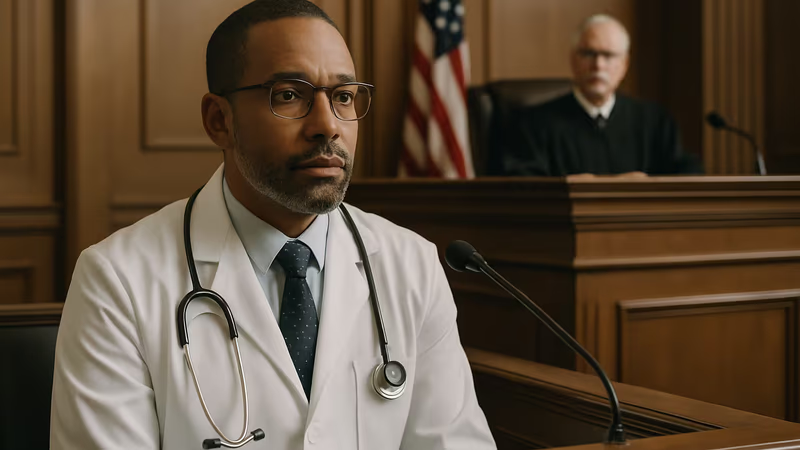
In medical malpractice litigation, expert testimony forms the backbone of most cases. However, not all expert opinions are created equal, and courts are increasingly scrutinizing the foundation upon which these opinions rest. The failure to establish proper foundation can render even the most qualified expert’s testimony worthless.
This is similar to the cases where a peer doctor fails to review sufficient documentation before arriving at an opinion.
“Lack of Foundation to form an expert opinion”
**Luu v Paskowski
**2008 NY Slip Op 10135 (2d Dept. 2008)
The pertinent portion of this case is as follows:
“ Zola did not refer to any part of the hospital records, and did not state when the blood loss occurred or how it caused the small bowel obstruction and hematoma. Zola made no reference to any of the hospital records in his affidavit, and did not state that he had reviewed the pleadings and depositions. Zola’s affidavit was conclusory and lacked a foundation (see Thompson v Orner, 36 AD3d at 792; Furey v Kraft, 27 AD3d at 418).
Procedural – default viz a vi failure to obtain an adjournment on the record
**Diamond v Diamante
**2008 NY Slip Op 10117 (2d Dept. 2008)
“plaintiffs and their attorney, nonparty James D. Reddy, appeal from a judgment which, inter alia, upon the denial of the plaintiffs’ application for an adjournment, is in favor of the defendants and against the plaintiff, dismissing the complaint, and against the nonparty James D. Reddy awarding costs and imposing sanctions.”
“Where, as here, the order appealed from was made upon the plaintiffs’ default, “review is limited to matters which were the subject of contest below” (Matter of Constance P. v Avraam G., 27 AD3d 754, 755 ; James v Powell, 19 NY2d 249, 256 n 3; Wexler v Wexler, 34 AD3d 458, 459; Brown v Data Communications, 236 AD2d 499). [*2]Accordingly, in this case, review is limited to the denial of the plaintiffs’ request for an adjournment, on the appeal by the plaintiffs, and the award of costs and imposition of sanctions against nonparty James D. Reddy, on the appeal by the nonparty.
Lessons from Luu v Paskowski: The Foundation Failure
The Luu decision provides a textbook example of how expert testimony can fail for lack of adequate foundation. Dr. Zola’s affidavit was rejected not because of his qualifications or the substance of his opinions, but because he failed to establish that he had reviewed the relevant materials and understood the specific facts of the case.
What Went Wrong
The court identified several critical failures in Dr. Zola’s affidavit:
- No reference to hospital records: The expert failed to indicate he had reviewed the medical records central to the case
- Missing temporal information: The affidavit didn’t address when the alleged blood loss occurred
- Lack of causal connection: The expert failed to explain how the blood loss caused the specific complications
- No mention of depositions: There was no indication the expert had reviewed deposition testimony
- Conclusory nature: The opinions were stated without supporting analysis
The Broader Implications
These failures illustrate fundamental requirements that apply to all expert testimony in medical cases. An expert’s opinion is only as strong as the foundation upon which it rests, and courts will not accept conclusions that appear to be formed without adequate factual basis.
Procedural Pitfalls: The Diamond v Diamante Warning
The Diamond case serves as a stark reminder of how procedural errors can derail even strong cases. When attorneys fail to follow proper procedures for requesting adjournments and other court accommodations, they risk default judgments and sanctions.
Key Procedural Requirements
The Diamond decision emphasizes several critical points about court procedure:
- Adjournment requests must be properly made: Courts require specific procedures for requesting adjournments
- Default consequences are severe: Once a default occurs, appellate review is limited
- Attorney sanctions are possible: Attorneys can be held personally liable for procedural failures
- Limited appellate review: After default, courts can only review contested issues
Practical Applications for New York Practitioners
These cases provide valuable lessons that extend beyond their specific facts. Here’s how practitioners can apply these principles to improve their case outcomes:
Expert Witness Preparation
When preparing expert witnesses, ensure that:
- All relevant records are reviewed: Experts must specifically state they have reviewed medical records, depositions, and other relevant materials
- Factual foundations are established: Opinions must be tied to specific facts and timing
- Causal connections are explained: Experts must explain not just what happened, but how and why
- Conclusions are supported: Every opinion should be backed by detailed analysis
- Review is documented: The affidavit should specifically state what materials were reviewed
Procedural Compliance
To avoid the fate that befell the attorney in Diamond:
- Know local rules: Each court may have specific requirements for motions and adjournments
- Make requests properly: Follow established procedures precisely
- Document requests: Ensure all requests are properly on the record
- Plan ahead: Don’t wait until the last minute to request accommodations
- Understand consequences: Know what happens if procedures aren’t followed
Applications to No-Fault Insurance Practice
While these cases involve traditional medical malpractice, their principles apply directly to no-fault insurance disputes. When challenging Independent Medical Examinations (IMEs) or presenting treating physician testimony, the same foundation requirements apply.
IME Challenges
When challenging an IME report, consider whether the examining physician:
- Reviewed all relevant medical records
- Understood the timeline of treatment
- Explained causal connections between injuries and treatment needs
- Based conclusions on adequate factual foundation
- Stayed within their area of expertise
Treating Physician Testimony
When presenting treating physician testimony, ensure the physician:
- References specific medical records and dates
- Explains the medical necessity for specific treatments
- Provides detailed factual support for opinions
- Addresses contrary opinions or evidence
- Demonstrates familiarity with the patient’s complete medical history
Frequently Asked Questions
What constitutes adequate foundation for medical expert testimony?
An expert must demonstrate they have reviewed all relevant medical records, understand the specific timeline of events, and can explain the factual basis for their opinions. Conclusory statements without supporting details are insufficient.
Can an expert opinion be salvaged if the foundation is inadequate?
Sometimes, but it’s risky. It’s better to ensure proper foundation from the beginning rather than try to correct deficiencies later in the litigation process.
How do procedural errors affect medical malpractice cases?
Procedural errors can result in default judgments, sanctions against attorneys, and limited appellate review options. Proper procedure is just as important as substantive preparation.
Do these standards apply to all types of medical litigation?
Yes, whether it’s medical malpractice, personal injury, or no-fault insurance disputes, the standards for expert testimony foundation remain consistent across different types of medical litigation.
What should I do if I discover foundation problems with my expert’s testimony?
Address the issues immediately. This might require supplemental affidavits, additional expert preparation, or in some cases, retaining a different expert with better foundation for their opinions.
Building Stronger Cases: Key Takeaways
The lessons from these cases are clear: success in medical litigation requires meticulous attention to both substantive and procedural requirements. Courts are sophisticated in their evaluation of expert testimony and unforgiving of procedural errors.
For Expert Testimony:
- Ensure comprehensive document review
- Establish clear factual foundations
- Provide detailed explanations of opinions
- Address timing and causation specifically
- Document the expert’s preparation process
For Procedural Compliance:
- Know and follow local court rules
- Make all requests properly and timely
- Document all procedural steps
- Plan ahead to avoid last-minute issues
- Understand the consequences of procedural failures
The Stakes Are High
In medical litigation, whether involving malpractice claims, personal injury cases, or insurance disputes, the stakes are high for all parties involved. Patients and their families depend on skilled legal representation to navigate complex medical and legal issues. Insurance companies and healthcare providers require defense counsel who understand both the medical and procedural aspects of these cases.
The cases discussed here demonstrate that technical excellence in legal practice isn’t optional – it’s essential. The difference between success and failure often comes down to careful attention to foundational requirements and procedural details that might seem mundane but are actually critical to case outcomes.
Strategic Considerations for Nassau and Suffolk County Practice
Practicing in the Long Island courts requires understanding not just state law requirements, but also local practices and preferences. Nassau County Supreme Court, Suffolk County courts, and the various district courts throughout the region each have their own procedural nuances that can affect case outcomes.
Building relationships with qualified medical experts who understand these requirements is crucial for sustained success in medical litigation practice. The best experts not only have strong credentials, but also understand the legal standards for providing testimony that will withstand judicial scrutiny.
Need Experienced Medical Litigation Counsel?
If you’re facing complex medical litigation issues, whether in medical malpractice, personal injury, or insurance disputes, experienced legal representation is essential. The evolving standards for expert testimony and increasingly complex procedural requirements demand attorneys who understand both the medical and legal aspects of these challenging cases.
Our firm has extensive experience handling medical litigation throughout Nassau County, Suffolk County, and New York City. We understand the importance of proper expert preparation, procedural compliance, and thorough case development.
Don’t let inadequate expert preparation or procedural errors undermine your case. Whether you need to challenge deficient expert testimony or ensure your own experts meet the highest standards, we can help guide you through the complexities of New York medical litigation.
Contact us today at 516-750-0595 to discuss your medical litigation needs. We provide comprehensive representation that addresses both the substantive and procedural aspects of complex medical cases.
The information in this post is provided for educational purposes only and should not be construed as legal advice. Every case is unique, and the outcome of your case will depend on the specific facts and circumstances involved.
Related Articles
- How medical experts establish competency to testify about specific practice standards
- Expert qualification standards and professional sufficiency requirements in no-fault cases
- When opposing expert affirmations are sufficient to defeat summary judgment
- Professional qualification requirements for internist expert testimony
- New York No-Fault Insurance Law
Legal Update (February 2026): Since this post’s publication in 2008, New York’s expert testimony standards and foundation requirements in medical malpractice cases may have been modified through appellate decisions, rule amendments, or changes to CPLR provisions governing expert witness qualifications and admissibility standards. Additionally, PIP-related medical testimony requirements may have evolved through regulatory updates or insurance law modifications. Practitioners should verify current foundation requirements and expert qualification standards under prevailing law.
Legal Context
Why This Matters for Your Case
New York law is among the most complex and nuanced in the country, with distinct procedural rules, substantive doctrines, and court systems that differ significantly from other jurisdictions. The Civil Practice Law and Rules (CPLR) governs every stage of civil litigation, from service of process through trial and appeal. The Appellate Division, Appellate Term, and Court of Appeals create a rich and ever-evolving body of case law that practitioners must follow.
Attorney Jason Tenenbaum has practiced across these areas for over 24 years, writing more than 1,000 appellate briefs and publishing over 2,353 legal articles that attorneys and clients rely on for guidance. The analysis in this article reflects real courtroom experience — from motion practice in Civil Court and Supreme Court to oral arguments before the Appellate Division — and a deep understanding of how New York courts actually apply the law in practice.
Keep Reading
More Adjournments Analysis

CPLR § 2106 Amendment Eliminates Affidavit Notarization Requirement: What This Means for New York Litigation
NY CPLR 2106 amendment eliminates notarized affidavits and certificates of conformity. Learn how this changes litigation practice. Call 516-750-0595.
Feb 18, 2026
Expert Witness in Car Accident Lawsuits
Learn how expert witnesses in New York car accident lawsuits help establish fault, causation, and damages through accident reconstruction, medical testimony, and economic analysis.
May 14, 2025
Civil Court overturns Appellate Term precedent
Civil Court overturns Appellate Term precedent on no-fault peer review expert testimony, ruling original peer reviewer must testify at trial
Mar 13, 2012
Expert Qualification Standards in New York No-Fault Cases: Understanding Professional Sufficiency Requirements
Learn how New York courts determine expert qualifications in no-fault insurance cases. Essential guide for Long Island and NYC attorneys handling medical expert testimony...
Mar 12, 2010
New trial ordered due to physician unavailability
New trial ordered when treating physician expert arrived without required original medical file and was unavailable for rescheduled testimony dates.
Jun 11, 2018
The dismissal should have been without prejudice
Appellate court corrects trial court's dismissal with prejudice ruling in mortgage foreclosure case, emphasizing proper application of procedural dismissal standards.
May 4, 2015Was this article helpful?

About the Author
Jason Tenenbaum, Esq.
Jason Tenenbaum is the founding attorney of the Law Office of Jason Tenenbaum, P.C., headquartered at 326 Walt Whitman Road, Suite C, Huntington Station, New York 11746. With over 24 years of experience since founding the firm in 2002, Jason has written more than 1,000 appeals, handled over 100,000 no-fault insurance cases, and recovered over $100 million for clients across Long Island, Nassau County, Suffolk County, Queens, Brooklyn, Manhattan, the Bronx, and Staten Island. He is one of the few attorneys in the state who both writes his own appellate briefs and tries his own cases.
Jason is admitted to practice in New York, New Jersey, Florida, Texas, Georgia, and Michigan state courts, as well as multiple federal courts. His 2,353+ published legal articles analyzing New York case law, procedural developments, and litigation strategy make him one of the most prolific legal commentators in the state. He earned his Juris Doctor from Syracuse University College of Law.
Disclaimer: This article is published by the Law Office of Jason Tenenbaum, P.C. for informational and educational purposes only. It does not constitute legal advice, and no attorney-client relationship is formed by reading this content. The legal principles discussed may not apply to your specific situation, and the law may have changed since this article was last updated.
New York law varies by jurisdiction — court decisions in one Appellate Division department may not be followed in another, and local court rules in Nassau County Supreme Court differ from those in Suffolk County Supreme Court, Kings County Civil Court, or Queens County Supreme Court. The Appellate Division, Second Department (which covers Long Island, Brooklyn, Queens, and Staten Island) and the Appellate Term (which hears appeals from lower courts) each have distinct procedural requirements and precedents that affect litigation strategy.
If you need legal help with a adjournments matter, contact our office at (516) 750-0595 for a free consultation. We serve clients throughout Long Island (Huntington, Babylon, Islip, Brookhaven, Smithtown, Riverhead, Southampton, East Hampton), Nassau County (Hempstead, Garden City, Mineola, Great Neck, Manhasset, Freeport, Long Beach, Rockville Centre, Valley Stream, Westbury, Hicksville, Massapequa), Suffolk County (Hauppauge, Deer Park, Bay Shore, Central Islip, Patchogue, Brentwood), Queens, Brooklyn, Manhattan, the Bronx, Staten Island, and Westchester County. Prior results do not guarantee a similar outcome.