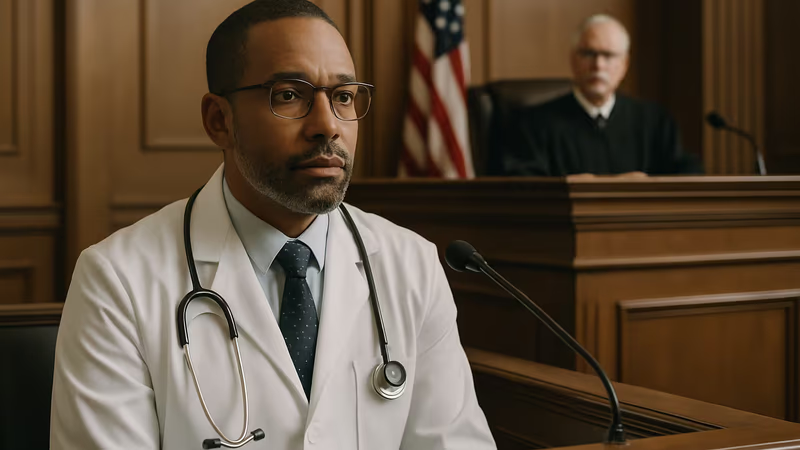
Key Takeaway
Understanding witness credibility standards in NY personal injury law. Expert analysis of medical testimony, expert witnesses & courtroom credibility. Call 516-750-0595.
This article is part of our ongoing medical necessity coverage, with 170 published articles analyzing medical necessity issues across New York State. Attorney Jason Tenenbaum brings 24+ years of hands-on experience to this analysis, drawing from his work on more than 1,000 appeals, over 100,000 no-fault cases, and recovery of over $100 million for clients throughout Nassau County, Suffolk County, Queens, Brooklyn, Manhattan, and the Bronx. For personalized legal advice about how these principles apply to your specific situation, contact our Long Island office at (516) 750-0595 for a free consultation.
Witness Credibility in Personal Injury Cases: Standards for Medical and Expert Testimony in New York
In personal injury litigation, witness credibility often determines case outcomes. The question \”What is credible?\” lies at the heart of many disputed claims, particularly when competing medical opinions clash. Recent decisions from New York’s Appellate Division provide crucial guidance on how courts evaluate witness credibility, especially in medical necessity determinations and expert testimony challenges.
Defining Credibility in Legal Context
Advanced Orthopedics v GEICO: The Credibility Standard
Advanced Orthopedics, PLLC v GEICO, 2019 NY Slip Op 50500(U)(1st Dept. 2019), illustrates the fundamental principles courts apply when evaluating witness credibility in personal injury cases.
The Civil Court found the defendant’s witness to be \”credible, worthy of belief, and persuasive.\” This determination highlights that credibility encompasses three distinct but related concepts:
- Credible – believable based on available evidence and testimony
- Worthy of belief – deserving of trust based on witness demeanor and consistency
- Persuasive – compelling enough to influence the court’s decision
The Appellate Standard for Credibility Determinations
The appellate court’s analysis provides important guidance for understanding how credibility determinations are reviewed on appeal. The court stated: \”In reviewing a determination made after a nonjury trial, the power of this court is as broad as that of the trial court, and this court may render the judgment it finds warranted by the facts, bearing in mind that the determination of a trier of fact as to issues of credibility is given substantial deference.\”
This establishes a crucial principle: while appellate courts have broad review powers, they give substantial deference to trial courts’ credibility findings because \”a trial court’s opportunity to observe and evaluate the testimony and demeanor of the witnesses affords it a better perspective from which to assess their credibility.\”
Factors Courts Consider in Credibility Assessment
Demeanor and Courtroom Presence
Trial courts place significant weight on witness demeanor, which includes:
- Eye contact and body language – indicators of confidence and honesty
- Voice quality and hesitation – suggesting certainty or uncertainty
- Responsiveness to questions – direct answers versus evasion
- Consistency under cross-examination – maintaining positions under pressure
- Professional appearance and preparation – suggesting reliability and competence
Consistency with Documentary Evidence
Credible testimony must align with objective documentation:
- Medical records – contemporary documentation of injuries and treatment
- Imaging studies – objective proof of claimed conditions
- Treatment notes – physician observations and patient complaints
- Billing records – evidence of actual services provided
- Employment records – supporting claims of work-related limitations
Medical Testimony and Credibility Challenges
The Medical Necessity Standard
In the Advanced Orthopedics case, the court upheld the Civil Court’s finding \”with respect to the lack of medical necessity of the knee surgery, which was based upon its assessment of the credibility of the witnesses.\” This demonstrates how credibility determinations directly impact medical necessity findings in personal injury cases.
Common Credibility Challenges in Medical Testimony
Medical witnesses face unique credibility challenges:
- Financial relationships – potential bias due to referral patterns or compensation
- Frequency of testimony – \”professional witnesses\” may lack credibility
- Lack of treating relationship – limited knowledge of patient’s actual condition
- Inconsistent opinions – changing positions between cases or over time
- Inadequate case review – superficial examination of medical records
Expert Witness Credibility Standards
Qualifications and Experience
Expert credibility depends heavily on demonstrated qualifications:
- Education and training – relevant medical or technical education
- Board certification – recognition by professional organizations
- Clinical experience – hands-on treatment of similar conditions
- Academic appointments – teaching or research positions
- Publication record – peer-reviewed articles in relevant areas
Opinion Foundation and Methodology
Credible expert opinions must demonstrate:
- Adequate factual foundation – thorough review of relevant records and data
- Reliable methodology – accepted practices within the relevant field
- Reasonable degree of certainty – opinions expressed with appropriate confidence
- Clear reasoning – logical connection between facts and conclusions
- Acknowledgment of limitations – honest assessment of opinion’s bounds
Lay Witness Credibility in Personal Injury Cases
Plaintiff Credibility
Personal injury plaintiffs face intense credibility scrutiny:
- Consistency of complaints – matching symptoms described to different providers
- Activity limitations – alignment between claimed disabilities and observed behavior
- Treatment compliance – following medical recommendations and attending appointments
- Employment claims – accuracy of work-related restrictions
- Social media presence – consistency with claimed limitations
Fact Witness Testimony
Independent witnesses often provide crucial credible testimony:
- Accident scene witnesses – observations of crash mechanics and immediate aftermath
- Family members – daily life impact and functional limitations
- Coworkers – work-related performance and attendance changes
- Healthcare providers – treating physician observations and recommendations
- Employer representatives – job requirements and accommodation efforts
Strategies for Enhancing Witness Credibility
Pre-trial Preparation
Experienced car accident attorneys enhance witness credibility through thorough preparation:
- Document review – ensuring witnesses are familiar with relevant records
- Timeline development – creating clear chronologies of events
- Mock examination – practicing direct and cross-examination scenarios
- Impeachment preparation – anticipating challenges to credibility
- Visual aids – supporting testimony with demonstrative evidence
Presentation Techniques
Effective witness presentation includes:
- Clear communication – avoiding medical jargon or technical language
- Professional appearance – appropriate courtroom attire and demeanor
- Organized testimony – logical progression of opinions and conclusions
- Honest admissions – acknowledging limitations or uncertainties
- Respectful interaction – courteous responses to all questioning
Attacking Witness Credibility
Common Impeachment Methods
Defense attorneys often challenge credibility through:
- Prior inconsistent statements – comparing current testimony to previous depositions or statements
- Bias demonstration – revealing financial or personal interests
- Factual contradictions – highlighting inconsistencies with documentary evidence
- Qualification challenges – questioning expertise or experience
- Methodology attacks – challenging the basis for expert opinions
Defensive Strategies
Protecting witness credibility requires:
- Thorough discovery – identifying potential credibility issues early
- Witness preparation – addressing weaknesses before trial
- Corroborating evidence – supporting testimony with independent proof
- Rehabilitation techniques – repairing damaged credibility through redirect
- Alternative witnesses – having backup sources for critical testimony
Technology’s Impact on Credibility Assessment
Digital Evidence and Authentication
Modern technology creates new credibility challenges:
- Social media surveillance – public posts contradicting claimed limitations
- Electronic medical records – timestamps and modification histories
- Video evidence – security footage and smartphone recordings
- GPS and activity tracking – objective data about plaintiff activities
- Communication records – text messages and emails revealing true conditions
Virtual Testimony and Remote Proceedings
COVID-19 changed credibility assessment through:
- Limited visual cues – reduced ability to observe full body language
- Technical difficulties – connection issues affecting testimony flow
- Environmental factors – home settings potentially affecting witness presentation
- Screen fatigue – reduced attention during lengthy remote proceedings
- Authentication challenges – ensuring witness identity and presence
Frequently Asked Questions
How do courts determine if a witness is credible?
Courts evaluate credibility based on witness demeanor, consistency with documentary evidence, qualifications (for experts), and overall reliability. Trial judges have substantial discretion in credibility determinations, which appellate courts rarely overturn.
Can a single credible witness overcome conflicting evidence?
Yes, courts may find one credible witness more persuasive than multiple less credible witnesses or conflicting documentary evidence. Quality of testimony often matters more than quantity.
What happens if a key witness is found not credible?
Loss of witness credibility can be case-ending, particularly if that witness is essential to proving key elements of the claim. This emphasizes the importance of thorough witness preparation and credibility protection.
How can attorneys improve their witnesses’ credibility?
Through comprehensive preparation, honest assessment of weaknesses, corroborating evidence development, and professional presentation training. Addressing potential credibility issues proactively is more effective than attempting repairs during trial.
Do expert witnesses face different credibility standards than lay witnesses?
Yes, expert witnesses must demonstrate specialized knowledge and reliable methodology, while lay witnesses testify based on personal observation and experience. Both face scrutiny, but experts face additional challenges regarding their qualifications and opinion foundations.
Building a Credible Case Foundation
From Case Inception
Credibility considerations should begin at case intake:
- Client credibility assessment – honest evaluation of plaintiff’s strengths and weaknesses
- Early documentation – contemporaneous records of injuries and limitations
- Witness identification – locating credible supporting witnesses early
- Medical team selection – choosing treating physicians with strong reputations
- Expert vetting – thoroughly researching potential expert witnesses
Throughout Litigation
Maintaining credibility requires ongoing attention:
- Consistent messaging – ensuring all witnesses tell the same story
- Regular updates – keeping witness testimony current with case developments
- Discovery management – preventing damaging admissions or discoveries
- Settlement negotiations – using credibility advantages strategically
- Trial preparation – intensive witness preparation for courtroom presentation
Conclusion: The Foundation of Successful Litigation
The Advanced Orthopedics v GEICO decision reinforces that witness credibility remains the cornerstone of successful personal injury litigation. While legal theories and procedural requirements matter, cases are ultimately won or lost based on whether judges and juries believe the witnesses presented.
The substantial deference given to trial court credibility determinations emphasizes the critical importance of effective witness preparation and presentation. Once a witness is deemed credible, that determination becomes nearly unassailable on appeal, making trial-level credibility the decisive factor in most contested cases.
For personal injury attorneys, this underscores the need for comprehensive witness credibility strategies from case inception through trial. Every aspect of witness presentation, from initial preparation through courtroom demeanor, contributes to the credibility assessment that often determines case outcomes.
Success in personal injury litigation requires not just strong legal arguments and favorable facts, but credible witnesses who can effectively communicate those facts to the trier of fact. As the legal landscape continues to evolve, the fundamental importance of witness credibility remains constant.
If you’re involved in a personal injury case where witness credibility is at issue, experienced legal counsel can help ensure your witnesses are properly prepared and presented. Call 516-750-0595 for a free consultation to discuss how to build and maintain credibility throughout your case.
Related Articles
- Understanding conclusory affidavits and building strong medical necessity opposition
- How courts evaluate expert medical testimony in civil proceedings
- IME doctor credibility requirements for diminished range of motion findings
- Prima facie standards for establishing medical necessity
- New York No-Fault Insurance Law
Legal Context
Why This Matters for Your Case
New York law is among the most complex and nuanced in the country, with distinct procedural rules, substantive doctrines, and court systems that differ significantly from other jurisdictions. The Civil Practice Law and Rules (CPLR) governs every stage of civil litigation, from service of process through trial and appeal. The Appellate Division, Appellate Term, and Court of Appeals create a rich and ever-evolving body of case law that practitioners must follow.
Attorney Jason Tenenbaum has practiced across these areas for over 24 years, writing more than 1,000 appellate briefs and publishing over 2,353 legal articles that attorneys and clients rely on for guidance. The analysis in this article reflects real courtroom experience — from motion practice in Civil Court and Supreme Court to oral arguments before the Appellate Division — and a deep understanding of how New York courts actually apply the law in practice.
About This Topic
Medical Necessity Disputes in No-Fault Insurance
Medical necessity is the most common basis for no-fault claim denials in New York. Insurers hire peer reviewers to opine that treatment was not medically necessary, shifting the burden to providers and claimants to demonstrate otherwise. The legal standards for establishing and rebutting medical necessity — including the sufficiency of peer review reports, the qualifications of reviewing physicians, and the evidentiary burdens at arbitration and trial — are the subject of extensive case law. These articles provide detailed analysis of medical necessity litigation strategies and court decisions.
170 published articles in Medical Necessity
Keep Reading
More Medical Necessity Analysis
MUA is dangerous
Court finds MUA treatment too aggressive without proper foundation. Expert testimony on medical necessity prevails in no-fault insurance dispute.
Mar 17, 2021
Another Medical Necessity?
New York court finds conflicting medical opinions create triable issue on physical therapy necessity, despite provider's weak affidavit of merit in no-fault insurance case.
Apr 27, 2020
Functional ATIC/ medial necessity and fee schedule defense susbstantiated
New York court decision on medical necessity and fee schedule defenses in no-fault insurance cases, featuring expert affidavit requirements and proper coding analysis.
Jul 31, 2017
A triable issue of fact
Court ruling shows defendant raised triable issue of fact on 30-day denial period through additional verification timing, shifting burden from carriers.
Jun 4, 2014
Another substitute peer case finds it way back on remand – but the dissent is potent
Appellate Term reverses trial court's exclusion of substitute expert testimony in no-fault medical necessity case, with strong dissent on expert testimony scope.
Mar 2, 2012
SSEP Testing in Medical Malpractice Cases: Understanding Your Rights in Long Island & NYC
Expert legal analysis of SSEP testing in medical malpractice cases on Long Island and New York City. Learn when failure to monitor constitutes medical malpractice.
Mar 26, 2010Was this article helpful?

About the Author
Jason Tenenbaum, Esq.
Jason Tenenbaum is the founding attorney of the Law Office of Jason Tenenbaum, P.C., headquartered at 326 Walt Whitman Road, Suite C, Huntington Station, New York 11746. With over 24 years of experience since founding the firm in 2002, Jason has written more than 1,000 appeals, handled over 100,000 no-fault insurance cases, and recovered over $100 million for clients across Long Island, Nassau County, Suffolk County, Queens, Brooklyn, Manhattan, the Bronx, and Staten Island. He is one of the few attorneys in the state who both writes his own appellate briefs and tries his own cases.
Jason is admitted to practice in New York, New Jersey, Florida, Texas, Georgia, and Michigan state courts, as well as multiple federal courts. His 2,353+ published legal articles analyzing New York case law, procedural developments, and litigation strategy make him one of the most prolific legal commentators in the state. He earned his Juris Doctor from Syracuse University College of Law.
Disclaimer: This article is published by the Law Office of Jason Tenenbaum, P.C. for informational and educational purposes only. It does not constitute legal advice, and no attorney-client relationship is formed by reading this content. The legal principles discussed may not apply to your specific situation, and the law may have changed since this article was last updated.
New York law varies by jurisdiction — court decisions in one Appellate Division department may not be followed in another, and local court rules in Nassau County Supreme Court differ from those in Suffolk County Supreme Court, Kings County Civil Court, or Queens County Supreme Court. The Appellate Division, Second Department (which covers Long Island, Brooklyn, Queens, and Staten Island) and the Appellate Term (which hears appeals from lower courts) each have distinct procedural requirements and precedents that affect litigation strategy.
If you need legal help with a medical necessity matter, contact our office at (516) 750-0595 for a free consultation. We serve clients throughout Long Island (Huntington, Babylon, Islip, Brookhaven, Smithtown, Riverhead, Southampton, East Hampton), Nassau County (Hempstead, Garden City, Mineola, Great Neck, Manhasset, Freeport, Long Beach, Rockville Centre, Valley Stream, Westbury, Hicksville, Massapequa), Suffolk County (Hauppauge, Deer Park, Bay Shore, Central Islip, Patchogue, Brentwood), Queens, Brooklyn, Manhattan, the Bronx, Staten Island, and Westchester County. Prior results do not guarantee a similar outcome.