Key Takeaway
Learn your rights regarding diagnostic testing during Independent Medical Examinations in New York. Expert guidance for Nassau & Suffolk County claimants.
This article is part of our ongoing ime issues coverage, with 149 published articles analyzing ime issues issues across New York State. Attorney Jason Tenenbaum brings 24+ years of hands-on experience to this analysis, drawing from his work on more than 1,000 appeals, over 100,000 no-fault cases, and recovery of over $100 million for clients throughout Nassau County, Suffolk County, Queens, Brooklyn, Manhattan, and the Bronx. For personalized legal advice about how these principles apply to your specific situation, contact our Long Island office at (516) 750-0595 for a free consultation.
Independent Medical Examinations and Diagnostic Testing in New York
Independent Medical Examinations (IMEs) play a crucial role in New York no-fault insurance cases, personal injury claims, and workers’ compensation matters. For claimants throughout Nassau County, Suffolk County, Queens County, and the greater New York metropolitan area, understanding when insurance carriers can require diagnostic testing as part of an IME—and when such testing crosses the line into potentially dangerous territory—is essential for protecting both your health and your legal rights.
The balance between an insurance carrier’s legitimate need to assess claims and a claimant’s right to refuse potentially harmful medical procedures has been the subject of numerous court decisions throughout Long Island and New York City. Recent appellate rulings provide important guidance for both claimants and their attorneys navigating this complex area of law.
The Evolving Standards for IME Diagnostic Testing
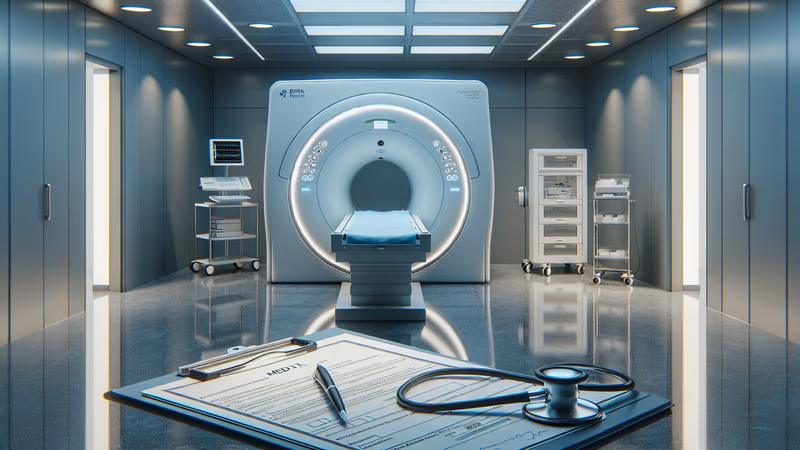
I could definitely see situations where it might be appropriate for an insurance carrier, as part of an IME, to demand that a claimant undergo a non-invasive diagnostic test at a facility of the insurance carrier’s choosing in order to assist the carrier to determine the medical reasonableness of future surgeries and other potentially invasive procedures. For instance, many of you might remember the piece the New York Times wrote last year regarding outdated MRI machines that are still in use, which are unable to fully and accurately delimit the actual locus and extent of an injury. If you forgot about that article, it is on this blog. I also recall Judge Viscovich’s decision in Complete Medical Care Svs., P.C. v. State Farm Mut. Auto. Ins.Co., 21 Misc.3d 436 (Civ. Ct. Queens Co. 2008) in which he decided that an EMG/NCV test was determined to be medically necessary, notwithstanding the uncontroverted evidence that it was improperly performed.
Clearly, from the standpoint as to whether further surgeries or further invasive treatment is necessary, a properly performed diagnostic test, using a modern and functioning machine, with a competent technician, might very well be helpful in determining a Claimant’s true clinical picture.
Technology and Accuracy Concerns
The importance of modern, properly calibrated diagnostic equipment cannot be overstated. Throughout Nassau County medical facilities, Suffolk County imaging centers, and the numerous diagnostic facilities across Queens and the five boroughs, the quality of equipment varies significantly. Outdated MRI machines, improperly calibrated devices, and inadequately trained technicians can produce results that are not only useless but potentially misleading in legal proceedings.
For personal injury claimants in Nassau County auto accident cases, Suffolk County slip-and-fall claims, or Queens County construction accident matters, inaccurate diagnostic testing can have devastating consequences for case value and settlement negotiations.
The Rosario Decision: Establishing Boundaries
Enter the matter of Rosario v BNS Bldgs., LLC 2009 NY Slip Op 08801 (2d Dept. 2009), which tangentially discussed this issue in the context of a third-party action:
“Under the circumstances, where, inter alia, the plaintiff established that the proposed medical testing was potentially dangerous (cf. Lefkowitz v Nassau County Med. Ctr., 94 AD2d 18, 21), the Supreme Court properly denied that branch of the defendants’ motion which was to compel her to submit to the proposed testing (see Santero v Kotwal, 4 AD3d 464, 465; Bobka v Mann, 308 AD2d 497, 498; Marino v Pena, 211 AD2d 668, 668-669).”
Read the bold case, supra, and you will see that under the appropriate circumstances, this type of an IME might be proper.
The Nassau County Medical Center Precedent
The reference to Lefkowitz v Nassau County Med. Ctr. is particularly significant for Long Island practitioners and claimants. This case established important precedents regarding when medical testing crosses the threshold from reasonable diagnostic procedure to potentially dangerous intervention that can be refused by the patient.
The decision recognizes that while insurance carriers and defendants have legitimate interests in obtaining accurate medical information, these interests must be balanced against the fundamental right of patients to refuse medical procedures that pose unreasonable risks to their health and safety.
Types of Diagnostic Testing in IME Context
In personal injury and no-fault cases throughout Nassau County, Suffolk County, Queens County, and the greater New York area, various types of diagnostic testing may be requested as part of an IME:
Non-Invasive Diagnostic Procedures
Generally considered acceptable and difficult to refuse:
- MRI Scans: Magnetic resonance imaging without contrast agents
- CT Scans: Computed tomography scans without contrast
- X-rays: Standard radiographic imaging
- Ultrasound: Non-invasive imaging using sound waves
- Physical examination: Standard orthopedic and neurological testing
Minimally Invasive Procedures
May be subject to challenge depending on circumstances:
- EMG/NCV Testing: Electromyography and nerve conduction velocity studies involving needle electrodes
- Contrast-Enhanced Imaging: MRI or CT scans requiring injection of contrast agents
- Bone Scans: Nuclear medicine procedures requiring injection of radioactive tracers
- Myelograms: Spinal imaging procedures involving spinal tap and contrast injection
Invasive Procedures
Generally subject to successful challenge:
- Arthroscopy: Surgical examination of joint interiors
- Discography: Injection of contrast material into spinal discs
- Nerve blocks: Injection procedures for diagnostic purposes
- Biopsies: Tissue sampling procedures
Legal Standards for Compelling Diagnostic Testing
Throughout New York State courts, from Nassau County Supreme Court in Mineola to Queens County Supreme Court in Jamaica, judges apply established legal standards when determining whether to compel diagnostic testing as part of an IME.
The Balancing Test
Courts must balance several factors:
- Medical necessity: Is the testing truly necessary for claim evaluation?
- Risk assessment: What are the potential risks and complications?
- Alternative methods: Are less invasive alternatives available?
- Proportionality: Is the risk proportional to the information sought?
- Claimant’s medical condition: Does the claimant have conditions that increase risk?
Burden of Proof
The party seeking to compel diagnostic testing must demonstrate:
- The testing is medically necessary
- The information cannot be obtained through less invasive means
- The risks are minimal and acceptable
- Proper protocols and qualified personnel will be used
Strategic Considerations for Different Practice Areas
No-Fault Insurance Claims
In Nassau County and Suffolk County no-fault cases, insurance carriers routinely request IMEs to evaluate the necessity of ongoing treatment. Understanding when diagnostic testing requests are reasonable versus overreaching can significantly impact claim resolution and payment of benefits.
Personal Injury Litigation
In Queens County personal injury cases, Brooklyn construction accident claims, and Manhattan slip-and-fall lawsuits, defendants often seek extensive diagnostic testing to challenge the extent of claimed injuries. Knowing when to object and how to protect clients’ rights is crucial for maximizing recovery.
Workers’ Compensation Cases
Long Island workers’ compensation claims frequently involve disputes over the extent of workplace injuries. IME diagnostic testing requests must be carefully evaluated to ensure they serve legitimate purposes and don’t expose injured workers to unnecessary risks.
Protecting Claimants’ Rights
For personal injury victims and no-fault claimants throughout Nassau County, Suffolk County, Queens County, and the broader New York metropolitan area, several strategies can help protect against inappropriate diagnostic testing demands:
Document Medical History
Comprehensive documentation of pre-existing conditions, allergies, and previous adverse reactions to medical procedures strengthens arguments against potentially dangerous testing.
Obtain Independent Medical Opinions
Consulting with treating physicians and independent medical experts can provide evidence regarding the appropriateness and necessity of requested testing.
Challenge Venue and Examiner Selection
Insurance carriers may select facilities or examiners with questionable credentials or outdated equipment. Challenging these selections can ensure more appropriate testing conditions.
Negotiate Testing Protocols
When testing cannot be avoided, negotiating specific protocols, equipment standards, and personnel qualifications can minimize risks and ensure accurate results.
Recent Developments and Trends
The landscape of IME diagnostic testing continues to evolve throughout New York State courts. Recent trends include:
Increased Scrutiny of Testing Requests
Courts are increasingly skeptical of fishing expeditions disguised as necessary medical examinations. Requests must be specifically tailored to disputed medical issues.
Technology Standards
Growing recognition that outdated equipment produces unreliable results has led to increased challenges based on equipment age and calibration standards.
Examiner Qualifications
Greater scrutiny of IME examiner credentials, including board certifications, experience with specific conditions, and bias history in litigation.
Frequently Asked Questions
Q: Can I refuse to undergo diagnostic testing requested by an insurance company?
A: You may refuse testing that poses unreasonable health risks or is not medically necessary for claim evaluation. However, refusal without valid grounds may impact your claim.
Q: What happens if I’m injured during IME diagnostic testing?
A: If you’re injured during testing due to negligence or improper procedures, you may have additional legal claims. Proper documentation and immediate medical attention are crucial.
Q: Can I bring an attorney to an IME that includes diagnostic testing?
A: In most cases, attorneys cannot attend the actual examination, but they can be present in the waiting area and should be immediately available if issues arise.
Q: How do I challenge a request for diagnostic testing I believe is inappropriate?
A: Work with experienced counsel to file appropriate motions challenging the testing request, supported by medical evidence and legal precedent.
Q: What if the IME facility uses outdated equipment?
A: You may challenge testing requests based on equipment age, calibration standards, and the reliability of results produced by outdated machines.
The Role of Medical Technology in Legal Proceedings
As medical technology continues to advance, the intersection of diagnostic capabilities and legal requirements becomes increasingly complex. Throughout Nassau County medical facilities, Suffolk County imaging centers, and the numerous diagnostic providers across Queens and the five boroughs, the quality and capabilities of equipment vary dramatically.
For legal practitioners and claimants, staying informed about technological standards and capabilities is essential for effective advocacy. Understanding the limitations of older equipment and the capabilities of modern diagnostic tools helps ensure that requested testing serves legitimate purposes and produces reliable results.
Quality Assurance and Accreditation
Reputable diagnostic facilities throughout Long Island and New York City maintain accreditation from organizations such as:
- American College of Radiology (ACR)
- Intersocietal Accreditation Commission (IAC)
- Joint Commission on Accreditation of Healthcare Organizations (JCAHO)
- State Department of Health licensing and oversight
Challenging testing at non-accredited facilities or those with lapsed certifications can provide grounds for refusal or alternative testing arrangements.
Conclusion: Balancing Rights and Responsibilities
The law governing IME diagnostic testing in New York represents a careful balance between the legitimate needs of insurance carriers and defendants to evaluate claims and the fundamental rights of claimants to refuse potentially dangerous medical procedures. The Rosario decision and related precedents provide important guidance, but each case must be evaluated based on its specific facts and circumstances.
For claimants throughout Nassau County, Suffolk County, Queens County, and the broader New York metropolitan area, understanding these principles and working with experienced legal counsel is essential for protecting both health and legal rights. The stakes are too high—both medically and legally—to address these complex issues without proper guidance and advocacy.
If you’re facing demands for diagnostic testing as part of an IME in Nassau County, Suffolk County, Queens County, or anywhere in the New York metropolitan area, call 516-750-0595 today. Our experienced legal team understands the complex interplay between medical necessity and legal rights, and we’ll work tirelessly to protect your interests while ensuring that any required testing serves legitimate purposes and is conducted safely.
Related Articles
- Understanding when objective criteria is necessary before requesting an IME
- How medical providers can defeat IME non-cooperation defenses
- Legal protections for IME reports against defamation claims
- Comprehensive guide to IME no-shows in New York no-fault cases
- New York No-Fault Insurance Law
Legal Update (February 2026): Since this 2009 post, New York’s IME diagnostic testing standards and procedural requirements may have been modified through regulatory amendments, court decisions, and updates to no-fault insurance regulations. Practitioners should verify current provisions regarding the scope of permissible diagnostic testing during IMEs, any new consent requirements, and recent appellate decisions that may have further refined the balance between carrier assessment rights and claimant protections.
Legal Context
Why This Matters for Your Case
New York law is among the most complex and nuanced in the country, with distinct procedural rules, substantive doctrines, and court systems that differ significantly from other jurisdictions. The Civil Practice Law and Rules (CPLR) governs every stage of civil litigation, from service of process through trial and appeal. The Appellate Division, Appellate Term, and Court of Appeals create a rich and ever-evolving body of case law that practitioners must follow.
Attorney Jason Tenenbaum has practiced across these areas for over 24 years, writing more than 1,000 appellate briefs and publishing over 2,353 legal articles that attorneys and clients rely on for guidance. The analysis in this article reflects real courtroom experience — from motion practice in Civil Court and Supreme Court to oral arguments before the Appellate Division — and a deep understanding of how New York courts actually apply the law in practice.
Keep Reading
More IME issues Analysis

Simple addition is insufficient
NY court rules simple addition insufficient to prove proper fee schedule calculations in no-fault insurance case, requiring detailed evidence of code utilization.
May 22, 2021
NF-3 is the operative document
Court ruling confirms NF-3 forms trigger 15-day IME request deadline, and patient no-shows at two scheduled exams justify insurance coverage disclaimer.
Mar 22, 2021
Non-disruptive representative allowed at IME
Court rules that having a non-disruptive representative present during an IME doesn't prevent defendants from conducting meaningful medical examinations under CPLR 3121.
Apr 9, 2015
An IME that went wrong
Legal case analysis of Reynolds v Ferrante where a no-fault insurance IME chiropractor injured a patient's knee, exploring insurer liability for contractor negligence.
Jun 11, 2013
IME Reports Are Entitled to Qualified Privilege Against Defamation Claims
Learn about IME reports and qualified privilege against defamation claims in NY personal injury cases. Expert legal guidance from experienced Long Island attorneys. Call...
Jan 29, 2010
IME scheduling letters: inclusion of an apartment number
Court ruling clarifies that insurance companies can use apartment numbers in IME scheduling letters even if not on original claim forms, with proper affidavit evidence.
Oct 27, 2016Was this article helpful?

About the Author
Jason Tenenbaum, Esq.
Jason Tenenbaum is the founding attorney of the Law Office of Jason Tenenbaum, P.C., headquartered at 326 Walt Whitman Road, Suite C, Huntington Station, New York 11746. With over 24 years of experience since founding the firm in 2002, Jason has written more than 1,000 appeals, handled over 100,000 no-fault insurance cases, and recovered over $100 million for clients across Long Island, Nassau County, Suffolk County, Queens, Brooklyn, Manhattan, the Bronx, and Staten Island. He is one of the few attorneys in the state who both writes his own appellate briefs and tries his own cases.
Jason is admitted to practice in New York, New Jersey, Florida, Texas, Georgia, and Michigan state courts, as well as multiple federal courts. His 2,353+ published legal articles analyzing New York case law, procedural developments, and litigation strategy make him one of the most prolific legal commentators in the state. He earned his Juris Doctor from Syracuse University College of Law.
Disclaimer: This article is published by the Law Office of Jason Tenenbaum, P.C. for informational and educational purposes only. It does not constitute legal advice, and no attorney-client relationship is formed by reading this content. The legal principles discussed may not apply to your specific situation, and the law may have changed since this article was last updated.
New York law varies by jurisdiction — court decisions in one Appellate Division department may not be followed in another, and local court rules in Nassau County Supreme Court differ from those in Suffolk County Supreme Court, Kings County Civil Court, or Queens County Supreme Court. The Appellate Division, Second Department (which covers Long Island, Brooklyn, Queens, and Staten Island) and the Appellate Term (which hears appeals from lower courts) each have distinct procedural requirements and precedents that affect litigation strategy.
If you need legal help with a ime issues matter, contact our office at (516) 750-0595 for a free consultation. We serve clients throughout Long Island (Huntington, Babylon, Islip, Brookhaven, Smithtown, Riverhead, Southampton, East Hampton), Nassau County (Hempstead, Garden City, Mineola, Great Neck, Manhasset, Freeport, Long Beach, Rockville Centre, Valley Stream, Westbury, Hicksville, Massapequa), Suffolk County (Hauppauge, Deer Park, Bay Shore, Central Islip, Patchogue, Brentwood), Queens, Brooklyn, Manhattan, the Bronx, Staten Island, and Westchester County. Prior results do not guarantee a similar outcome.